How to create a membership site in 2026 (step-by-step guide)
Learn how to create a membership site step by step: pick the right model, price it, build it with today's tools and AI, launch it and keep members.

Have you ever thought of creating a membership site for your business?
Do you have expertise or knowledge that you want to share, or do you have a following that you want to serve in a much bigger way?
Membership sites can turn your passions into a profitable business and make your life a whole lot more enjoyable (the freedom to travel the world as a digital nomad will do that).
This guide is a blueprint for how to reach more people while connecting with your audience in a deeper, more meaningful way.
You’ll discover exactly how to create a membership site that earns money every single month consistently.
If your current business model has you feeling tired, exhausted, and wanting to spend more time with your family, this guide is for you, but it’s also for anyone who has a powerful message they want to share with the world.
Meet the #1 membership site expert Stu McLaren
Stu McLaren has helped thousands of lifestyle entrepreneurs build successful membership sites over the years.
He’s also the former co-founder of WishList Member, one of the world’s largest membership platforms.
When it comes to real-world experience, Stu is a huge authority on the subject, having experience running his own 6 and 7-figure memberships.
His TRIBE membership program has helped thousands of business owners build memberships in almost every niche. You can find his current programs on his Creator Directory profile.

Stu is also one of the best people around… he truly cares about his students success and giving back to causes he believes in (he’s also the co-founder of Village Impact where Stu and his wife Amy build schools in Kenya).
I’ve been fortunate enough to hang out with Stu in person a few times as well… fun fact: he’s the same in person as he is online, which is quite rare these days.
What is a membership site?
A membership site is a subscription-based online business where people pay for monthly access to exclusive content.
If you play your cards right, your first site will be a smash hit.
Online education has been skyrocketing in recent years, and it’s because people are willing to pay for convenience.
The internet is flooded with free resources, but it’s all too exhausting for most people to sift through.
That’s where membership sites come in with their private forums, articles, and video courses, all organized into actionable, easy-to-follow steps that get results.
Why create a membership site?
Recurring revenue is the holy grail for many online entrepreneurs, and that’s exactly what membership sites deliver.
In fact, you probably already belong to a membership service without even realizing it.
Netflix, Spotify and Apple Music are some of the biggest names in the membership model game, and it’s been snowballing in popularity ever since Blockbuster died a quick and painful death.
The recurring revenue model is now king of the castle, and today newbie entrepreneurs and businesses of all sizes can get in on the action.
Stu McLaren tends to say that we’re in the midst of “The Recurring Revolution”… and I couldn’t agree more.
Why should you create a membership site?
Because you can turn any skill or knowledge into scalable, consistent, location-independent income. And believe it or not, you don’t even have to be the one with the expert knowledge.
Instead, you can simply curate content and sell it as life-changing advice through your site.
Here are a few MASSIVE pros to starting a membership site:
1. Create scalable income.
How scalable are membership sites? Real scalable.
Imagine a world where you sell the same digital product to thousands of people without having to manage inventory.
That’s membership sites in a nutshell.
No matter how many customers you have, they all interact with the same content in the same way.
2. Your time just got a lot more valuable.
Rather than trading one hour of your time for one hour of pay, you can spend that same hour creating a piece of content that pays you over and over again via monthly subscriptions.
3. The satisfaction of making a lasting impact.
Memberships sites make a difference in the lives of the people they bring together.
By creating a membership site, you get to affect change on a major scale.
The membership site philosophy
Without a doubt, membership sites have huge perks, but they do come at a cost: For one, membership sites take a lot of hard work.
This means that they aren’t for everyone, but you have to admit, any business worth building comes with its growing pains.
Stu McLaren knows this better than almost anyone. He’s helped entrepreneurs launch thousands of successful memberships in nearly every industry, mainly through his TRIBE program.
This is his membership philosophy:
- Low stress: A membership site is a marathon, not a sprint. Luckily, this business model allows you to lead a low-stress lifestyle while building your audience.
- Grow into it vs. waiting for perfection: Your site will never feel perfect, that comes with steady growth. If you want to crush it, you should take action NOW and mold it to perfection as you go.
- High profitability: Selling the same digital content to an almost unlimited number of users lifts the ceiling on ROI.
- Keep things simple: Don’t jump the gun on complicated content packages. Keep your content simple and predictable. People gravitate towards membership sites because they provide a straightforward system for accomplishing their goals. The last thing you want to do is overwhelm them with too many options.
- Start and continuously improve: Get in the habit of asking your subscribers what they like, what they hate, and what they’d like to see. Never stop trying to get into the minds of your audience and always strive to do a better job at solving their pain points.
Type of membership site owners
Are you a hobbyist or a business owner?
Membership site owners generally fall into one of these categories, and I bet you can guess which one has the most success.
Business owners treat their membership sites like real businesses, and they tend to grow exponentially with the right level of commitment and the right strategies.
Hobbyists, on the other hand, use membership sites as a “side income,” and they almost always plateau and plummet.
When it comes down to it, membership sites are meant for a certain breed of entrepreneur: ones that care about making an impact.
Here’s how to tell if you have what it takes to turn a membership site into a profitable business:
Is a membership site really right for me?
Membership sites can work for product-based, service-based, or education-based businesses, but they all require you to connect with your audience on a personal level.
You have to tap into the hearts and minds of the community you wish to serve.
Here are three groups of people that membership sites are especially well-suited for:
Person #1: An established expert
Do you already get invited to speak at events?
Do you have a platform and audience as a coach, consultant, blogger, or podcaster?
Then with the right strategy you can leverage membership sites in a profitable way.
Person #2: An influencer with an audience
Do you already leverage influencer marketing on Instagram, YouTube, TikTok or X and have a lot of followers?
What about a Facebook group in a specific niche that gets a ton of engagement?
Take the messages you spread on social media and continue the conversation on a membership site.
Person #3: Someone who wants to start an online business
Even if you just have an idea, that’s enough to start your journey to building your first membership site and turning it into a full-time online business.
Membership owner profiles
As long as you effectively help people improve their lives, chances are you can make a membership site work for you.
No, seriously… membership sites can work in almost any niche, no matter what your background is in the industry.
If you don’t have a ton of expert knowledge yourself, you can always find a way to package other people’s expertise, create an online course, and sell it as part of your site.
Here are the main 9 membership owner profiles.
Where do you fall?
1. Expert
If you’re an expert in your niche, a membership site can help you to reach a wider audience and make boatloads of money in the process.
Plus, being an expert cuts a lot of grunt work out of the equation since you don’t have to outsource as much of the content creation.
2. Speaker
Are you a public speaker who wants to spend less time on the road and more time connecting with your audience?
Membership sites are a perfect way to do that.
Leverage the presentations you already make to build a stable revenue stream and offer additional value to your existing audience.
3. Author
A membership site gives readers a place to continue the conversations you start in your books.
And it’s an easy way to stay connected to your readers and create a responsive community.
Best-selling author Michael Hyatt took the questions his readers were sending him and turned it into PlatformUniversity.com, which became a massive success with 1,000’s of members.
In fact, Stu McLaren partnered up with Michael to create his membership site, it was based on everything he now includes in his TRIBE course.
4. Coach
Maintain the intimacy you have with your customers but ditch the hourly grind.
With a shared members area, you can simplify the coaching process while creating more leverage.
5. Consultant
No more trading your time directly for money as a one-on-one consultant.
Instead, turn it into a membership site that repurposes the tools you’ve created for your clients.
It’s a win-win: you get to leverage your time more effectively, and more people get access to your advice.
Of course, you can always continue to upsell individual consultancy packages for the right price.
6. Blogger
Do you already make money blogging?
Memberships are a great back-end content upgrade for free blog content.
If you’re already ranking for relevant keywords, your SEO articles will instantly become a funnel for new paid members.
Do your readers reach out with a lot of questions?
Take their questions and use them as a starting point for your premium membership content.
7. Podcaster
A membership site is an excellent way to monetize a podcast.
Take your most popular podcast topics and expand them to create exclusive content for your membership site.
Your most loyal listeners are probably chomping at the bit to hear more from you, and premium content is a great way to bring your 1,000 true fans closer together.
8. Influencer
As a social media influencer, a membership site can produce serious revenue from your following.
It can be a natural extension whatever it is you share on social media.
Use it as an opportunity to go deeper into the subjects you cover on Instagram and Facebook.
9. Business owner
Stop hoping for customers to return.
Instead, embrace the low-hassle world of predictable recurring revenue.
The Dollar Shave Club is a prime example of a membership site that flipped an old-school industry on its head with the membership model.
No matter which owner profile you adopt, a membership site provides an effective training ground for your audience to master the skills you teach them (even if it is shaving).
The MOST important thing is focusing on the people you want to serve.
Once you figure that out, how do you know if they’re ready for a membership?
Different types of membership sites
How will your membership site fit into your broader business model?
How will you package your content?
These decisions are really important when it comes to crafting an effective marketing strategy.
In fact, the type of site you choose to create is one of the most important parts of building a successful membership business, so take close note of it.
1. Publisher: A “digital magazine” with regular content
For me, this model is the least attractive because it means that you have to pump out large volumes of content.
Think of it like starting a traditional blog that only subscribers have access to.
This model is perfect for audiences with a ravenous appetite for fresh content, and it’s best for self-motivated communities that don’t need much hand holding.
2. UPS: Weekly or monthly “package” is delivered
Can your product be delivered to someone’s door (or inbox).
With some businesses, it makes sense for subscribers to customize their content/package, and then you deliver it on a weekly, bi-weekly, or monthly basis.
The dog niche has a ton of sites operating on this model, like Bark Box, for example.
They deliver customized packages of dog treats and dog toys every month.
3. Modular/drip: Content is created and dripped out over time
The drip model is one of the most common and it works well in a variety of niches.
It’s also the most convenient because you get to front load all your content creation and release it throughout the year.
For example, you can create a full course and then release one module every week or once a month.
This makes it easy for subscribers to keep up the pace without feeling overwhelmed.
The drip model delivers tons of perceived value and allows you to break lessons down into core concepts.
Membership site owners love it because they can provide better results with less content, and members love it because they feel a sense of accomplishment while learning at their own pace.
4. Community: Protected area for people to connect
Essentially, this type of membership site is a private forum, and it’s one of the easiest types of membership sites to create.
With most membership sites, the primary value is in the content you create. But with a community-oriented site, members join because they want to chat with other members.
Obviously, the community model relies on an active, highly-invested community, but it also makes it easy to justify your rates because you hold the only keys to the club.
5. Coaching: Place for clients to get both shared resources and individual instruction
In this model, the membership site is a front-end product for one-on-one coaching.
Members have access to the shared premium content, but the real goal is to upsell them on high-ticket individual instruction.
6. Combo: Elements of multiple membership types
For some membership sites, it makes sense to combine different models.
Bloggers with local followings are the most likely to benefit from this strategy.
Paid members can get access to exclusive themed posts, a private forum, bonus discounts, and early access to product launches.
You can also throw in monthly coaching calls for your highest-paying members.
7. Live workshops: a new live session every month
Instead of a library that grows forever, members get one practical, live session every month, plus the replays.
It's how I'm rebuilding my own membership, AI Creator OS: a new hands-on live AI workshop every month, taught by people who use AI in their own business.
8. Cohort: a group that goes through it together
A cohort takes members through a program over several weeks, with live sessions and real work between them. Everyone starts together, so completion is far higher than a self-paced course.
My Certified AI OS Consultant program works this way: an 8-week live cohort that ends with a live review with me.
9. Library: templates, prompts and skills
Members pay for tools they can use right away: templates, swipe files, prompts and AI skills, updated as things change. It's one of the easiest memberships to keep fresh, because you add to it instead of replacing it.
10. AI assistant: your knowledge, on demand
Load your frameworks, courses and answers into an AI assistant, like a Claude project or a custom GPT, and give members access to it. They get answers in your method at any hour, and you spend your live time on the questions only you can answer.
Keep in mind that there’s no magic formula, but there is an ideal strategy for how to best serve your audience.
Ask yourself, “Is my membership site a hook for an upsell (front end), or is it the upsell itself (back end)?”
Then decide which membership type will keep your audience motivated, engaged, and getting results.
5 biggest membership misconceptions & roadblocks
Lots of people have misconceptions about what it takes to build a successful membership site.
One of the biggest rumors is that you have to be an expert in the niche, and another popular one is that you need a big email list for your launch.
WRONG and WRONG.
Here’s the down-low on common membership site misconceptions and myths:
1. Small email list
What if I told you that having a small email list can actually be an advantage?
Believe it or not small email lists are more responsive and have higher conversions.
They also make it easier to develop an intimate relationship with your tribe.
Plus, small email lists are great for beta testing.
Stu’s TRIBE program is packed with students who have turned small email lists into big membership businesses, like Wendy Batten.
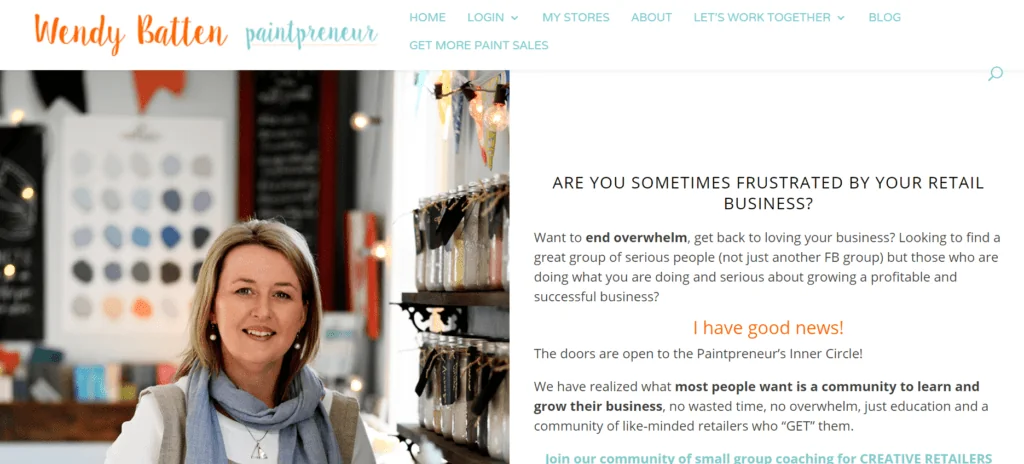
She helps paint store retailers sell paint, and before she launched her membership site, her email list was only 460 strong.
By the day of her launch, 59 percent of them joined, driving $2,800 in revenue in the first month.
Again, that’s just one of many students who got started with a small list.
Then there’s Marianne Kane, who crushed it in the women’s fitness niche.
Her site about kettlebell workouts gained 52 members for her launch out an email list of only 250.
Still think you need a big email list?
2. Not an expert
Not an expert? Not a problem.
It actually isn’t necessary to be an expert because you can base your content around other people’s knowledge.
One of the most effective ways to do this is to use virtual summit interviews as part of your membership site.
By organizing them in a thoughtful way, you can create a path for people to follow that gets them results.
One of my Virtual Summit Mastery students, Mitch Asser, uses this model for his intermittent fasting membership site.
Not only is this a great way to get content, but it’s super efficient because you’re just repurposing the content your already have (we call it the VSM Multiplier Method in Virtual Summit Mastery).
3. Lots of free content in my market
Lots of free content is a strong sign that there’s a lot of demand in the niche.
It also means that you have an excellent opportunity to stand out from the crowd by packaging your content in a way that provides clarity.
It’s easy to get lost in the sea of free content that’s out there and fail to make any real progress.
You can learn pretty much anything on the internet for free, but most people get decision fatigue before they take action.
Membership sites are the answer.
4. The content “treadmill”
One of the main downsides to a traditional blog is that you have to keep pumping out content on an endless treadmill.
With a membership site (and the right strategy) this doesn’t have to be the case.
Instead, you can create a year’s worth of content in 7 days or less like Michael Hyatt did for Platform University, but more on this later.
And today AI takes most of the treadmill away. It drafts your lessons from your outlines, turns 1 live session into a replay, a summary, an action guide and a week of posts, and handles the admin. You keep showing up live, which is the part members pay for.
5. No email list
You don’t need an email list at when you start your journey, because that’s what virtual events are for.
With a single virtual conference, you can build an email list of 1,000-5,000 (in some cases even 10,000+) high-motivated people fast.
Stu teaches several other ways to grow a list, like building a free community around your topic in a short time.
How to come up with your perfect membership topic & idea
Before you decide which type of content to create and how to package it, you’ll need to conduct some market research.
Use the 3 c’s of assessment to decide if your membership idea is a winner
Stu likes to evaluate membership ideas based on their customers, community, and content.
1. Customers
- Are they passionate about what you want to teach?
- Do they already regularly buy products around the subject.
- Is there a consistent problem or challenge that they face?
If you answered “YES” three times, then it’s a strong sign that you’re on the trail of a great idea.
2. Community
- Can you build a targeted email list?
- Do you already have a significant social media following?
- Can you interview experts as part of a virtual conference and use those interviews to attract subscribers?
Without a community to launch to, you’re going to have a hard time getting early momentum, and early momentum is extremely important with membership sites.
3. Content
- Have you created content for your market in the past?
- Does your audience ask questions about your content?
- Are you comfortable asking for critical feedback and making changes based on the suggestions?
Here’s the thing, the content is actually the easiest part, and it’s really not worth worrying about.
What’s most important is to understand your audience’s pain points intimately.
Dig deeper into your audience’s pain points
Join Facebook groups, Reddit threads and other free online communities where your target audience hangs out and discover what their pain points are.
- Are there goals that they’re consistently striving towards?
- What do they want and what external problems are keeping them from getting it?
- What internal problems weigh on their minds and keep them up at night?
- Where are they on their current path and where do they want to be?
The success of you site depends on getting inside their heads, and the easiest way to do that is by going straight to the source.
Developing your core membership strategy
Developing a core membership strategy comes down to figuring out the best way to serve your members.
The first major decision you’ll have to make in developing a core membership strategy is how to distribute your content.
Access vs. delivery
Content can either be hosted on your site or deliver to your members’ email.
Depending on your payment structure, there are four main ways to grant access to your content:
- Recurring: Access is granted following regular monthly payments.
- Lifetime: Members get permanent access as long as the site exists.
- Fixed Term: Access is granted for a set period (e.g. a year).
- Pay-as-you-go: Members buy content a la carte as needed.
For most membership sites, a recurring monthly payment system is the go-to option if you want to create stable, scalable income.
Rather than having an access-based model like the ones listed above, you can deliver content to your members instead.
Here are the three main ways to deliver content:
- Instant: All content is immediately available, with only the occasional bonus or update.
- Ongoing: New content is released at regular intervals without and end date (weekly, monthly, yearly).
- Dripped: Content is released at regular intervals with a set end date (when the course material ends).
Whichever content distribution strategy you choose, make sure it’s the best way for your audience to learn.
PRO TIP: If a strategy makes you more money but hurts student results, don’t touch it with a ten-foot pole.
Pricing models: Deciding what to charge for your membership
Are you going to go with a recurring payment plan, a one-time fee, an upfront fee, or a hybrid?
Recurring fees (monthly, yearly, or hybrid)
In the recurring fees pricing model, students get access to the content right away, but as soon as they miss a monthly payment they get blocked.
Pros of recurring fees
- Recurring fees create a more predictable revenue stream.
- They’re also a more affordable solution for people who don’t have a big chunk of cash to blow upfront.
- On top of that, recurring fees push students to take action so that they can justify the monthly cost.
Cons of recurring fees
- The downsides to recurring payment models is that they bring in less money per member each month.
- They also put more pressure on you provide quality content so that you retain members.
Other Options for Recurring Fees
- Recurring fees can also be charged on an annual basis, but then the monthly bill won’t be there to serve as motivation to take action.
- You can also opt to have both a monthly and annual option, with the annual option saving customers money in the long run.
- If you want the best of both worlds, you can charge a larger upfront fee with an ongoing monthly fee.
- Yet another way to get creative with pricing is to do a low-priced trial with an ongoing monthly fee.
One-time fees
Collecting a one-time fee for access to your content can be a very alluring setup for several reasons.
Pros of one-time fees
- You receive one massive payment upfront and BAM, your bank account swells in an instant. This can be great if you need an early injection of cash when you’re first getting started.
- One-time fees are also more straightforward to set up with payment processors (although most checkout tools, like Stripe, make recurring payments easy too).
- When it comes to managing customer expectations, one-time fees are a lot easier. Members can see what they pay for right out the gate, and there’s no pressure to deliver fresh content.
Cons of one-time fees
- You have to market and sell month-to-month if you want to keep the revenue tap on.
- If you aren’t on top of your marketing game, your income will be all over the place. One month maybe you sell to 17 people and the next you only two.
- Unpredictable income can be incredibly stressful, especially if you’re burning money on paid ads.
Pricing front-end vs. back-end membership sites
Membership sites fall into one of two categories depending on how they fit into your overall business model.
Front-end membership sites serve as an entry-level hook into your content and brand. They usually have a lower price point because their main job is to warm customers up for a high-level product.
Back end membership sites have a higher price tag because they are the upsell. The hook is something else like free blog content or a less expensive info product.
For example, Stu has offered a membership called TRIBE Connect only to students of his paid TRIBE program.
The final price tag you put on your site will depends on the industry, the market, and what you offer, but in the end what really matters is how it fits into the customer’s journey with your brand.
Pricing front-end membership sites
Front-end membership sites really serve as a way to collect highly-qualified people for other high-ticket offers, so typically you wouldn’t be worried about making a lot of money on front-end sites (although it’s definitely possible if you get quite a lot of members).
Monthly memberships can be as low as $5 a month and go all the way up to $100 a month, but his varies dramatically depending on the market.
The goal is to set a price that keeps customers engaged for however long it takes to warm them up to your high-ticket offer.
Pricing back-end membership sites
With back-end membership sites, the price points are actually much higher because they themselves are the high-ticket offer (or at least a higher priced offer than the typical front-end membership site).
Typically, the low end for these sites is $50 a month, but they can get as high as $500-$1,000.
You earn a lot more per member, but you’re also going to have fewer members in general.
Both front-end and back-end sites have their advantages, but neither is better than the other.
It’s just about having a clear role that the membership site plays in your overall business strategy.
Now let’s talk about the 5 core pillars of your recurring membership business strategy that you need to focus on…
The 5 core pillars of your membership site strategy
Rome wasn’t built in a day, and your membership site won’t be either.
Helping his students explode the growth of 1,000’s of membership sites has taught Stu how to engineer an effective game plan, and he boils his strategy down into the 5 core pillars that every membership site entrepreneur should focus on…
1. Developing your membership content strategy
The first of the 5 core pillars is a content strategy that creates a “success path” members can take to accomplish their goals.
How to create a success path
The foundation of the success path is core content that all members get instant access to when they join the site.
This core content explains how to get the most out of the site and provides critical knowledge for success.
On top of this core content, weekly/monthly content gets released as easy-to-identify milestones in themes and segments.
Types of Content
- Video (interviews, screen captures, lessons, presentations)
- Text (PDF’s, infographics, charts, diagrams, articles)
- Voice (recordings, lessons, interviews)
- Interactive (coaching, community, forums, Q&A)
Format your content in a way that fits the rhythm and learning style of your audience.
For most memberships, releasing fresh content once a week works best.
How to batch-produce incredible content in 7 days or less
Depending on your content model, batch-producing content can give you a whole year’s worth of content in less than a week, and Stu teaches the whole process in TRIBE.
When Stu partnered with New York Times best-selling author Michael Hyatt to create Platform University, they needed to create content fast.
Michael was already a ridiculously busy public speaker, doing 30-40 events a year with at least two days of travel per event.
This meant he was already gone 100 days out of the year and didn’t have time to create loads of content.
He also ran a podcast and published articles on his personal blog.
But guess what?
Even Michael was able to create 6-8 month’s worth of content in six days.
Stu and Michael developed a content strategy where they recorded videos and interviews in 3 two-day video shoots.
A couple quick rules-of-thumb for batch-producing content:
- Never release more than one primary piece of content per week.
- Weekly content shouldn’t take longer than an hour to consume. Anything that takes longer than this will overwhelm busy members and they may fall behind, get discouraged, and quit the program.
- Make your lessons “bite-sized” and easy to digest.
- Fill your content with actionable advice that’s easy to implement right NOW.
Remember, it’s not about the volume of content, it’s about the speed of implementation.
How fast can your content get people results?
Less is more…
If you overwhelm your audience, you’ll see a high turnover.
The biggest benefit about batch-producing content, though, is that it’s relatively stress-free.
Constantly scrambling to create new content can feel like an endless treadmill, and that’s not how to design your best life.
Provide value with community-based content
By building your site’s forum into a highly sought after group, you can turn it into one of your main attractions.
The best part is, it’s content that your members create for you.
People are willing to pay a premium to be surrounded by people who are serious about improving themselves in a deeper, more intimate environment.
Facebook groups can be helpful, but they don’t always attract the highest quality members.
Membership site forums, on the other hand, weed out the people who aren’t totally committed to accomplishing their goals and helping others do the same.
Key Takeaways
- Package your content in easy-to-digest milestones.
- Release weekly/monthly content and give instant access to foundational material.
- Batch-produce content and release it at weekly or monthly intervals.
- Create a community that provides value to other members.
2. Creating & building your membership site with ease
Now that you've decided which type of membership to create, it's time to build it. The tools are simpler and cheaper than ever, and AI can build a lot of it for you.
Recording and editing
- Riverside records studio-quality video and audio for live sessions, interviews and lessons.
- Descript edits video by editing the transcript, and cleans up audio.
- Loom or Screen Studio for quick screen recordings and walkthroughs.
For hardware, a good USB microphone and a 1080p or 4K webcam are enough to start. Your phone camera works too, as long as you have good light.
Membership platforms
Pick the platform that fits how you want to deliver:
| Platform | Best for |
|---|---|
 Circle Circle | Community-led memberships with courses, events and live sessions |
 Skool Skool | Simple community and course memberships with built-in engagement |
 Kajabi Kajabi | All-in-one: courses, community, email and payments |
 Teachable Teachable | Course-first memberships that are easy to set up |
 Memberful Memberful | Adding paid memberships to a site or newsletter you already have |
 MemberPress MemberPress | Full control on your own WordPress site |
WordPress still works if you want full control, but it takes more setup and maintenance. If it's your first membership, start with a hosted platform, and spend your time on the content and the members instead.
When you choose, think about the features you can't do without:
- Will you drip content, or release it all at once?
- Do you need live sessions and a community built in?
- Do you want monthly and yearly plans, or a trial?
- Can members cancel on their own?
Payments, pages and email
- Stripe handles monthly and yearly subscriptions in almost any country.
- Your email platform sends the onboarding, launch and win-back emails that keep members active.
- Landing and sales pages can come from your membership platform, or you can build your own with AI.
AI inside your membership
This is the biggest change since I first wrote this guide:
- An AI assistant for members. A Claude project or a custom GPT with your frameworks lets members get answers in your method, any time.
- Content from every live session. AI turns each session into a replay, a summary, an action guide and a set of posts.
- A member area built with AI. Tools like Claude Code can build a simple member area or resource library for you, if you want your own.
- Admin on autopilot. AI can draft onboarding emails, answer common questions and flag members who stopped showing up.
Key takeaways
- Hosted platforms are the fastest way to start; WordPress gives you full control.
- Stripe and your email platform handle payments and member communication.
- AI can now build parts of your membership and keep it running, so you can focus on your members.
3. Launching & marketing your membership site
Is your membership site ready for lift off?
A good launch can drive a ton of signups and get you off on the right track.
Membership sites are designed for gradual growth rather than short bursts of income, but if you play your cards right, your launch can give you an injection of cash.
But before you launch, you’ll want to layout a marketing plan that sets you up for success:
- Build and email list.
- Create desire during your launch with a video series.
- Do a webinar during the launch to hype up your membership site and community.
Take the time to thoroughly plan out your launch to avoid any hiccups.
Open vs. closed membership marketing strategy
One undeniable fact of human psychology is that scarcity urges people to buy.
Obviously, there are always exceptions to the rule, but overall customers are more likely to purchase when they have a limited time to do so.
This is why the closed strategy to marketing can be so powerful.
With a closed strategy, enrollment is only open a few times a year.
If customers don’t jump on the opportunity now, they’ll be stuck twiddling their thumbs for another three, six, or twelve months.
Of course, this depends on the market, and you might find that for your site an open strategy (where people can enroll anytime) works best.
The only way to find out is to split test, but in most cases the scarcity that comes with a closed strategy will drive more signups.
Build an email list
First and foremost, you’ll need a strategy for building an email list.
Having a targeted email list is the single most important piece of the launching puzzle, and it can also be the hardest part to execute.
Virtual summits are the fastest and most effective way to build a targeted email list compared to any other strategy.
After starting my blog in 2013, I worked hard for a year-and-a-half to build a list using traditional tactics.
I had a blog, did guest posts, conducted interviews for my YouTube channel, and even started a podcast.
In the end, I had only a few hundred subscribers to show for it.
Then I came across virtual summits.
I launched The Branding Summit at the tail end of 2014, and within a month I’d grown my list to a few 1,000 highly-targeted subscribers (not to mention making roughly $60k in revenue between all-access passes and affiliate sales).
I’ve since taught hundreds of VSM students how to do the same, like Diana Rowan who hosted the Virtual Harp Summit (yes, a summit for Harpists).
The first summit she hosted brought in 2,100 email subscribers and 460 all-access pass sales.
Then with the help of Stu McLaren’s TRIBE program, Diana launched her membership site for harpists on the backend of her online summit, and now brings in recurring revenue month after month consistently.
Every year she hosts a few summits to get even more harpists to sign up for her membership so she can serve them in a deeper way.
Test the waters and build hype
Before you go all in for the big launch, test the waters with a beta launch.
Give early site access to the audience you already have at a discounted rate and ask for feedback (I usually like to call this first round a “Founders Circle”).
This way by the time the actual launch date rolls around, you’ll hopefully have caught all the bugs… and you’ll also have some raving fans and case studies if you’ve done things right.
Launch to your full email list & audience
Leverage the cases studies you get from your beta launch to promote your main launch.
As Stu says, “The longer the runway, the bigger the launch”, meaning that the longer you advertise your main launch the more hype and suspense you’ll build.
Consider recording a short video series and drive traffic to it with ads, your content or affiliate partners.
Top off your promotional run with a webinar that describes how your product will solve your audience’s biggest pain points.
Build an evergreen funnel
Eventually, when everything is converting well during your live launches and promotions, you can build out an evergreen funnel where ads, content and partners drive traffic to a webinar.
Of course you can also promote this evergreen funnel to your own email list, and affiliates can drive traffic as well.
Then on the webinar you’ll provide a lot of value, and then make an offer to join your membership site towards the end.
Consider offering an early-bird discount for the first 2-3 weeks following your launch and throw in some bonus content.
This provides extra incentive and creates scarcity, and nothing drives conversions like a ticking clock.
Retarget, convert, and conquer
Not everyone is going to bite on the first membership launch.
It may take them a while to get warmed up, and that’s just fine.
Keep plugging away with strategies like these for turning leads into members:
- Wait list promotions: This strategy works if you only open membership a few times a year (the “closed” strategy). Run periodic promotions leading up to the “application window” and get prospects on an exclusive waiting list.
- Trial downsell promotions: Send promotions for hook products to people who showed interest but didn’t sign up.
- Come-back promotions: Send offers to former members who cancelled and try to get them to come back.
- Member referral campaigns: Encourage members to invite others. A referral tool or a simple reward for each referral makes this easy.
Key Takeaways
- Virtual summits are the fastest and most effective way to build a large, targeted email list for your membership site launch.
- Leverage the cases studies from the beta launch to hype your main launch (the longer the runway, the bigger the launch).
- Use an evergreen funnel with a video series and webinar to hype your launch and continually drive leads.
- Retarget leads that have shown interest with periodic promotions.
4. Membership retention strategy
How do you keep your members from jumping ship?
The short answer is that you get them results, but it’s especially important that they feel like they’re getting results, and to do that you need to keep them engaged.
Member Onboarding
First impressions are a big deal, especially when it comes to retaining members.
That’s why it’s so important to have a solid member onboarding process.
What do they experience in the first minutes, hours, and weeks of joining?
Here are a few tactics for creating an incredible initial experience:
- Add a “Getting Started” page where you feature key info on how the site works and give them an interactive walkthrough.
- Use an email autoresponder to highlight important features as they explore the website for the first time.
- Solve a small but significant problem for them right away. This will make them confident that you can help them tackle the big stuff.
- Throw in an unexpected bonus, like a gift or personalized welcome video (a quick personal video recorded on your phone works great).
Community retention strategy
The community you create can easily become your membership site’s most valuable asset.
People are willing to pay to stay a part of a tribe they’ve grown fond of, and there are several things you can do to make you tribe into a tight community.
- Shift the relationship away from you and towards building a relationship with other members.
- During onboarding, encourage new members to reach out to others in the community forum.
- Create habits and rituals that all members take part in. These play a big part in helping members manage expectations and gives members something to bond over.
Personalized retention
People love it when you make a big deal about them.
Make your members feel special and they’ll be more likely to stick around.
- People love knowing that you care.
- They also love hearing their name.
- Communicate more! Share what’s happening with new members and publicly celebrate their wins.
- Seek out high-achieving members and make them a “star” of the community. People are less likely to leave when you feature them and highlight their accomplishments.
The most important thing is to constantly offer actionable advice and get members excited about upcoming content.
If they don’t stick around, they’ll miss out!
Of course, you can’t win ‘em all, so if they do decide to leave, don’t feel hurt.
Instead, try to convince them to stay with a downsell, but at the very least make sure they leave on a positive note.
Key Takeaways
- Make your onboarding process memorable and full of heavy-hitting content so that they feel great about their decision to buy.
- Create rituals and habits that all members take part in to strengthen the sense of community.
- Publicly recognize the achievements of individual members. If you make them feel special, they’ll be more likely to stick around.
5. Scaling your membership site business
The ability to create scalable, recurring monthly revenue is one of the most attractive parts of the membership site business model.
Once you’ve proven that you can make a positive impact and retain customers on a small scale, it’ll be time to grow like crazy.
Build a team
Eliminate tedious processes by outsourcing.
As your membership site grows, you’ll inevitably run out of time to do everything yourself.
If you want to scale your site to the high heavens, you’ll need to start outsourcing the grunt work.
Sites like Upwork, Fiverr and OnlineJobs.ph are great places to find freelancers, and AI now handles a lot of what you'd have hired for first.
Consider hiring a customer support representative, a community manager to respond to comments, and someone to help with content creation.
Write down your systems and processes (SOPs) as you go. An AI assistant that knows your SOPs can train new team members and answer their questions.
Strategies for getting new members
Scale your site by bringing in new members and by offering upsells so that long-time members have a reason to stay.
- Paid ads on Meta, YouTube or Google
- Organic search traffic (rank blog articles on relevant keywords)
- Start a free community where you warm up new prospects.
- Run an affiliate program where your students and other influencers in your industry drive leads your way.
- Host virtual summits (Michael Hyatt ran the Influence and Impact Summit to successfully scale Platform University after seeing how well it worked for Chandler Bolt’s Self-Publishing Success Summit to grow his online business to 7 figures quickly).
The next question is what else can you sell to existing members?
Ask them what other content and services they’d like to see and create products based around their suggestions.
Upsell product ideas
- Additional membership tiers
- Done-for-you services
- Small group coaching
- Private masterminds
- Live events
- Branded products and merchandise
Take to heart what your members say and create a diverse ecosystem of services to keep them engaged.
Key Takeaways
- Build your team and start outsourcing things you don’t want to be doing.
- Focus on creating systems and processes (SOPs) to make things easier and more efficient as you bring on new team members and contractors.
- Attract new members by continuing to host virtual summits that drive new members.
- Recruit other people in the industry to become your affiliate.
- It’s easier and cheaper to upsell to existing customers rather than finding new ones.
- Listen to member feedback and create new products.
Examples of successful membership site owners
Membership sites can work in any market, like the music niche and the real estate industry.
They can even be started from scratch (literally ground zero) and generate thousands of dollars in a matter of days.
They can also be the perfect compliment to a course, virtual summit or services.
Here are a few case studies from Stu’s TRIBE students to back it up:
Levi Kujala: Guitar niche
Levi Kujala already ran a guitar membership site that was bringing in $30k a month, which is a phenomenal accomplishment in itself.
But after going through the TRIBE Course, he was able rapidly grow it into a $52k a month site.
From there his membership quickly exploded to $100k, and it’s now a multi-million dollar site with over 6,000 members.
The most inspiring part of Levi’s story, however, has nothing to do with ROI.
He started hosting these live jam sessions for military vets, and they were getting on stage and jamming together.
The ability to bring people closer together through a tight knit community is a powerful thing (and it doesn’t hurt to drive tons of revenue while you’re at it).
Anna Saucier: rapid-launch success story
Anna’s story will blow away any doubts you had about getting early momentum with a small email list.
She was attending one of Stu’s live TRIBE events and was feeling inspired by all the success stories.
She said, “You know what? I’m going to launch, and I’m going to do it right here at this event.”
The only problem was that she had no sales videos, no webinar, no sales page, no checkout page, and no anything.
Well… almost nothing.
Anna did have a small email list of 326 people. She asked them to fund her membership site at a “founding member site.”
Although at the time it was just a concept, she was able to generate over $5k in 24 hours.
This is the power of a small, highly-qualified list.
Susan Garrett: Dog niche
Susan had been grinding for almost a decade as a high-level dog trainer, teaching on the road nearly 200 days out of the year.
She was starting to burn out and needed a way to create steady, scalable income without having to travel all the time.
She rolled out the beta version of her dog training site to 1,600 of her clients and over 1,000 of them joined at $30 a month.
FAQs about creating a membership site
Here are answers to the questions people ask most about creating a membership site.
A membership site is a subscription-based online business where people pay for monthly access to exclusive content.
Recurring revenue. Monthly payments give you a more predictable income than one-off sales, and they’re easier for your members to afford.
The 6 main types are a publisher site (a digital magazine with regular content), a monthly package, a modular or drip site, a community, a coaching membership, and a combination of these.
No. Small lists are often more responsive, convert better and are great for beta testing. And if you have no list at all, a virtual event can build one for you.
No. You can build your content around other people’s knowledge. One of the best ways is to use virtual summit interviews inside your membership, organized into a path that gets members results.
Use Stu McLaren’s 3 C’s: customers, community and content. Are people passionate about the topic and already buying around it? Can you build a targeted community? Can you keep delivering content they need?
Recurring fees give you predictable revenue, are more affordable for members and push them to take action. A one-time fee gives you a big payment upfront and is simpler to set up.
No. With the right strategy you can create a year’s worth of content in 7 days or less, like Michael Hyatt did for Platform University.
Final thoughts on creating a membership site
Here's how I'd start today:
Now imagine your own membership on a topic you love, bringing in predictable income every month while you show up live for the people you serve.
It's well within reach. For the bigger picture of predictable income, read how to build a recurring revenue business. To learn from Stu directly, find his programs on his Creator Directory profile.
Have you thought about creating a membership, or do you already run one and want to take it further? DM me on X or Instagram and let me know.
Navid Moazzez
AI business strategist & AI OS builder
Navid Moazzez helps creators and founders master AI and build their own AI Operating System (AI OS) to automate their business and life.
Navid.me is reader-supported. When you buy through links on this site, I may earn an affiliate commission. Learn more.



 Free AI newsletter
The most actionable AI newsletter for founders
Every week, get proven AI strategies, curated tools, and step-by-step systems to grow your audience, create better content, and build a profitable creator business.
No fluff, no filler, no BS. Just five minutes each week that might level up your online business and life.
P.S. Sign up now to get free access to my ultimate AI tools guide for creators.