


A free debt payoff calculator that plans every debt from one budget and compares the avalanche and the snowball side by side.
Put every debt in one plan and see your debt-free date with the avalanche and the snowball side by side.
Your debts
Your plan
Avalanche pays the highest rate first, for the least interest. Snowball pays the smallest balance first, for quick wins.
Your result
Add at least one debt with a balance.
Embed this tool on your site
Paste the code into any page: WordPress, Webflow, Squarespace, Ghost or plain HTML. It's free with the credit under it, which links back to navid.me.
This free debt payoff calculator puts every debt you have into one plan and shows your debt-free date.
It runs the avalanche and the snowball side by side, so you see which pays less interest and which clears a debt sooner.
I built it because paying the minimums on everything feels like progress and isn't. One budget, aimed at one debt at a time, changes the date more than anything else you can do.
Here's how both methods work, and how much a bigger budget saves.
 TL;DR
TL;DRKey takeaways
What is a debt payoff calculator?
A debt payoff calculator plans how to pay off several debts from one monthly budget. It adds each month's interest, pays every minimum, and sends the rest to one target debt.
When that debt is gone, its payment rolls into the next one. So the amount you pay never drops, and each debt falls faster than the last.
How to use the debt payoff calculator
Get your statements first, since each debt needs its own numbers.
Your debts stay in this browser, and nothing is sent anywhere.
Avalanche or snowball?
Both methods pay the same total every month. They only differ in which debt gets the extra first.
- Pays first
- The highest interest rate
- Best for
- Paying the least interest
- Pays first
- The smallest balance
- Best for
- Quick wins that keep you going
The avalanche always costs the same or less interest.
But a 2012 study by David Gal and Blakeley McShane in the Journal of Marketing Research found that people who closed small accounts first were more likely to pay off their debt.
So pick the one you'll stick with. The calculator shows what each costs, so you choose with the numbers in front of you.
A worked example
Here's the example the calculator loads when you press Try an example.
- Balance
- $6,500
- Rate
- 24.9%
- Minimum
- $165
- Balance
- $1,200
- Rate
- 17.9%
- Minimum
- $40
- Balance
- $3,000
- Rate
- 11.5%
- Minimum
- $95
- Balance
- $14,000
- Rate
- 7.5%
- Minimum
- $320
The minimums add up to $620 a month. You can pay $1,000, so $380 goes to one debt at a time.
With the avalanche, the credit card goes first and is gone in month 14. The store card follows in month 16, the personal loan in month 19 and the car in month 29.
With the snowball, the store card goes first and is gone in month 3. The personal loan follows in month 9, the credit card in month 19 and the car in month 29.
- Debt-free
- Month 29
- Interest
- $3,367
- Debt-free
- Month 29
- Interest
- $3,800
Both finish in month 29 here, and the avalanche saves $433. The snowball gives you a win in month 3, which is worth something too.
How much a bigger budget saves
The budget changes the result far more than the method. Here's the same example at different monthly budgets.
- Months
- 55
- Avalanche interest
- $8,998
- Snowball interest
- $8,998
- Months
- 41
- Avalanche interest
- $5,431
- Snowball interest
- $5,991
- Months
- 29
- Avalanche interest
- $3,367
- Snowball interest
- $3,800
- Months
- 22
- Avalanche interest
- $2,516
- Snowball interest
- $2,832
- Months
- 18
- Avalanche interest
- $2,031
- Snowball interest
- $2,275
Going from the minimums to $1,000 saves 26 months and $5,631 of interest. At the minimums, both orders come out the same here, because there's almost nothing extra to aim until the first debt is gone.
How to pay it off faster
The calculator shows the math, and these moves change the inputs.
Ask for a lower rate
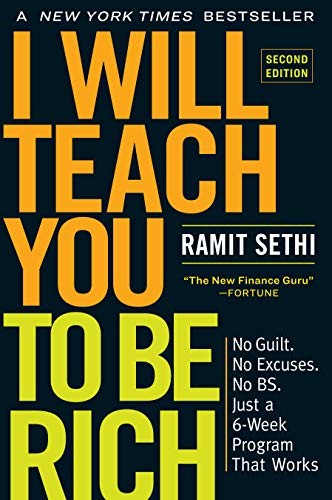
A lower rate on your most expensive debt helps right away. Ramit Sethi's I Will Teach You to Be Rich has a script for asking your card company for one.
I Will Teach You to Be Rich

by Ramit Sethi
I Will Teach You to Be Rich by Ramit Sethi offers a no-BS, practical guide to automating your finances, saving smarter, negotiating bills, and investing without obsessing over every dollar.
I may earn a commission if you make a purchase, at no additional cost to you.
Find extra money each month
Every $100 you add moves your date closer. The side hustle quiz and remote jobs are two places to look for it.
Stop adding new debt
A plan only works if the balances stop growing. Pay cards in full each month while you work through the rest.
Mistakes to avoid
These are the ways a payoff plan stalls.
- Paying only the minimums on every debt
- Spreading extra money across all debts instead of one
- Lowering your payment when a debt is gone, instead of rolling it into the next
- Leaving a card open with new spending on it
- Skipping an emergency fund, so the first surprise goes back on a card
Keep a small cash buffer, then put every extra dollar on your target debt.
Live below your means
The point of being debt-free is the freedom on the other side.
You basically, once you make a little bit of money, you still want to be living like your old self, so that just the worry goes away.
Once the debts are gone, keep paying the same amount into savings. The compound interest calculator shows what that becomes.
Who is the debt payoff calculator for?
It's for anyone with more than one debt and a plan to clear them, and these tools help on the way.
- Loan calculator – for seeing the real cost of a single loan
- Net worth calculator – for watching your net worth rise as debts fall
- Mortgage payoff calculator – for the biggest debt, once the rest are gone
- Side hustle quiz – for finding the extra money that speeds it all up
- Card fees abroad calculator – for not adding fees when you spend abroad
Make your plan here, and come back each month to update the balances.
More money calculators
Your currency and scene come with you to each one.
| Calculator | What it answers |
|---|---|
| Loan calculator | What does a loan really cost? |
| Net worth calculator | Where do I stand today? |
| Mortgage payoff calculator | How soon can my home be mine? |
| Compound interest calculator | What happens when I invest instead? |
When the last debt is gone, the compound interest calculator is where the same payment starts working for you.
Plan your money with your AI
Take your numbers further in





Debt Payoff Calculator FAQs
Questions about the debt payoff calculator? Here's what to know.
A debt payoff calculator plans how to pay off several debts from one monthly budget.
This free one shows your debt-free date with the avalanche and the snowball side by side.
You pay every minimum, then put everything else on the debt with the highest interest rate.
It costs the least interest of any order.
You pay every minimum, then put everything else on the smallest balance.
You clear your first debt sooner, which helps you keep going.
The avalanche saves more interest, and the snowball gives quicker wins.
Pick the one you'll stick with, and the calculator shows what each costs.
Add each month's interest to each debt, pay the minimums, put the rest on your target debt, and repeat until every balance is zero.
The calculator does it month by month.
The calculator flags it, because some debt will fall behind.
Raise the budget to at least the minimums, or talk to your lenders.
When one debt is paid off, its payment moves to the next debt instead of going back into your spending.
That's what makes each debt fall faster.
Paying off a debt earns its interest rate, with no risk.
High-rate debt like a credit card is almost always worth clearing first.
You can, but it usually has the lowest rate and the longest term.
You can plan your other debts here first and use the mortgage payoff calculator for the home.
Yes, download every month's balances as a CSV, save the plan as a page or a PDF, or copy a link that opens the same plan.
Yes, it's free with no login.
Your debts stay in this browser.
I did.
I'm Navid Moazzez, and I made the debt payoff calculator as one of my free tools on navid.me.
More about me.
Navid Moazzez
AI business strategist & AI OS builder
Navid Moazzez helps creators and founders master AI and build their own AI Operating System (AI OS) to automate their business and life.
Navid.me is reader-supported. When you buy through links on this site, I may earn an affiliate commission. Learn more.
Related calculators


More free tools

 X
X Bluesky
 LinkedIn
 Threads

 Mastodon
 Instagram
 TikTok
 Pinterest
 YouTube


Related MCP servers & CLIs


 Substack


 Apple Podcasts
 Free AI newsletter
The most actionable AI newsletter for founders
Every week, get proven AI strategies, curated tools, and step-by-step systems to grow your audience, create better content, and build a profitable creator business.
No fluff, no filler, no BS. Just five minutes each week that might level up your online business and life.
P.S. Sign up now to get free access to my ultimate AI tools guide for creators.