
Choosing the right ecommerce platform decides how you sell, what each sale costs, and where your buyers find you, now including AI chats. In this guide, I ranked and reviewed the 18 best ecommerce platforms, along with my top 5 picks, so you can pick the one that fits your store.
 ShopifyFrom $29 a month billed yearly, after 3 days free
A complete store that sells online, in person and in AI chats, with $1.1 trillion in sales on it.
 FourthwallFree plan, or $15 a month
Merch printed and shipped for you, with nothing upfront, and an API for your own store.
 BigCommerceFrom $29 a month billed yearly, after 15 days free
Plans that grow with your sales, B2B tools and a 15-day trial with no card.
 WooCommerceFree, plus hosting and extensions
A free, open-source store on your own WordPress site, with no platform fee.
 WixFrom $29 a month billed yearly
An AI website builder with a store, bookings and a blog, and no code.
How do you choose between the best ecommerce platforms to launch your online store and sell products online? In 2026, the answer has changed: your store has to sell on your site, on social, in person and now in AI chats like ChatGPT.
I've sold online for over a decade: courses, virtual summits and memberships. Today I sell my merch through Fourthwall, on a store I built on its API, and my digital products through a store I built myself.
I went back through every one this week, and wrote up what each does well, where it falls short, and what it really costs.
In this guide, I'll show you:
- All 18 ecommerce platforms I reviewed, each with who it's for, key features, pros, cons and pricing
- The ecommerce stats that matter in 2026
- How people sell online in 2026, from your own store to AI chats
- The kinds of ecommerce platforms, and how to choose one
- Where to sell digital products instead
- The best free ecommerce platforms
- What I use today
Every price here is from each platform's own pages, read on October 3, 2026.
 TL;DR
TL;DRKey takeaways
The best ecommerce platforms
Here's every platform I reviewed, with what each is best for and what it costs to start. Each name opens its site in a new tab:
- Best for
- A complete store
- Price
- $29 a month, billed yearly
- Free to try
- 3 days free
- Best for
- Creator merch
- Price
- Free, or $15 a month
- Free to try
- Free plan
- Best for
- B2B and growing brands
- Price
- $29 a month, billed yearly
- Free to try
- 15-day free trial
- Best for
- A store on WordPress
- Price
- Free, plus hosting
- Free to try
- Free
- Best for
- Beginners
- Price
- $29 a month, billed yearly
- Free to try
- Free plan
- Best for
- Creatives
- Price
- $19 a month, billed yearly
- Free to try
- 14-day free trial
- Best for
- A store with a CRM
- Price
- $97 a month
- Free to try
- 14-day free trial
- Best for
- Selling in person too
- Price
- Free, or $49 a month
- Free to try
- Free plan
- Best for
- Adding a store to any site
- Price
- $29 a month, billed yearly
- Free to try
- Free plan
- Best for
- Designers
- Price
- $29 a month, billed yearly
- Free to try
- Free to start
- Best for
- A small budget
- Price
- $3.99 a month, 48 months
- Free to try
- 30-day money-back
- Best for
- Artists and makers
- Price
- $15 a month
- Free to try
- Free plan
- Best for
- Creators
- Price
- $22 a month, billed yearly
- Free to try
- 14-day free trial
- Best for
- A light WordPress store
- Price
- $199 a year
- Free to try
- Free plan
- Best for
- Developers
- Price
- Free, or $29 a month
- Free to try
- Free to host
- Best for
- A flat monthly price
- Price
- $41 a month
- Free to try
- No free trial
- Best for
- Small catalogs
- Price
- $35 a month
- Free to try
- 14-day free trial
- Best for
- Enterprise
- Price
- By quote
- Free to try
- Demo
1. Shopify
The best ecommerce platform overall
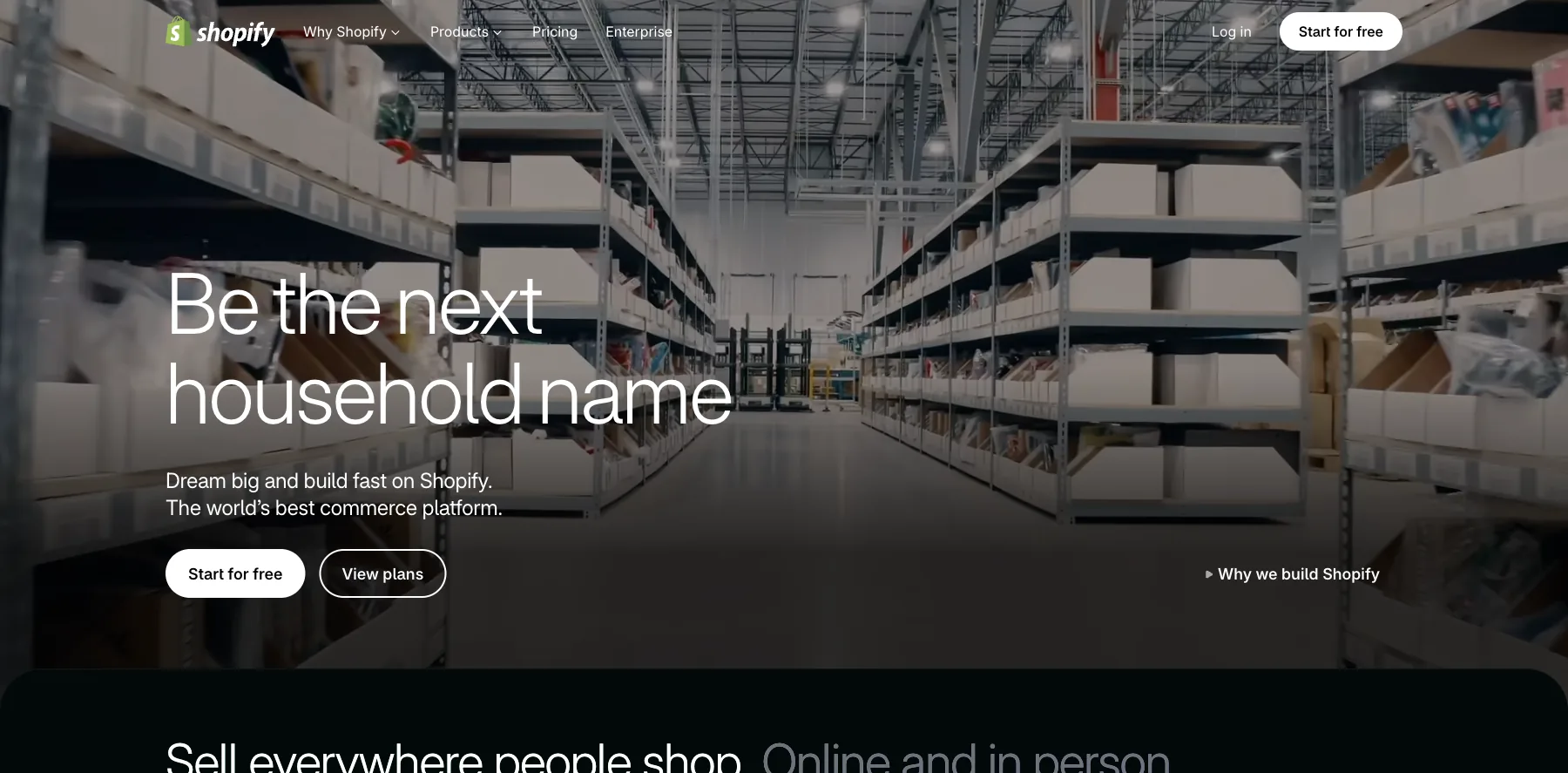
Shopify is the most complete store you can rent: an online store with its own checkout, themes, inventory, shipping and a point of sale for selling in person. Merchants have made $1.1 trillion in sales on it, and someone makes their first sale on Shopify every 26 seconds, it says.
It's also built for how people shop in 2026. Every plan sells online, in person and in AI chats, and Sidekick, its AI assistant, helps you run the store.
Shopify takes no cut when you use Shopify Payments, whose card rates start at 2.9% + $0.30 on Basic and fall on higher plans. With another payment provider, it adds a transaction fee.
Who is Shopify for?
Shopify is for anyone whose business is mainly a store, from a first product to a brand selling in stores, online and on social.
Key features
- An online store with its own checkout
- Selling in AI chats, online and in person from one admin
- Sidekick, an AI assistant for the store
- Themes, plus apps from the Shopify App Store
- Orders, inventory and shipping, with up to 87% off shipping from Grow
- Point of sale for selling in person, with POS Pro at $89 a month per location
- B2B catalogs and a fully customizable checkout, on Plus
Pros
- The most complete store of any platform here
- No transaction fee with Shopify Payments
- 3 days free, then $1 a month for 3 months
- No setup fees on any plan
Cons
- Starts at $39 a month, or $29 billed yearly
- Many features come through paid apps
- A transaction fee with another payment provider
Pricing
Shopify has four plans, from its pricing page as read on October 3, 2026, billed yearly:
- Basic – $29 a month, or $39 billed monthly, with card rates from 2.9% + $0.30.
- Grow – $79 a month, with card rates from 2.7% + $0.30 and five staff accounts.
- Advanced – $299 a month, with card rates from 2.5% + $0.30 and 15 staff accounts.
- Plus – from $2,300 a month, with card rates from 2.25% + $0.30 and unlimited B2B catalogs.
A complete store that sells online, in person and in AI chats, with $1.1 trillion in sales on it.
2. Fourthwall
The best ecommerce platform for creator merch

Fourthwall is a store for creators: merch it prints and ships for you, digital products and memberships, from a branded shop with no upfront costs. I use it for my merch.
You pick products from its catalog, each with a flat cost listed up front, and set your own price. Fourthwall takes the cost out of each sale and you keep the rest, with no extra percentage. Products you make yourself carry no fee.
Its Storefront API goes a step further. You can build your own store on your own site and design, and Fourthwall still handles the products, the checkout, payment, printing and shipping. That's what I do on navid.store.
Who is Fourthwall for?
Fourthwall is for creators who want to sell merch, with nothing to buy upfront and nothing to ship themselves.
Key features
- Print-on-demand merch from a catalog, printed and shipped for you
- Your own products next to theirs, which it can ship for you too
- Digital products and memberships
- Your products on YouTube's merch shelf, Instagram Shopping and TikTok Shopping
- A Storefront API, to build your own store on your own site
- Your own domain, and a free .store domain on Pro
Pros
- A free plan, with no upfront costs
- No percentage on catalog merch, only its flat cost
- A custom store of your own through the API
Cons
- The API needs a developer, or an AI coding tool like Claude Code
- 5% of digital product sales on the free plan
- Memberships keep 5% on both plans
Pricing
Fourthwall has a free plan and Pro, from its pricing page as read on October 3, 2026:
- Free – $0, with 5% on digital products and 5 GB of storage.
- Pro – $15 a month, or $48 less a year billed yearly, with 0% on digital products, 100 GB and $10 of shop credit a month.
- Card processing – 2.9% + $0.30 on US cards, on both plans.
Merch printed and shipped for you, with nothing upfront, and an API for your own store.
3. BigCommerce
The best ecommerce software for B2B and growing brands
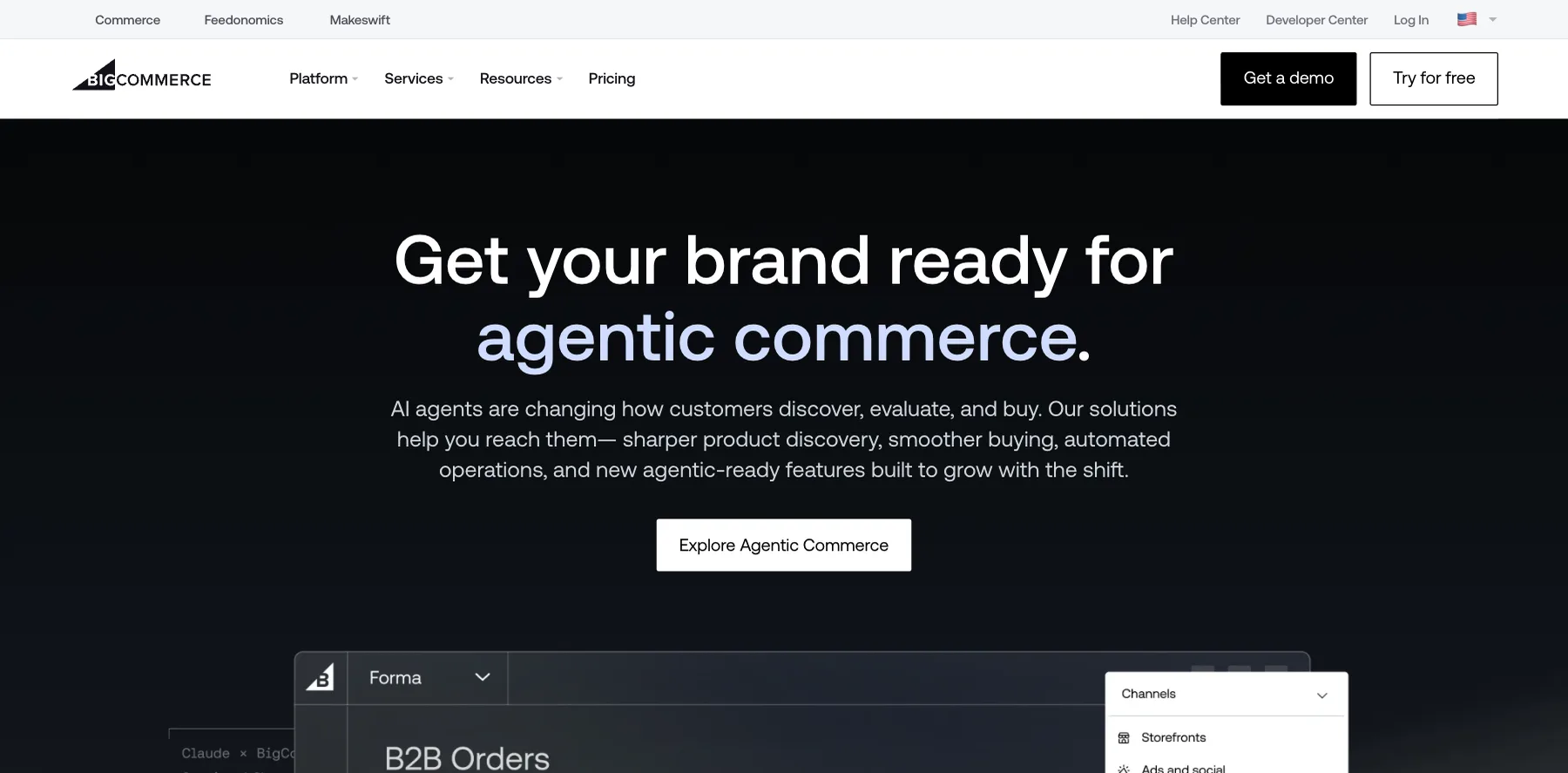
BigCommerce is a hosted store built to grow into: its plans go by your yearly sales, and its higher tiers add B2B ordering for selling to other businesses.
Its home page now leads with getting your brand ready for agentic commerce, the shopping that AI agents do for people.
The catch is the payment fee. On Core and Growth, orders through what BigCommerce calls Open Payment Providers carry a fee of 2% and 1% of the order. Orders through its embedded payment providers carry none.
Who is BigCommerce for?
BigCommerce is for growing brands and B2B sellers with large catalogs, who want a store that scales without moving platforms.
Key features
- A hosted store with plans by yearly sales
- B2B ordering for selling to other businesses
- Tools for agentic commerce, where AI agents shop for people
- Embedded payment providers with no extra fee
- Enterprise plans for $1 million and more in yearly sales
Pros
- A 15-day free trial, with no credit card needed
- 25% off billed yearly
- Room to grow from a first store to enterprise
Pricing
BigCommerce has four plans, with a 15-day free trial, from its pricing page as read on October 3, 2026:
- Core – $39 a month, or $29 billed yearly, for up to $30,000 in yearly sales.
- Growth – $105 a month, or $79 billed yearly, for up to $100,000.
- Scale – $299 a month billed yearly, for about $1 million a year, with 0.9% on sales above its cap.
- Enterprise – from $1,499 a month billed yearly, for $1 million and more.
Plans that grow with your sales, B2B tools and a 15-day trial with no card.
4. WooCommerce
The best ecommerce platform for WordPress
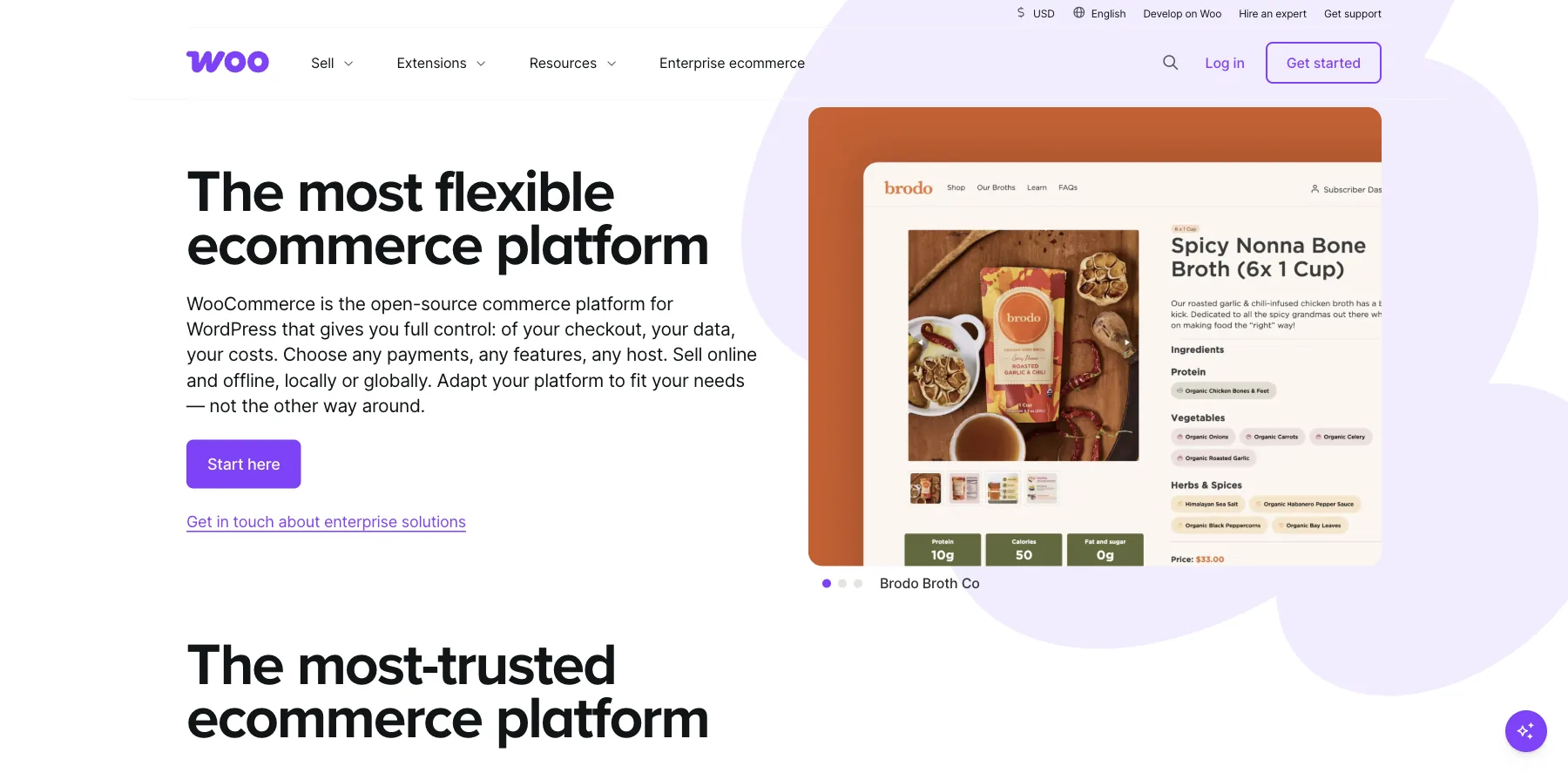
WooCommerce is the free, open-source store for WordPress: you install it on your own site and own your store, your checkout and your data.
It charges no platform fee and no cut of your sales. What you pay for is everything around it: hosting, usually $25 to $350 a month for most stores, and paid extensions at $29 to $299 a year each, it says.
WooPayments, its own payments, charges about 2.9% + $0.30 a sale on US cards, and you can use Stripe, PayPal or almost any other provider instead.
Who is WooCommerce for?
WooCommerce is for anyone who runs WordPress, or wants to, and would rather own their store than rent it.
Key features
- A free store plugin for WordPress
- Unlimited products, orders and APIs
- Physical products, downloads, subscriptions and memberships
- Any payment provider, including WooPayments, Stripe and PayPal
- Selling in unlimited markets, with no fee for each one
- Extensions for almost anything
Pros
- Free, and open source
- No platform fee and no cut of your sales
- Your store and your data on your own site
Cons
- Hosting, updates and security are yours to run
- Paid extensions add up
- More setup than a hosted store
Pricing
WooCommerce is free, from its pricing page as read on October 3, 2026. These are the costs around it:
- WooCommerce – free, with no platform fee.
- Hosting – $25 to $350 a month for most stores, it says.
- Extensions – $29 to $299 a year each.
- WooPayments – about 2.9% + $0.30 a sale on US cards.
A free, open-source store on your own WordPress site, with no platform fee.
5. Wix
The best ecommerce website builder for beginners
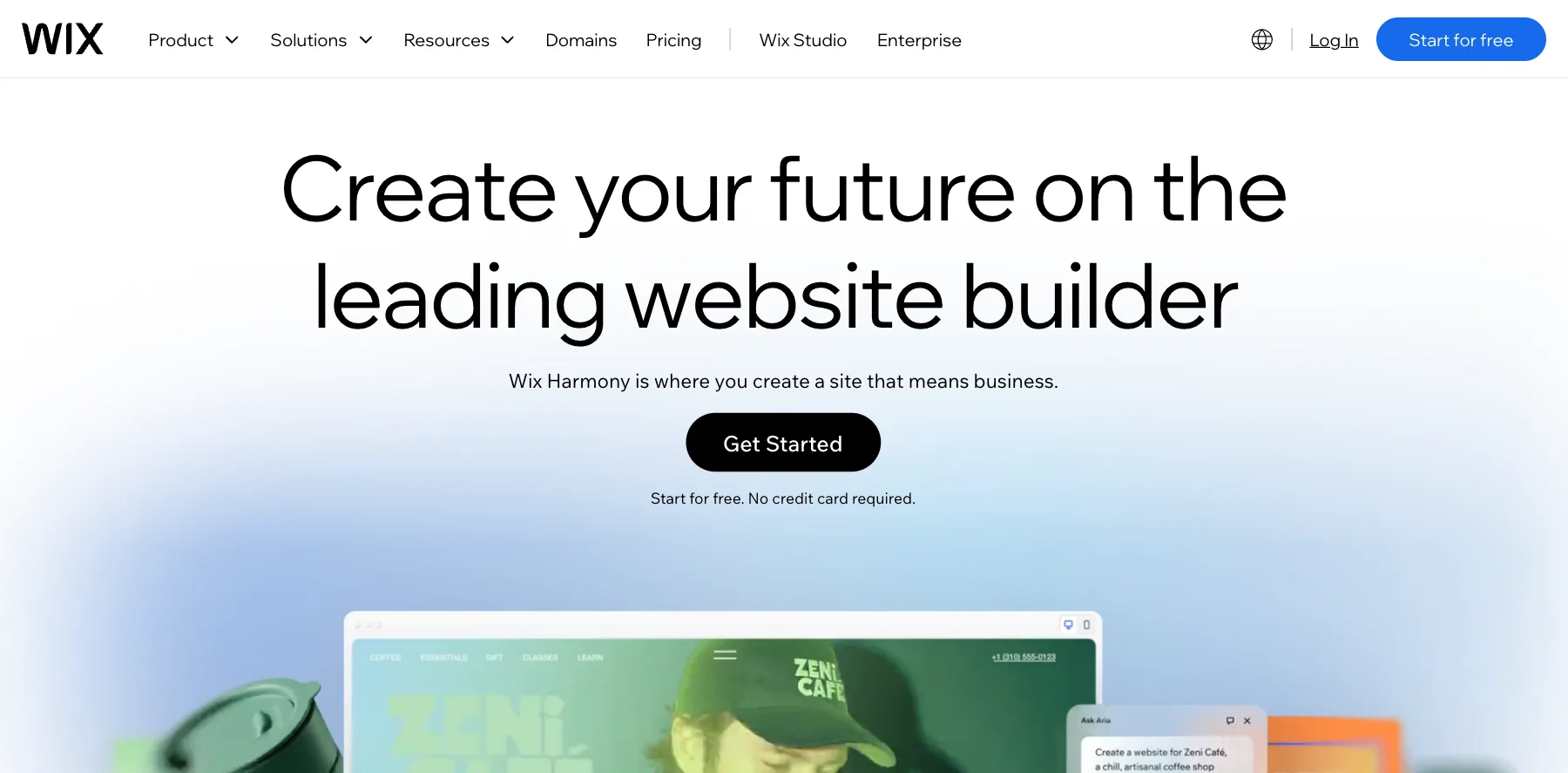
Wix is a website builder with a store built in. You can start from a single prompt and let its AI build the site, then change any detail in its drag-and-drop editor, or start from one of thousands of templates.
A store starts on Core: you accept payments and sell from your own site, and the higher plans add a standard and then an advanced store, with selling on marketplaces.
Square now syncs a Wix store with a Square catalog too, so inventory, orders and discounts stay the same online and in person.
Who is Wix for?
Wix is for beginners and small businesses who want a good-looking store fast, with bookings or a blog next to it, and no code.
Key features
- An AI website builder that starts from a single prompt
- A drag-and-drop editor and thousands of templates
- A store: basic on Core, standard on Business, advanced on Business Elite
- Selling on marketplaces
- Bookings, events and a blog
- Your own domain, free for the first year
Pros
- The easiest start of any platform here
- A store, bookings and a blog without plugins
- A 14-day money-back guarantee
Cons
- A store starts on Core, at $29 a month billed yearly
- The free and Light plans can't take payments
- Moving your store off Wix later is hard
Pricing
Wix has a free plan and four paid ones, billed yearly, each with a 14-day money-back guarantee, from its plans page as read on October 3, 2026:
- Light – $17 a month, with your own domain, but no payments.
- Core – $29 a month, adding payments and a basic store.
- Business – $39 a month, with a standard store.
- Business Elite – $159 a month, with an advanced store and unlimited storage.
An AI website builder with a store, bookings and a blog, and no code.
6. Squarespace
The best online store builder for creatives
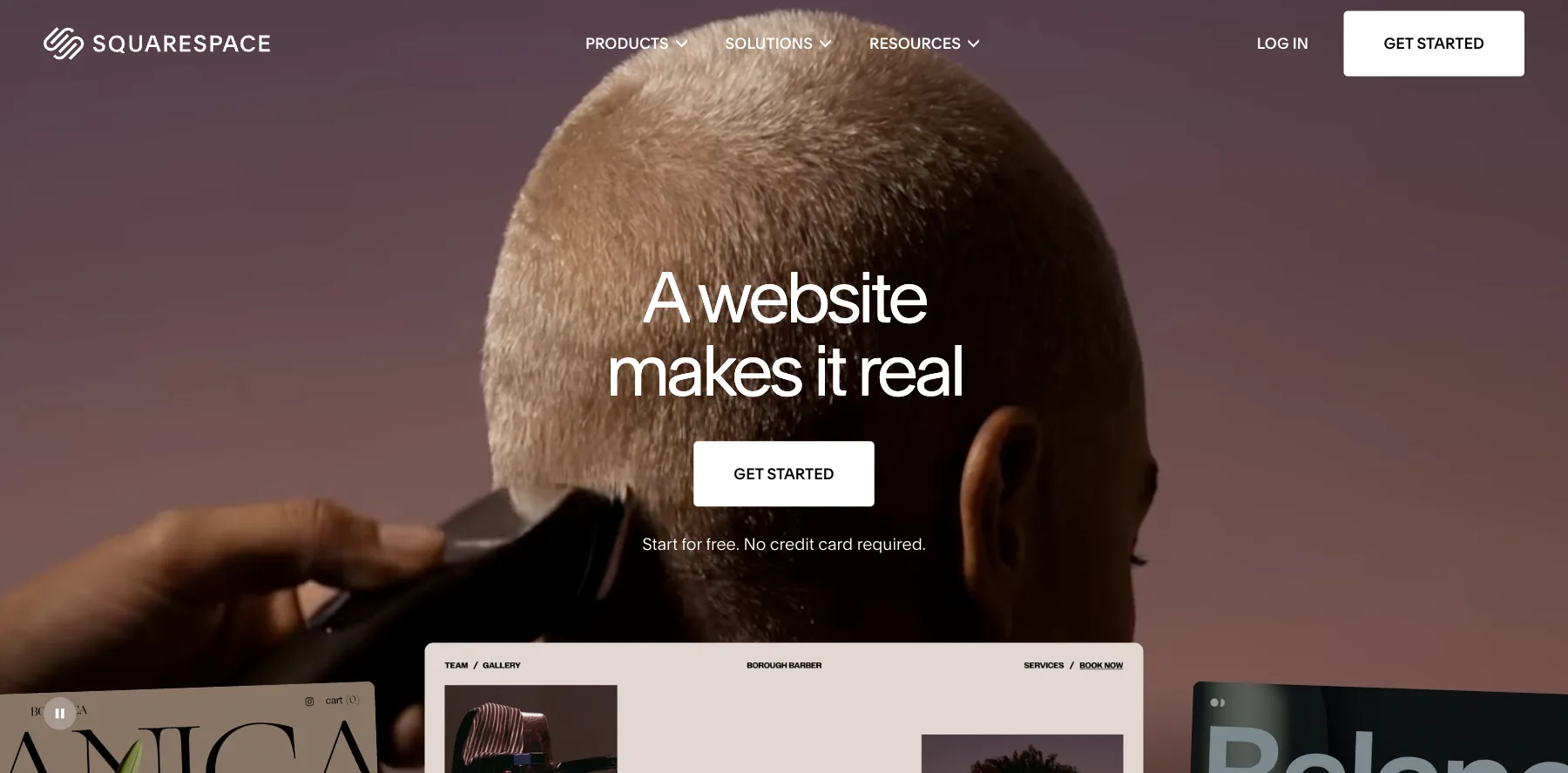
Squarespace is the website builder known for its templates: stores for creatives, makers and small brands that look polished from the start.
What its first plan keeps from your sales is the catch. Basic takes 2% of store sales and 7% of digital content and memberships. From Core, the store fee is 0%.
It also calculates sales tax for over 100 countries, for 0.15% of an order, at most $0.99.
Who is Squarespace for?
Squarespace is for creatives, photographers and small brands who care most about how their store looks.
Key features
- Templates that look designed, for every kind of store
- Card rates from 2.9% + $0.30 with Squarespace Payments, and 2.7% + $0.30 on Plus
- Shipping labels and real-time carrier rates
- Automatic sales tax for over 100 countries
- Digital content, courses and memberships
Pros
- Templates that look good with little work
- A 14-day free trial
- 0% store fees from Core
- Up to 36% off billed yearly
Cons
- Basic keeps 2% of store sales and 7% of memberships
- Fewer store features than Shopify or BigCommerce
- No free plan
Pricing
Squarespace has four plans, with a 14-day free trial, from its pricing page as read on October 3, 2026:
- Basic – $25 a month, or $19 billed yearly, with a 2% store fee.
- Core – $39 a month, or $29 billed yearly, with no store fee.
- Plus – $65 a month, or $49 billed yearly, with card rates from 2.7% + $0.30.
- Advanced – $139 a month, or $99 billed yearly.

Templates that look designed, with a store and 0% store fees from Core.
I may earn a commission if you make a purchase, at no additional cost to you.
7. HighLevel
The best ecommerce software with a built-in CRM
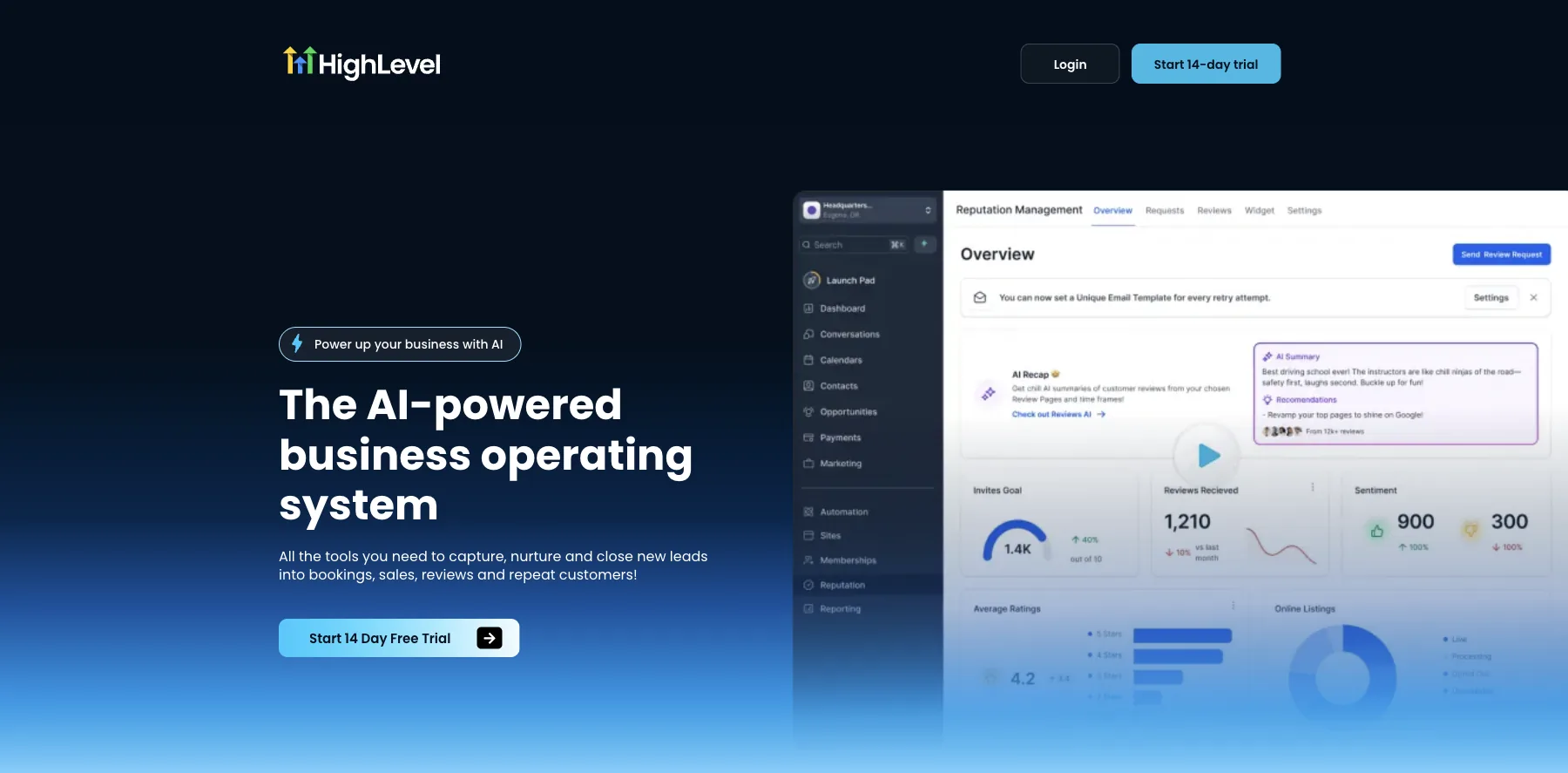
HighLevel is an all-in-one platform for marketing and selling, and its store builder sells unlimited products from a template you customize, with no code.
Each sale comes with the follow-up behind it: the contact in its CRM, abandoned cart reminders, the emails and texts, and the next offer. Buyers can pay with Affirm, Klarna and Afterpay at checkout.
It takes no cut of your sales, with payments through Stripe, PayPal, NMI and others. Every plan has unlimited contacts and users, and phone, SMS, email and AI are charged as you use them.
Who is HighLevel for?
HighLevel is for businesses and agencies that want their store, CRM, email, SMS and bookings in one account.
Key features
- A store builder with unlimited products
- Inventory management
- Affirm, Klarna and Afterpay at checkout
- Abandoned cart reminders and workflow automation
- A CRM, email and SMS behind every sale
- One-click upsell funnels
Pros
- No cut of your sales
- The store and the follow-up in one place
- A 14-day free trial, month to month
Cons
- Starts at $97 a month, more than a store on its own
- Phone, SMS, email and AI are charged by use
- Its plans are built around sub-accounts, the way an agency works
Pricing
HighLevel has three plans, each with a 14-day free trial, from its pricing and store pages as read on October 3, 2026:
- Starter – $97 a month, or $970 a year, with three sub-accounts.
- Unlimited – $297 a month, or $2,970 a year, with unlimited sub-accounts.
- Agency Pro – $497 a month, or $4,970 a year, with SaaS mode.

A store with unlimited products and the CRM, email and SMS behind every sale.
I may earn a commission if you make a purchase, at no additional cost to you.
8. Square Online
The best ecommerce platform for in-person sellers
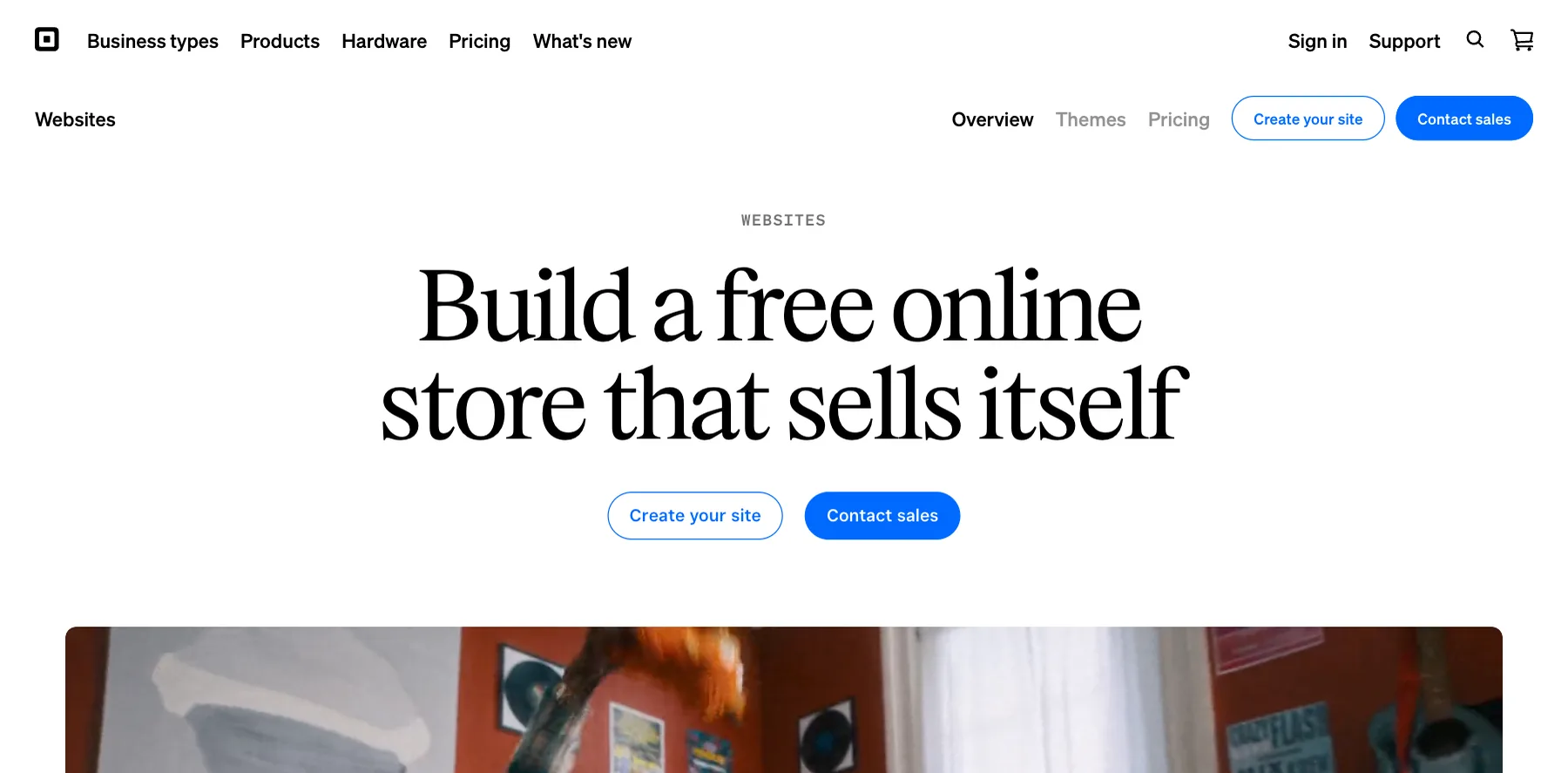
Square Online is the free online store that comes with every Square account, built for businesses that also sell in person. Square also owns Weebly, which still runs as a separate website builder.
Your store shares one catalog with your Square point of sale, so items, inventory and orders stay in sync, and it handles pickup, local delivery and shipping.
The free plan has no monthly fee, but its online card rate is 3.3% + $0.30. Square Plus, at $49 a month per location, brings it down to 2.9% + $0.30.
Who is Square Online for?
Square Online is for shops, cafes and restaurants that sell in person and want an online store on the same system.
Key features
- A free online store on every Square plan
- One catalog with your Square point of sale
- Pickup, local delivery and shipping labels
- Abandoned cart emails and product reviews
- Four interest-free installments for buyers, paid to you upfront
- A sync for Wix stores with your Square catalog
Pros
- A free plan, with no monthly fee
- Online and in person on one system
- A 30-day free trial of Square Plus
Cons
- 3.3% + $0.30 on online sales on the free plan
- Fewer store designs than Shopify or Squarespace
- Built around in-person selling first
Pricing
Square has three plans, from its online store plans page and its pricing announcement as read on October 3, 2026:
- Free – $0, with an online card rate of 3.3% + $0.30.
- Plus – $49 a month per location, with 2.9% + $0.30 online, after a 30-day free trial.
- Premium – $149 a month per location, with every Square tool and its lowest processing rate.
A free online store on one catalog with your Square point of sale.
9. Ecwid
The best ecommerce solution to add a store to any site
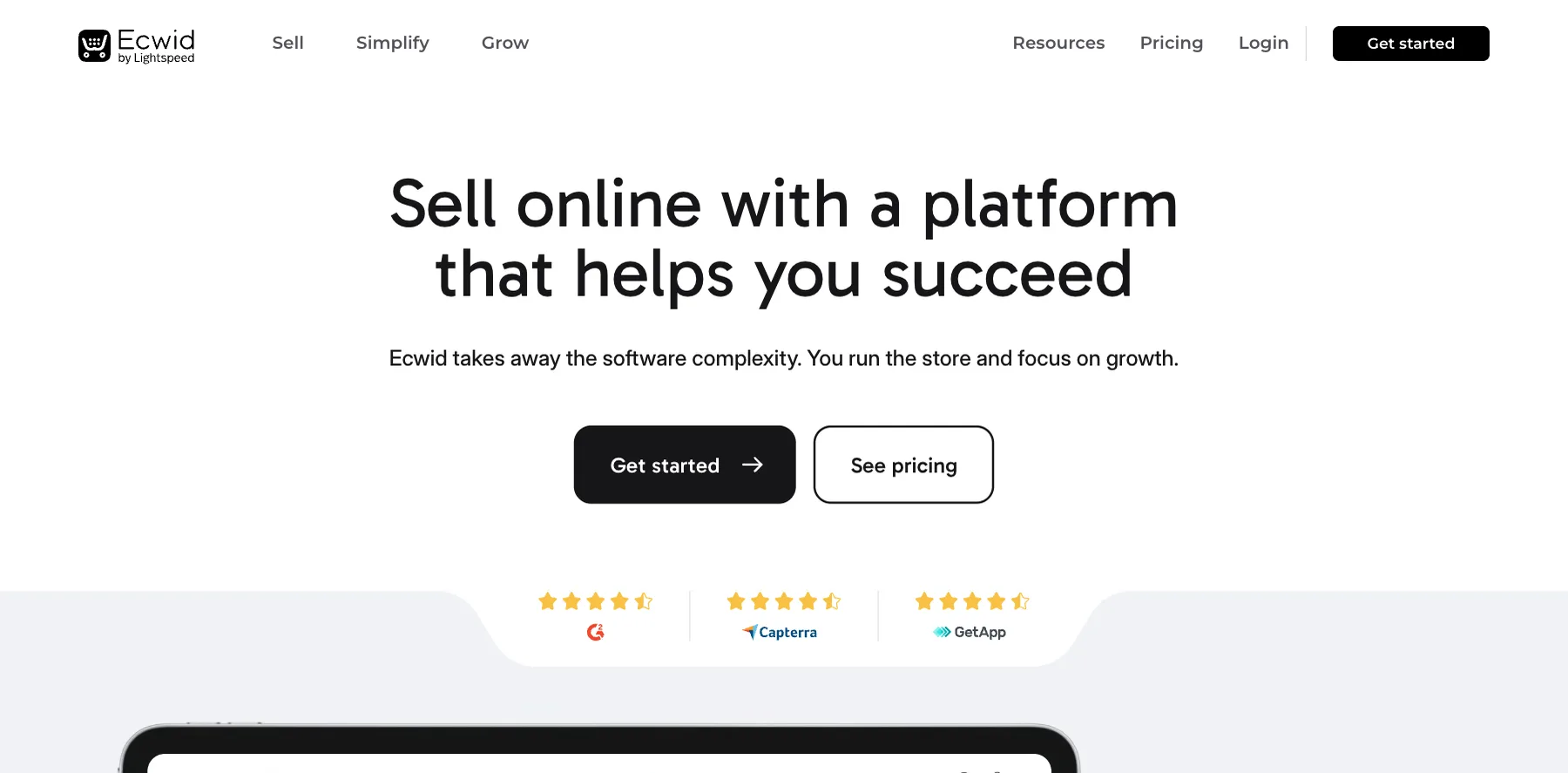
Ecwid, by Lightspeed, is a store you can add to any website you already have, or to several at once, managing every product and order from one account.
It also builds a store site for you from scratch, and syncs your catalog to Facebook, Instagram, Amazon, eBay and Walmart.
Ecwid charges no transaction fees on any plan. Its free Starter plan sells up to ten products, and digital products start on Venture.
Who is Ecwid for?
Ecwid is for anyone who already has a website, on any builder, and wants to add a store to it rather than move.
Key features
- A store you add to any website, or to several at once
- A code-free site builder for a store of its own
- Shops on Facebook and Instagram, with product tags in your posts
- Syncing your catalog with Amazon, eBay and Walmart
- Digital products, from Venture
- A link-in-bio microsite
Pros
- A free plan for up to ten products
- No transaction fees on any plan
- Works with the site you already have
Cons
- Lightspeed Payments and other providers charge their own card fees
- Digital products start on Venture, at $35 a month
- Product limits on every plan but Unlimited
Pricing
Ecwid has a free plan and three paid ones, from its pricing page and its March 2, 2026 price change article as read on October 3, 2026:
- Starter – free, for up to ten products.
- Venture – $35 a month, or $29 billed yearly, for up to 100 products and digital goods.
- Business – $65 a month, or $49 billed yearly, for up to 2,500 products.
- Unlimited – $149 a month, or $119 billed yearly, for unlimited products.

A store you add to the website you have, with no transaction fees.
10. Webflow
The best ecommerce website builder for designers
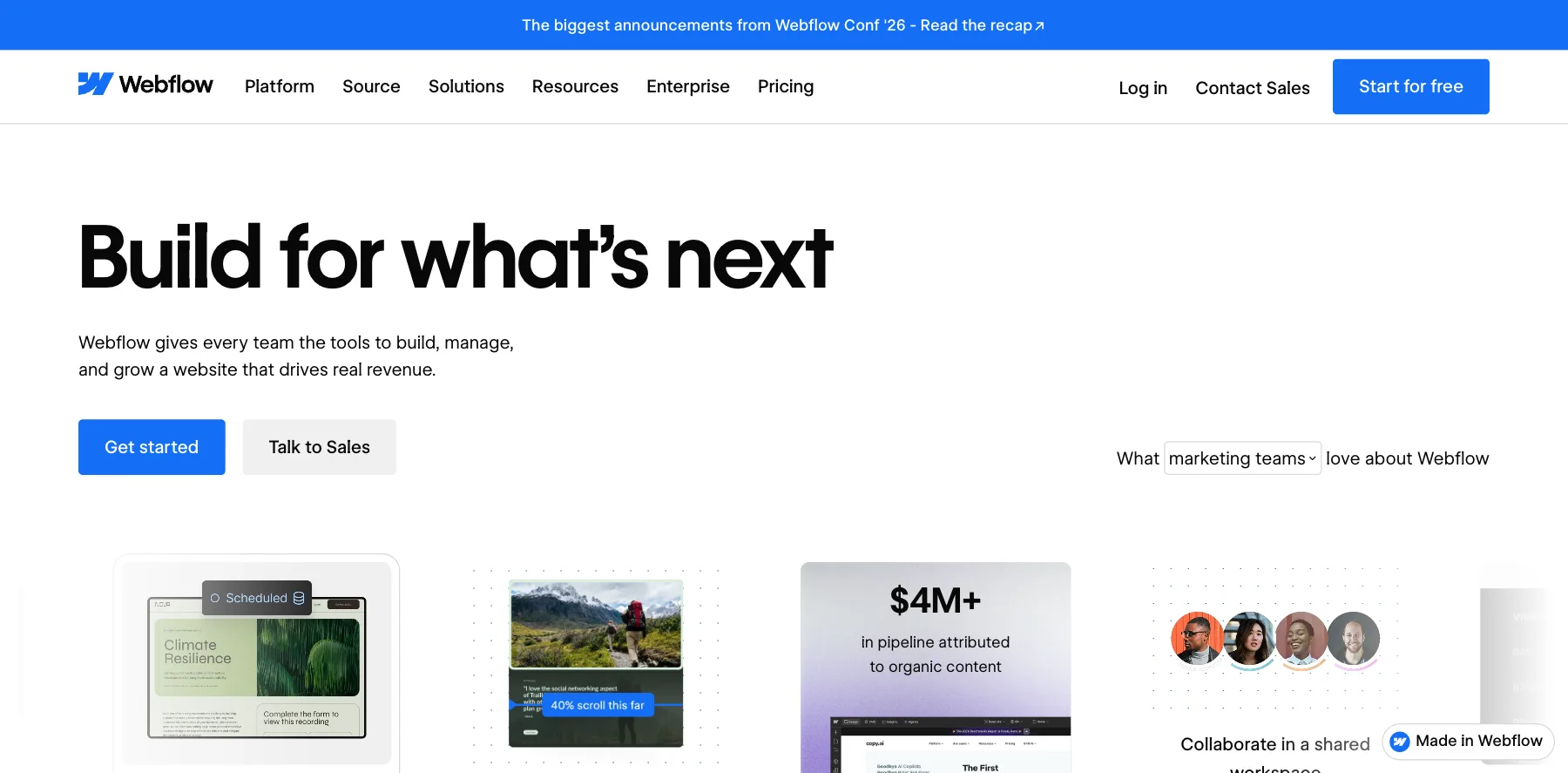
Webflow is the website builder for designers, and its ecommerce plans give you a custom shopping cart and checkout you design down to the last detail, with a CMS and hosting behind it.
Each plan caps your products, which Webflow calls ecommerce items: 500 on Standard, 5,000 on Plus and 15,000 on Advanced. Standard also keeps 2% of each sale.
Who is Webflow for?
Webflow is for designers and design-led brands who want a store that looks exactly like their design.
Key features
- A custom shopping cart and checkout you design
- A visual editor with full control of every element
- A CMS and hosting
- Unbranded emails to buyers, from Plus
Pros
- More design control than any other builder here
- No transaction fee from Plus
- Your products in the same CMS as your content
Cons
- Standard keeps 2% of each sale
- A cap of 500 products on Standard
- More to learn than Wix or Squarespace
Pricing
Webflow has three ecommerce plans, billed yearly, from its pricing page as read on October 3, 2026:
- Standard – $29 a month, with 500 ecommerce items and a 2% transaction fee.
- Plus – $74 a month, with 5,000 items and no transaction fee.
- Advanced – $212 a month, with 15,000 items and no transaction fee.

A custom cart and checkout you design, with a CMS and hosting.
I may earn a commission if you make a purchase, at no additional cost to you.
11. Hostinger AI Website Builder
The best ecommerce platform on a budget
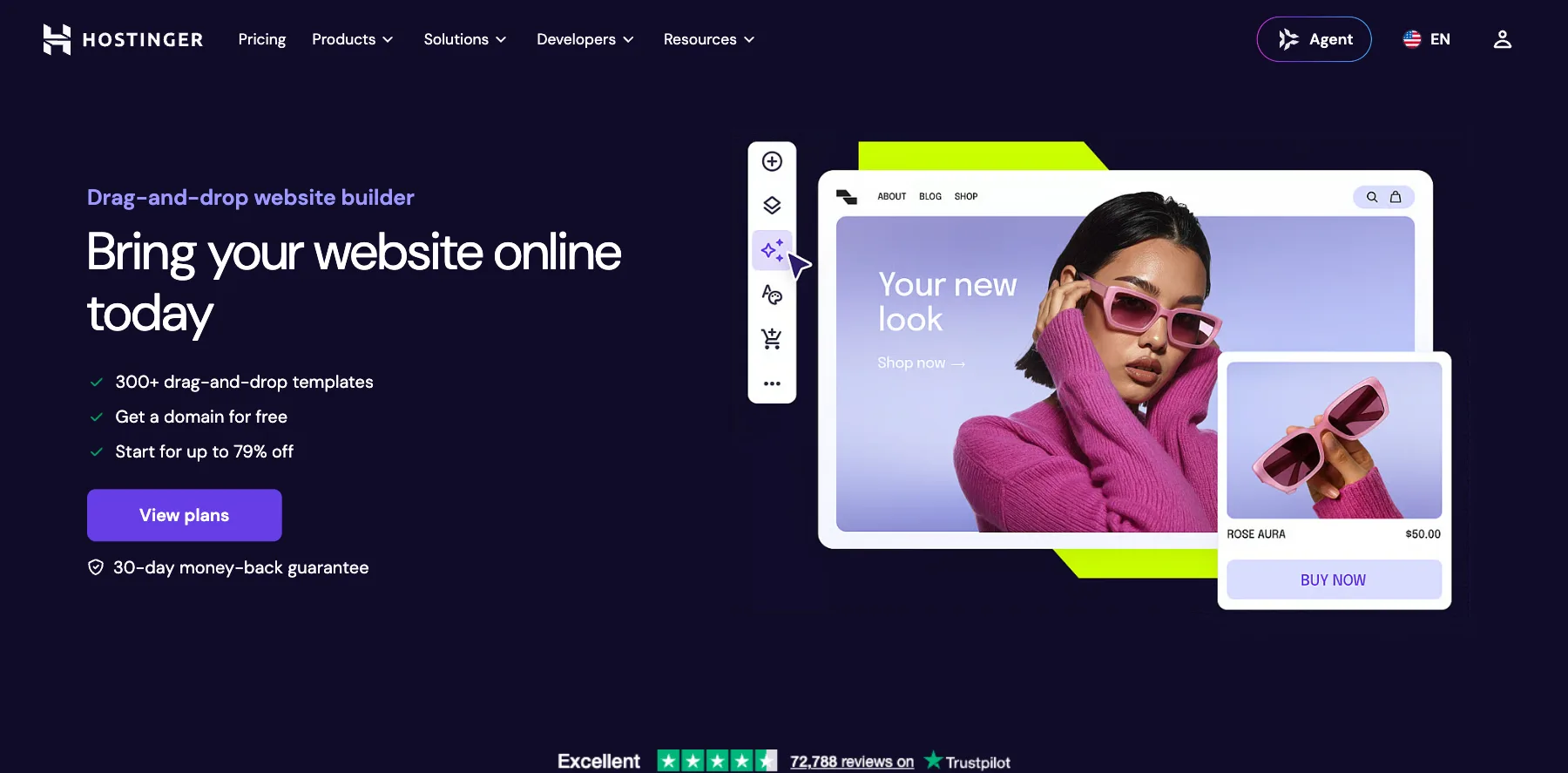
Hostinger AI Website Builder, the builder that used to be called Zyro, builds a store from a short description, which you fine-tune in a drag-and-drop editor. Its AI assistant can build and manage the store for you too.
It sells physical and digital products, print-on-demand and services, with 0% transaction fees. The low prices are for long plans: from $3.99 a month on a 48-month plan, renewing at $16.99 a month.
Who is Hostinger AI Website Builder for?
Hostinger AI Website Builder is for beginners who want a store on a small budget and are happy to pay for years upfront.
Key features
- An AI builder that starts from a short description
- An AI assistant that builds or manages your store
- Physical and digital products, print-on-demand and services
- Hosting and a free domain for the first year
- 400+ templates
Pros
- The lowest price of any store here
- 0% transaction fees
- Hosting and a domain included
Cons
- The low price needs a 48-month plan
- It renews at more than four times the first price
- A store starts on Unlimited, not the cheapest plan
Pricing
Hostinger's builder plans are priced for 48 months, from its website builder page as read on October 3, 2026:
- Premium – $2.99 a month, renewing at $10.99, for up to three websites, without a store.
- Unlimited – $3.99 a month, renewing at $16.99, with ecommerce and unlimited websites.
- Cloud Startup – $7.99 a month, renewing at $25.99, with ecommerce and more speed.

An AI-built store with hosting and a domain, and 0% transaction fees.
I may earn a commission if you make a purchase, at no additional cost to you.
12. Big Cartel
The best online store platform for artists
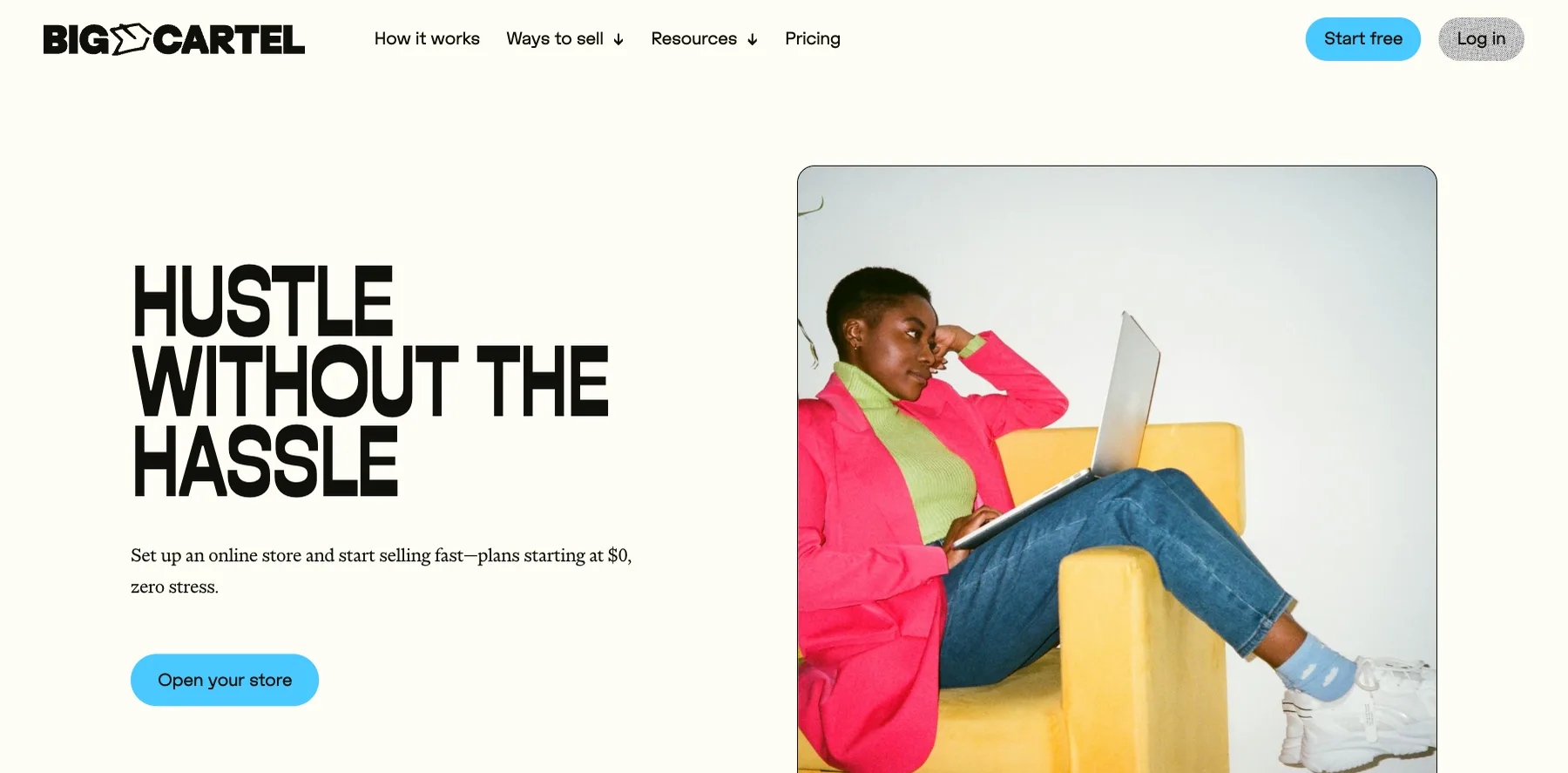
Big Cartel is the simple store for artists and makers: a shop for physical and digital products, with print-on-demand apps, shipping labels and sales tax handled.
It's cheap and plain on purpose. Platinum is $15 a month, and Diamond, at $30, adds abandoned cart recovery, scheduled product drops and password-protected products.
Who is Big Cartel for?
Big Cartel is for artists, makers and small shops who want a simple store at a low, flat price.
Key features
- Physical and digital products
- Print-on-demand and other apps
- Shipping labels, with up to 90% off shipping
- Sales tax on autopilot
- Importing products from Etsy, Squarespace and Shopify
- Selling in person from the mobile app
Pros
- A 7-day free trial, and a free limited plan
- A low, flat price
- Simple to set up
Cons
- Abandoned carts and product drops start on Diamond
- Fewer features than Shopify or BigCommerce
- Built for small shops more than growing brands
Pricing
Big Cartel has a free plan and two paid ones, from its pricing page as read on October 3, 2026:
- Gold – free, with fewer features.
- Platinum – $15 a month, after a 7-day free trial.
- Diamond – $30 a month, adding abandoned carts, product drops and Zapier.

A simple store for artists and makers at a low, flat price.
13. Sellfy
The best simple ecommerce platform for creators
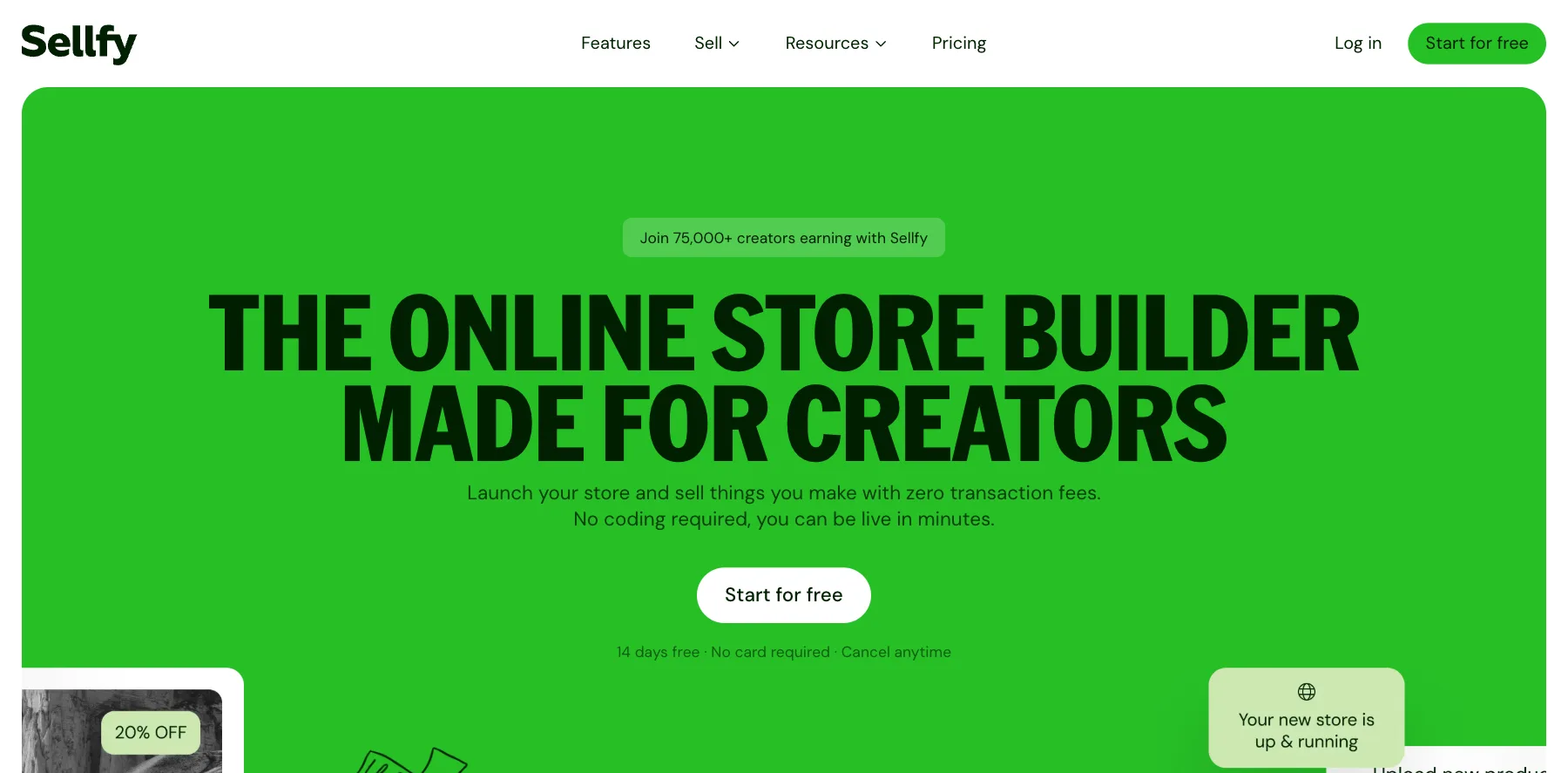
Sellfy is a store builder for creators: digital downloads, subscriptions, print-on-demand merch and physical products, from one store. It says over 75,000 creators earn with it.
It charges no transaction fees. What you pay for is a plan, sized by how much you sell in a year.
Who is Sellfy for?
Sellfy is for creators who want a simple store for downloads and merch, at a flat monthly price.
Key features
- Digital downloads
- Subscriptions
- Print-on-demand merch
- Physical products
- Unlimited products on every plan
Pros
- No transaction fees
- A 14-day free trial, with no card needed
- 25% off billed yearly
Cons
- Each plan caps your yearly sales: $10,000 on Starter
- Starts at $22 a month billed yearly
Pricing
Sellfy has three plans, with a 14-day free trial, from its pricing page as read on October 3, 2026:
- Starter – $29 a month, or $22 billed yearly, for up to $10,000 in sales a year.
- Business – $79 a month, or $59 billed yearly, for up to $50,000.
- Premium – $159 a month, or $119 billed yearly, for up to $200,000.
Downloads, subscriptions and print-on-demand merch, with no transaction fees.
14. SureCart
The best lightweight ecommerce software for WordPress
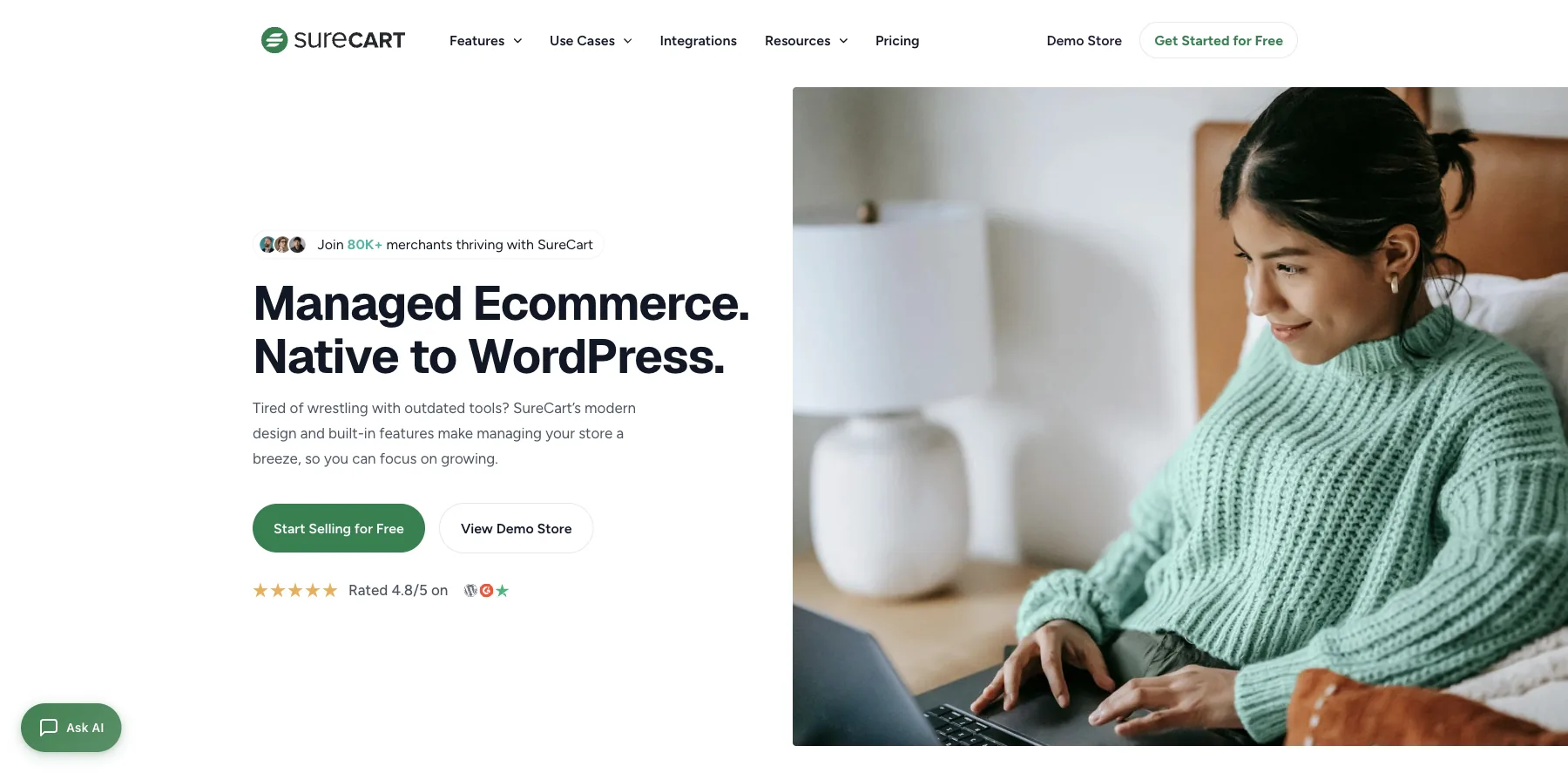
SureCart is a checkout and ecommerce plugin for WordPress, used by over 80,000 merchants, it says.
It sells files, ebooks, courses and templates with secure, instant delivery, plus license keys for software.
Every plan, the free one included, has order bumps, one-click upsells, subscriptions and sales tax, on your own site, without WooCommerce.
The free Launch plan charges a 2.9% transaction fee. Pro, from $199 a year for one store, charges none.
Who is SureCart for?
SureCart is for WordPress site owners who want a lighter store than WooCommerce, with order bumps and upsells built in.
Key features
- A checkout native to WordPress
- Digital downloads with secure, instant delivery, and license keys
- Order bumps and one-click upsells, on every plan
- Subscriptions, free and paid trials, setup fees and a subscription saver
- Automatic sales tax for 40+ countries and every US state, and EU VAT
- Coupons, an affiliate program and a customer portal
- An agency suite to run many stores from one place
Pros
- Order bumps and upsells, even on the free plan
- No transaction fee on Pro
- A lifetime option
- A 14-day money-back guarantee
Cons
- The free plan charges a 2.9% transaction fee
- Card fees on top on every plan
- WordPress and hosting are yours to run
Pricing
SureCart has a free plan and Pro by the number of stores, yearly or once, from its pricing page as read on October 3, 2026:
- Launch – free, with a 2.9% transaction fee.
- Pro, one store – $199 a year, or $699 once.
- Pro, five stores – $299 a year ($249 the first year when I checked), or $1,199 once.
- Pro, unlimited stores – $499 a year ($399 the first year when I checked), or $1,999 once.

A WordPress store with order bumps, one-click upsells and subscriptions on every plan.
15. Medusa
The best open-source ecommerce platform
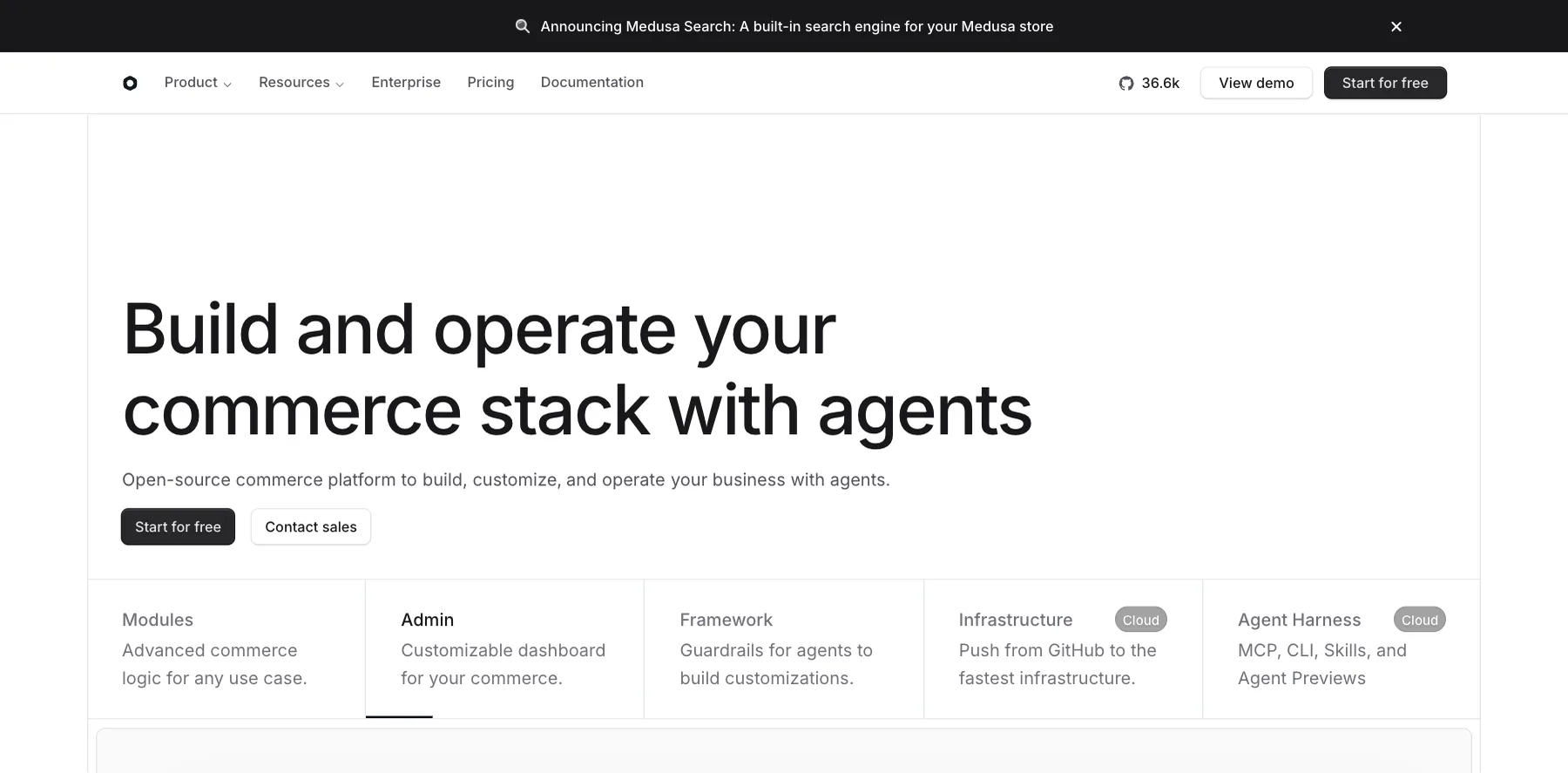
Medusa is an open-source commerce platform for developers: the store's backend, which you put your own storefront in front of, built with AI agents in mind. Its code has over 36,500 stars on GitHub.
You can host it yourself for free, or let Medusa Cloud host it, from $29 a month. Either way, it takes no cut of your sales.
Who is Medusa for?
Medusa is for developers and teams building a custom store, who want a backend they own and can change.
Key features
- An open-source commerce backend
- Any storefront you build in front of it
- Medusa MCP and a Cloud CLI, for working with AI agents
- Deploys from GitHub on Medusa Cloud
- Search and emails built into Medusa Cloud
Pros
- Free to host yourself
- 0% platform fee on your sales
- Your own backend, with no lock-in
Cons
- Needs a developer, or an AI coding tool
- You build the storefront yourself
- Medusa Cloud adds usage fees above each plan
Pricing
Medusa is free to host yourself, and Medusa Cloud has three plans and Enterprise, from its pricing page as read on October 3, 2026:
- Develop – from $29 a month.
- Launch – from $99 a month, with autoscaling and backups.
- Scale – from $299 a month, with background workers and priority support.
- Enterprise – custom, with an SLA and SSO.

An open-source commerce backend for a store you build yourself.
16. Shift4Shop
The best ecommerce software at a flat price

Shift4Shop, formerly 3dcart, is a hosted store with hundreds of features built in, from SEO and email marketing to inventory and fraud protection, for one flat price.
Its plan costs $41 a month, with PayPal's card processing built in and no setup or transaction fees. It says its merchants process over $200 billion a year.
Who is Shift4Shop for?
Shift4Shop is for sellers who want a full-featured store at a flat monthly price, without paying for apps.
Key features
- Hundreds of features built in, with no apps to buy
- 100+ free themes, with HTML and CSS editing
- Card payments through PayPal
- Fraud protection by Kount
- A free domain and SSL certificate
Pros
- One flat price, with no setup or transaction fees
- A free domain, renewed every year
- Many features without paid apps
Cons
- Payments run through PayPal's processing
- Its themes look dated next to Shopify's or Squarespace's
- A smaller app ecosystem
Pricing
Shift4Shop has one plan, from its pricing page as read on October 3, 2026:
- End-to-End – $41 a month, with no setup or transaction fees, plus your payment processor's fees.

A hosted store with hundreds of features built in and no transaction fees.
17. Volusion
The best ecommerce platform for small catalogs
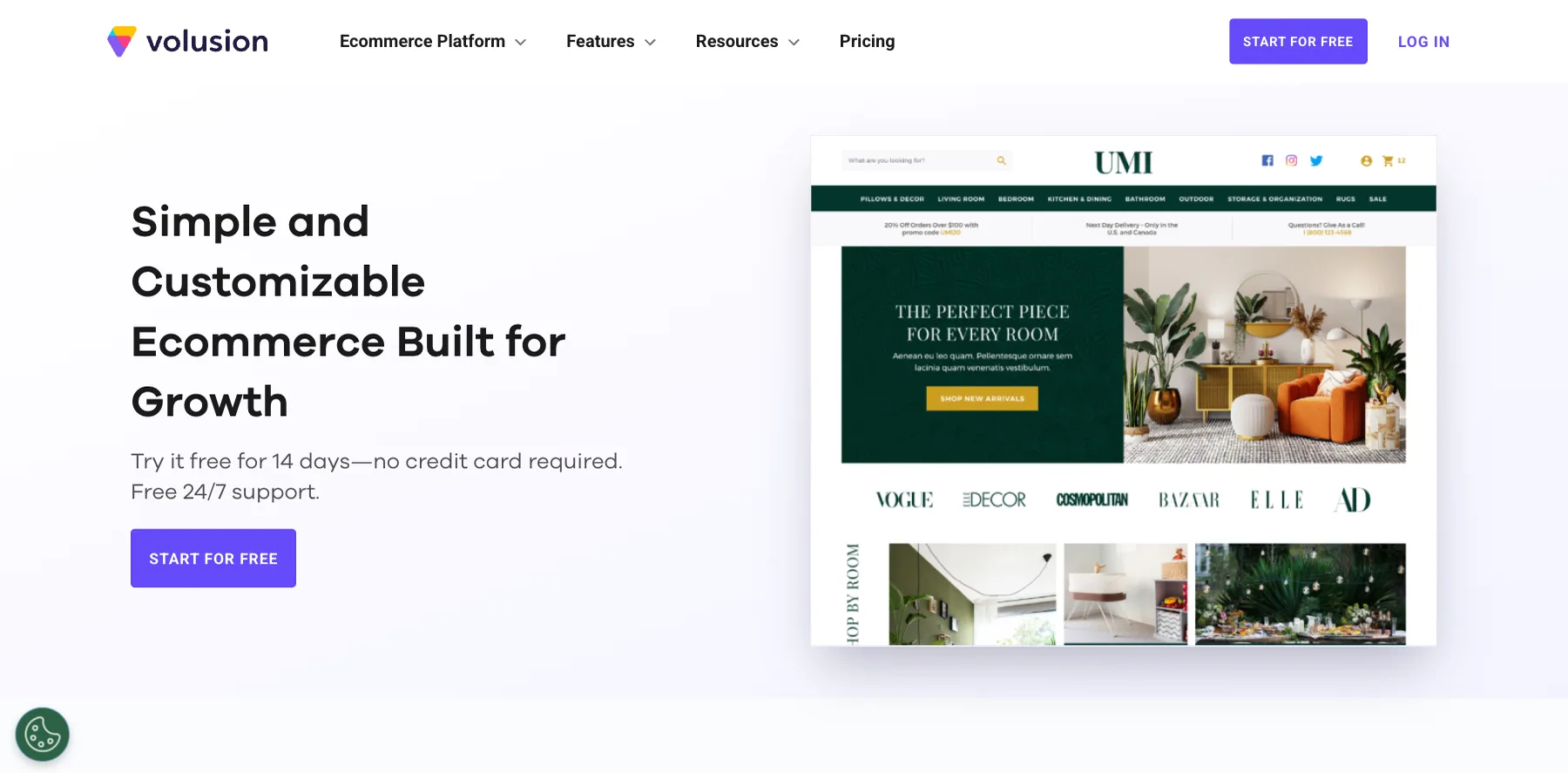
Volusion is one of the oldest hosted stores, now sold on a low total cost of ownership: plans by your number of products, from 100 to unlimited.
It has a 14-day free trial, with no credit card needed, and ecommerce support from its own team.
Who is Volusion for?
Volusion is for small stores with a set catalog that want a simple hosted store and support.
Key features
- A hosted store with themes you can customize
- Plans by number of products
- Ecommerce support
- A Prime plan priced by your yearly sales
Pros
- A 14-day free trial, with no credit card
- Simple plans
- Ecommerce support from its own team
Cons
- A cap of 100 products on Personal
- A smaller app ecosystem than Shopify or BigCommerce
- Each plan also caps your yearly sales
Pricing
Volusion has four plans, from its pricing page as read on October 3, 2026:
- Personal – $35 a month, for up to 100 products.
- Professional – $79 a month, for up to 5,000 products.
- Business – $299 a month, for unlimited products.
- Prime – priced by your yearly sales.

A simple hosted store with plans by number of products.
18. Adobe Commerce
The best enterprise ecommerce platform
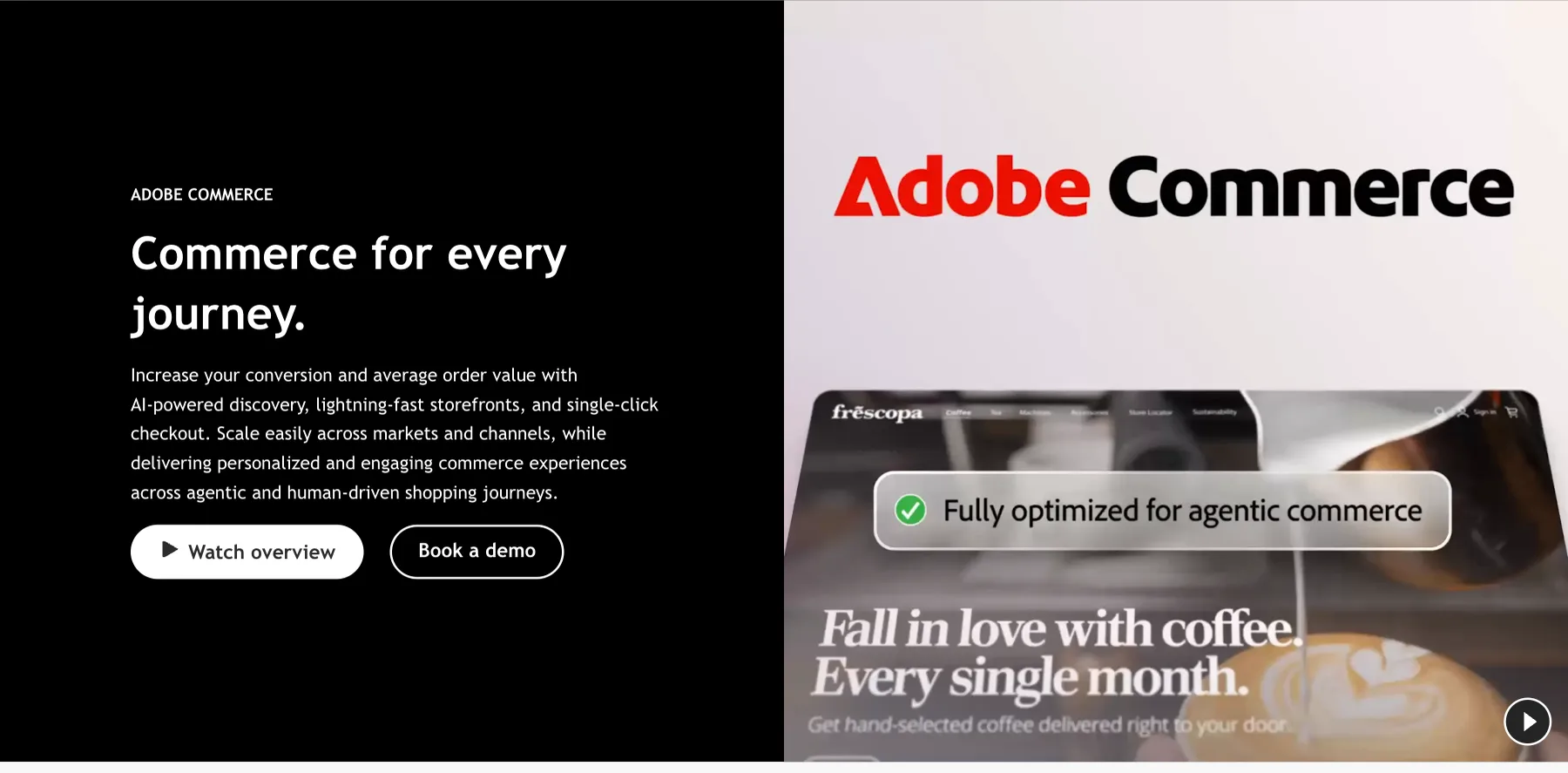
Adobe Commerce, formerly Magento, is an enterprise store for B2B and B2C: multiple brands, countries and catalogs from one platform, on cloud infrastructure that it says handles over 200,000 orders an hour.
It now promises storefronts built for agentic commerce, with AI-powered product discovery for people and AI agents alike. Pricing is by quote, after a demo.
Who is Adobe Commerce for?
Adobe Commerce is for large retailers and B2B companies with a development team and an enterprise budget.
Key features
- B2B and B2C on one platform
- Multiple sites, brands, markets and languages
- AI-powered product discovery and single-click checkout
- Auto-scaling cloud hosting for flash sales
- PCI-certified security
Pros
- Built for the biggest catalogs and B2B
- Deep customization
- Built for flash sales at scale
Cons
- Pricing only by quote
- Needs developers to run it
- Far more than a small store needs
Pricing
Adobe Commerce is priced by quote, from its product page as read on October 3, 2026:
- Adobe Commerce – by quote, after a demo with Adobe's sales team.

B2B and B2C commerce for large catalogs, brands and markets.
Ecommerce stats for 2026
Here are the numbers that show where online selling stands this year:
- $340.2 billion – US online retail sales in the second quarter of 2026, adjusted for the season, from the US Census Bureau's report of August 18, 2026.
- 12.2% – how much those online sales grew from a year earlier, against 6.7% for all retail.
- 17.1% – online sales' share of all US retail sales that quarter.
- $1.1 trillion – what merchants have made in sales on Shopify, it says.
- Every 26 seconds – how often someone makes their first sale on Shopify, it says.
- 700 million – people using ChatGPT each week when OpenAI launched Instant Checkout on September 29, 2025.
Online sales keep growing almost twice as fast as retail overall, and the next channel, buying inside AI chats, has already started.
How to sell online in 2026
These are the ways people sell online today, and most stores use more than one:
- Your own hosted store – a store on a platform that hosts it for you, like Shopify, Wix, Squarespace or BigCommerce.
- A store on WordPress – a store you own on your own site, with WooCommerce or SureCart.
- A custom store on an API – your own design and site, with a platform behind it for products and checkout. Fourthwall's Storefront API does this for merch, and Medusa is an open-source backend for any store.
- Print on demand – merch that's printed and shipped only when someone buys it, through Fourthwall or Big Cartel's apps.
- Social and marketplaces – your products on Instagram, TikTok, YouTube, Amazon, eBay and Walmart. Fourthwall puts them on YouTube's merch shelf and TikTok Shopping, and Ecwid syncs your catalog to Amazon, eBay and Walmart.
- In person – one catalog for your shop and your store, with Square or Shopify's point of sale.
- AI chats – people buying inside ChatGPT, through OpenAI's Instant Checkout and the Agentic Commerce Protocol it built with Stripe. Shopify sells in AI chats on every plan, and BigCommerce and Adobe Commerce now build stores for AI agents that shop for people.
Types of ecommerce platforms
They come in six kinds:
Hosted stores
A store the platform hosts and updates for you, like Shopify, BigCommerce, Wix, Squarespace and Square Online.
Open-source stores
A store you own and host, like WooCommerce and SureCart on WordPress, or Medusa's backend.
Custom stores on an API
Your own design and site, with the platform behind it, like Fourthwall's Storefront API and Medusa.
Creator stores
Merch and products for creators, like Fourthwall, Big Cartel and Sellfy.
Stores you add to a site
A store added to the website you already have, like Ecwid.
Enterprise
Large catalogs, brands and B2B, like Adobe Commerce, BigCommerce Enterprise and Shopify Plus.
How to choose an ecommerce platform
Five things decide most of it:
- What you sell – merch, physical products, digital products or services. Fourthwall prints merch for you, and Ecwid and Big Cartel sell downloads too.
- What it takes from each sale – Squarespace's Basic plan keeps 2%, Webflow's Standard plan keeps 2%, and BigCommerce charges a fee on orders through some payment providers. Shopify takes no cut with Shopify Payments, and WooCommerce, Ecwid and HighLevel take none at all.
- How you want to build – a builder like Wix or Squarespace, a theme on Shopify, or your own design on an API.
- Where you sell – online only, in person too with Square or Shopify, or on social, marketplaces and AI chats.
- How big you'll grow – BigCommerce, Shopify Plus and Adobe Commerce are built for large catalogs and B2B.
Selling digital products?
Ecommerce isn't only physical products and merch. Most stores here sell digital products too: Shopify through its free Digital Products app, Squarespace through digital content and memberships, Ecwid from its Venture plan, and Big Cartel, Sellfy, SureCart and Fourthwall on their own.
If you mostly sell courses, ebooks, templates or memberships, you may not need a store at all. A checkout like ThriveCart takes 0% of your sales, and Whop has no monthly fee, at 2.7% + $0.30 a sale. I compare them in my guides to the best shopping cart software and the best place to sell digital products.
The best free ecommerce platforms
Here's where you can start a store without a monthly bill:
- WooCommerce – free and open source, on WordPress hosting you pay for.
- Square Online – a free plan, with 3.3% + $0.30 on online sales.
- Ecwid – a free Starter plan for up to ten products.
- Fourthwall – a free plan, with no upfront costs for merch.
- Big Cartel – a free Gold plan, with fewer features.
- SureCart – a free plan for WordPress, with a 2.9% transaction fee.
- Medusa – free to host yourself, if you can build the storefront.
Wix has a free plan too, but it can't take payments until Core.
What I use
I sell my merch on navid.store, a store I built on Fourthwall. Fourthwall's Storefront API gives my own Next.js site the products, the collections and the cart, and its checkout takes the payment and handles printing, shipping and returns. So my store looks like my brand, not one of Fourthwall's templates, and it runs on Cloudflare.
It's a bit more on the advanced side than a hosted store, but AI coding tools like Claude Code and Codex can figure it out quickly.
My digital products sell through Creator Store, a store I built myself with Next.js, Stripe and Supabase, with no plan and no cut of my sales. Before that, ThriveCart was my go-to cart for years, and I processed millions of dollars through it.
If you'd rather not build anything, Shopify is where I'd start a store today, and Fourthwall for merch.
Some links in this guide are affiliate links: if you sign up through one, I may earn a commission, at no cost to you.
FAQs about ecommerce platforms
Shopify is my pick overall, with the most complete store and selling online, in person and in AI chats, from $29 a month billed yearly.
For creator merch, I'd pick Fourthwall, which I use, and for WordPress, WooCommerce.
An ecommerce platform is the software behind an online store: your products, the cart and checkout, payments, orders and shipping.
Some host everything for you, like Shopify, and some you host yourself, like WooCommerce.
Shopify is the best for most small businesses, Wix is the easiest start, and Square Online is the best if you also sell in person.
For a small, simple shop at a flat price, Big Cartel starts at $15 a month.
Yes, WooCommerce is free on WordPress, and Square Online, Ecwid, Fourthwall and Big Cartel have free plans.
Free plans usually limit your products or take a bigger share of each sale.
Most hosted stores cost $15 to $80 a month to start, like Big Cartel at $15 and Shopify at $29 billed yearly.
Card processing adds about 2.9% + $0.30 a sale, and enterprise plans like Shopify Plus start at $2,300 a month.
Yes, Shopify hosts and updates your store for you, while WooCommerce on WordPress needs your own hosting, updates and security.
WordPress gives you more control and no platform fee in return.
Headless ecommerce means your store's front, the design and pages, is separate from the platform that runs products and checkout.
I do this with Fourthwall's Storefront API, and Medusa and Shopify work this way too.
Yes, Ecwid builds shops on Facebook and Instagram, and Fourthwall puts your products on TikTok Shopping and YouTube's merch shelf.
A store of your own still helps, so the buyers and their emails are yours.
Fourthwall is my pick for merch, since it prints and ships for you, with nothing to buy upfront.
Big Cartel and Sellfy work too, with print-on-demand apps.
US online retail sales were $340.2 billion in the second quarter of 2026, 17.1% of all retail sales.
They grew 12.2% from a year earlier, almost twice as fast as all retail, the US Census Bureau reported.
Start on a platform, since Shopify, WooCommerce or Fourthwall get you selling quickly.
Build your own when you need your own design or no platform fee, as I did with navid.store and Creator Store.
Final thoughts on the best ecommerce platforms
There are a lot of ecommerce platforms, so it comes down to what you sell, how you want to build, and where your buyers are.
Here are my final recommendations:
The best overall: the most complete store, selling online, in person and in AI chats.
Start on ShopifyThe best for creator merch, and what I use, with my own store on its API.
Start on FourthwallThe best for B2B and scale, with plans that grow with your sales.
Try BigCommerce freeThe best for WordPress: a free, open-source store you own.
Get WooCommerceThe best for creatives, with templates that look designed.
Try Squarespace freeNow I'd like to turn it over to you. Which platform will you sell on? Or do you use a great one I didn't cover? Send me a message and tell me.
Keep reading:
- The best shopping cart software – checkouts for your products, compared
- The best place to sell digital products – 33 places for downloads, courses and memberships
- The best website builders – builders for the site around your store, compared
Start with the platform that fits what you sell today, and move up when your store outgrows it.
Navid Moazzez
AI business strategist & AI OS builder
Navid Moazzez helps creators and founders master AI and build their own AI Operating System (AI OS) to automate their business and life.
Navid.me is reader-supported. When you buy through links on this site, I may earn an affiliate commission. Learn more.
Similar articles

200+ creator economy glossary terms you need to know (2026)

What is a wantrapreneur? How I stopped being one (and how you can too)
35 highest paying side hustles in 2026, ranked by real rates
44 ways to make extra money beside your day job in 2026
50 ways to make money from home in 2026, with what each pays
The 14 best website builders in 2026 (free and paid)
28 ways to make passive income with AI in 2026, and how passive each really is
50 best online side hustles for 2026, ranked by what they pay
85 remote side hustles you can do from anywhere in 2026
48 ways to make money on your phone in 2026, and how fast each pays
The 15 best landing page builders in 2026 (free and paid)
The 17 best shopping cart software in 2026 (free and paid)
Outils gratuits associés


 Newsletter IA gratuite
La newsletter IA la plus concrète pour les fondateurs
Chaque semaine, recevez des stratégies IA éprouvées, des outils sélectionnés et des systèmes pas à pas pour développer votre audience, créer un meilleur contenu et bâtir un business de créateur rentable.
Pas de blabla, pas de remplissage, pas de baratin. Juste cinq minutes par semaine qui peuvent faire passer votre business en ligne et votre vie au niveau supérieur.
P.-S. Inscrivez-vous maintenant pour accéder gratuitement à mon guide ultime des outils IA pour les créateurs.