


A free retirement calculator that works in today's money and shows your target, the age your money lasts to and what to save a month.
See if your savings carry the life you want after work, in today's money, and the monthly saving that gets you there.
Your numbers
Spending and pension are in today's money. Pension means any income you'll get in retirement, like Social Security or a state pension.
Returns are before inflation; the calculator takes inflation out, so every number reads in today's money. A 4% withdrawal rate is the rule of thumb from William Bengen's 1994 study.
Your result
Enter your age, a retirement age past it and what you'd spend a month.
Embed this tool on your site
Paste the code into any page: WordPress, Webflow, Squarespace, Ghost or plain HTML. It's free with the credit under it, which links back to navid.me.
This free retirement calculator shows whether your savings carry the life you want after work. Enter your age, what you've saved and save a month, and what you'd spend, and it draws your money at every age to 95.
I built it because retirement calculators often mix future dollars with today's, so the numbers feel bigger than they are. This one works in today's money, so $4,000 a month at 80 means what $4,000 means now.
Here's how the calculator works, what your target really is, and the few changes that move your retirement date the most.
 TL;DR
TL;DRKey takeaways
What is a retirement calculator?
A retirement calculator projects your savings to the day you stop working, then checks if they pay for the years after. It's the same compounding as any savings plan, with spending at the end.
This one takes inflation out of every return first. A 7% return with 3% inflation grows your money about 3.9% a year in real terms, and every number on the page is in today's money.
How to use the retirement calculator
It asks for a few numbers you know and a few guesses you can change with a click.
Your numbers stay in this browser, so you can come back and change them any time.
Your target, and where it comes from
Your target is the nest egg that pays your spending without running out.
The calculator takes what you'd spend a month, takes out any pension, and divides the yearly gap by your withdrawal rate. At 4%, every $1,000 a month you need from savings asks for $300,000.
| Withdrawal rate | Target for $2,500 a month |
|---|---|
| 3% | $1,000,000 |
| 3.5% | $857,143 |
| 4% | $750,000 |
| 4.5% | $666,667 |
| 5% | $600,000 |
The 4% comes from William Bengen's 1994 study in the Journal of Financial Planning, which tested withdrawals against every 30-year stretch of US market history he had.
A lower rate is safer for a retirement longer than 30 years, which is why the pills go down to 3%.
A worked example
Here's the example the calculator loads when you press Try an example, worked out in October 2026.
You're 35 with $50,000 saved, and you save $800 a month. You'd like $4,000 a month in retirement, and you expect $1,500 a month of pension.
Your money earns 7% while you save and 5% once you retire, with 3% inflation, and you take 4% a year.
At 65, you'd have about $694,198 in today's money. Your target is $750,000, because the $2,500 a month your pension doesn't cover needs $750,000 at 4%.
You're $55,802 short. Saving $883 a month instead of $800 closes the gap, and so does working two more years.
- Nest egg
- $394,559
- On track?
- No, lasts to 70
- Nest egg
- $530,151
- On track?
- No, lasts to 81
- Nest egg
- $694,198
- On track?
- Close, lasts past 95
- Nest egg
- $769,082
- On track?
- Yes
- Nest egg
- $892,670
- On track?
- Yes
At 65, the money still lasts past 95 in this example, because the 5% return after retiring beats the 4% you take. The target is the safer bar, so the calculator marks you short until you reach it.
What changes your retirement date
Four changes move your date the most, and you can try each with one click.
Saving a little more
The monthly saving that reaches your target shows right under the result. In the example, $83 more a month gets there.
Retiring a little later
Each extra year adds a year of saving and takes away a year of spending. The retire-at pills jump between common ages, so you can see the difference at once.
Spending a little less
Every $100 a month you don't need from savings takes $30,000 off your target at 4%. Spending is often easier to change than returns.
Living somewhere that costs less
The same life costs very different amounts around the world. The retirement visa finder and the best cities for digital nomads show where a retirement budget goes further.
Mistakes to avoid
A plan looks safe until one of these shows up.
- Mixing future dollars and today's dollars in the same plan
- Planning on one great return instead of a long-run average
- Forgetting taxes on what you withdraw from some accounts
- Leaving out health care, which often costs more as you age
- Counting a pension or state pension you haven't checked
Check your pension estimate at the source, and run the plan again once a year.
Money is for freedom
For me, retirement is about time more than a number.
The ultimate purpose of money is so you don’t have to be in a specific place, at a specific time, doing anything you don’t want to do.
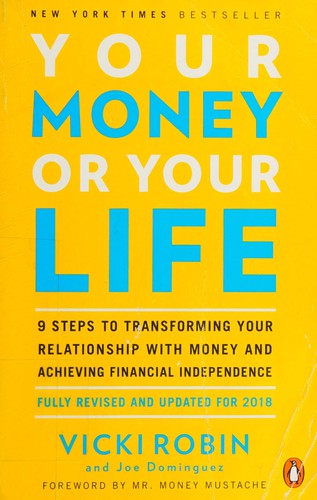
Your Money or Your Life by Vicki Robin and Joe Dominguez calls the point where your investments pay for your life the crossover point. That's the same line this calculator draws, without waiting for a set age.
Your Money or Your Life
by Vicki Robin
Your Money or Your Life by Vicki Robin teaches how to rethink spending, save more.
I may earn a commission if you make a purchase, at no additional cost to you.
If you want to see what that freedom can look like, read what is a global citizen.
Who is the retirement calculator for?
It's for anyone who wants to know if their saving adds up, at any age, and these tools take the plan further.
- Compound interest calculator – for seeing how your savings grow year by year
- Net worth calculator – for adding up everything you own and owe today
- Inflation calculator – for seeing what prices did in your country
- Retirement visa finder – for retiring in another country
- Tax rates by country – for comparing what you'd keep in each country
Run your numbers here first, then use these to test where and when you could stop.
More money calculators
Your currency and scene carry over to each of these.
| Calculator | What it answers |
|---|---|
| Compound interest calculator | How does my money grow? |
| Net worth calculator | Where do I stand today? |
| Inflation calculator | What will prices be? |
| Mortgage payoff calculator | Can I retire without a mortgage? |
Paying off a mortgage before you retire lowers what you need a month, so it's worth checking both.
Plan your money with your AI
Take your numbers further in





Retirement Calculator FAQs
Questions about the retirement calculator? Here's what to know.
A retirement calculator projects your savings to the age you stop working and checks if they pay for the years after.
This free one works in today's money and draws every age to 95.
Take what you'd spend a month, less any pension, times 12, and divide by your withdrawal rate.
At 4%, $2,500 a month from savings needs $750,000.
The 4% rule says you can take 4% of your savings in your first year of retirement, then the same amount raised for inflation, for about 30 years.
It comes from William Bengen's 1994 study of US market history.
It was tested over 30 years, so a longer retirement is safer at a lower rate.
Try 3% or 3.5% in the calculator to see the difference.
It takes inflation out of every return, so every number reads like money now.
That way $4,000 a month at 80 means what $4,000 means today.
Use a long-run average for what you invest in, and a lower one for the years after you retire, when a plan often holds less in stocks.
Run a lower return too and plan on it.
Any income you'll get in retirement that isn't from your savings, like Social Security, a state pension, a company pension or rent.
Check your official estimate before you count it.
The calculator shows the monthly saving that reaches your target.
Retiring a year or two later, spending a little less or living somewhere cheaper closes the gap too.
Yes, if your savings reach your target sooner.
Drag the retire-at slider to see what each age needs.
It's the age your savings run out if you spend what you entered.
Past 95 means they last for the plan.
No, it doesn't take out taxes.
Enter your spending as what you'd need before tax from savings, or add a margin for tax.
Yes.
Save it as a page or a PDF, download every age as a CSV, or copy a link that opens the same numbers.
Yes, it's free with no login.
Your numbers stay in this browser.
I did.
I'm Navid Moazzez, and I made the retirement calculator as one of my free tools on navid.me.
More about me.
Navid Moazzez
AI business strategist & AI OS builder
Navid Moazzez helps creators and founders master AI and build their own AI Operating System (AI OS) to automate their business and life.
Navid.me is reader-supported. When you buy through links on this site, I may earn an affiliate commission. Learn more.
Related calculators


More free tools

 X
X Bluesky
 LinkedIn
 Threads

 Mastodon
 Instagram
 TikTok
 Pinterest
 YouTube


Related MCP servers & CLIs


 Substack


 Apple Podcasts
 Free AI newsletter
The most actionable AI newsletter for founders
Every week, get proven AI strategies, curated tools, and step-by-step systems to grow your audience, create better content, and build a profitable creator business.
No fluff, no filler, no BS. Just five minutes each week that might level up your online business and life.
P.S. Sign up now to get free access to my ultimate AI tools guide for creators.