How to promote a virtual event: 17 tips and a 6-week plan
17 practical tips for promoting a virtual event, and a simple 6-week plan to put them in order.
You can have the best speakers and the best content in your niche, and still get 50 registrations.
It happens all the time. Not because the event is bad, but because nobody knew about it in time.
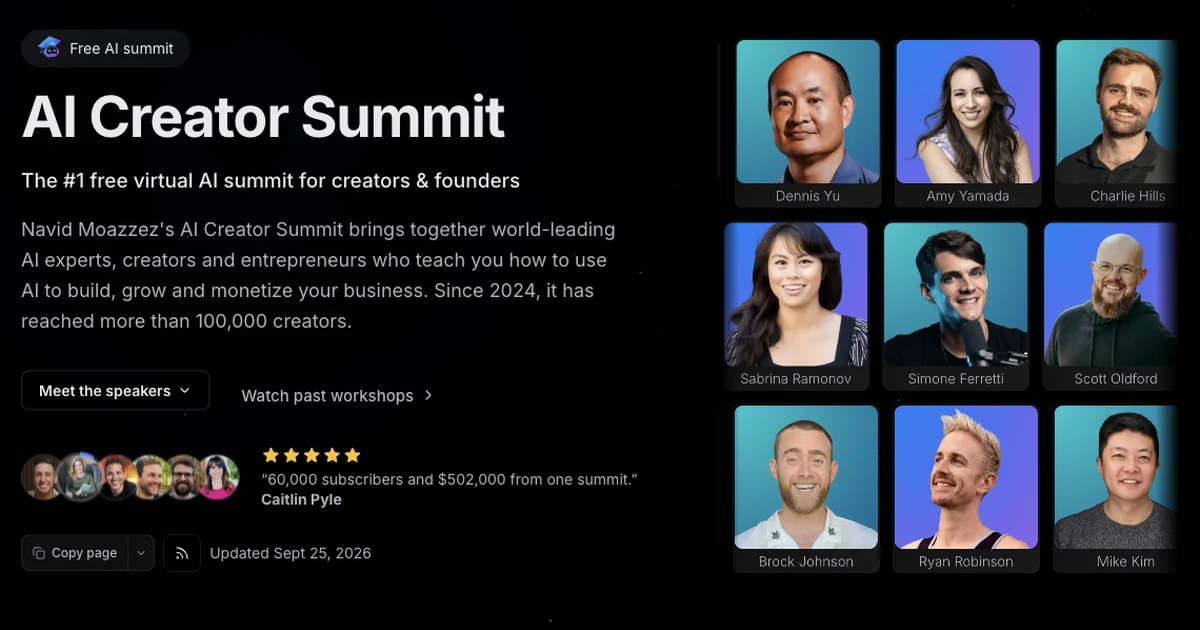
I've been promoting virtual summits since 2014. My first one, The Branding Summit, had 88 speakers and I had almost no audience of my own. Promotion is what made it work, and it's what has made every summit since then work, up to the AI Creator Summit, which 100,000+ creators have tuned in to.
Here are 17 tips for promoting a virtual event, and a simple 6-week plan to put them in order.
Before you promote: get the offer right
The best promotion can't fix an event nobody wants.
Before you send a single email, you should be able to finish this sentence: "This event helps [specific person] get [specific result]."
If you can't, the next tips won't help much. If you can, everything else gets easier.
17 tips for promoting a virtual event
1. Make the promise impossible to misread 🎯
Your event isn't "a summit about marketing". It's how to build your email list from scratch, or how to use AI in your creator business.
A clear promise does half the promotion for you, because people instantly know whether it's for them.
Steph Gaudreau felt the health niche was already full of summits. So she narrowed it down to exactly who she wanted to attract, and her Women's Strength Summit took her from 62 email subscribers to 19,560 new ones.
2. Give it a name that sells itself 🏷️
List Building School. The Women's Strength Summit. The AI Creator Summit.
A good name tells people the topic and the audience in 3 or 4 words. Skip clever names that need explaining.
3. Put up a waitlist page early ⏳
You don't need the full registration page to start. A simple page with the promise and an email box lets you collect interest while you're still booking speakers.
Everyone on that list gets the announcement first.
4. Choose speakers who will actually share it 🎤
A big name who never mentions your event does less for you than a mid-sized creator who emails their list twice.
Pick speakers whose audience matches yours, and who are excited to be part of it. Ask how they like to promote before they say yes, so you both know what to expect.
5. Make it a win for your speakers too 🤝
Speakers promote harder when they get something back: new subscribers, a share of pass sales, exposure to your audience.
Caitlin Pyle made sure her Work-At-Home Summit grew her speakers' lists, not just her own:
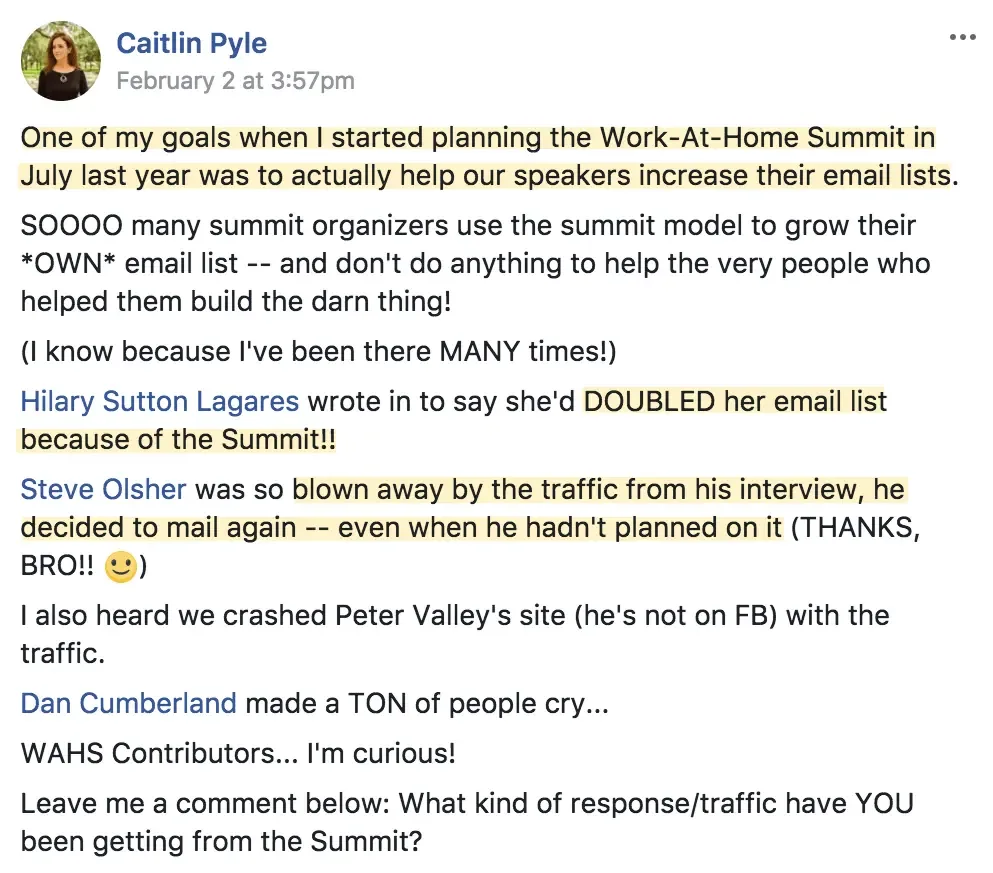
She got 60,000 new subscribers in about a week.
6. Hand partners a done-for-you promo kit 📦
Every speaker and affiliate gets the same kit: 2 or 3 ready emails, social posts, graphics and their own tracking link. The less they have to write, the more they share.
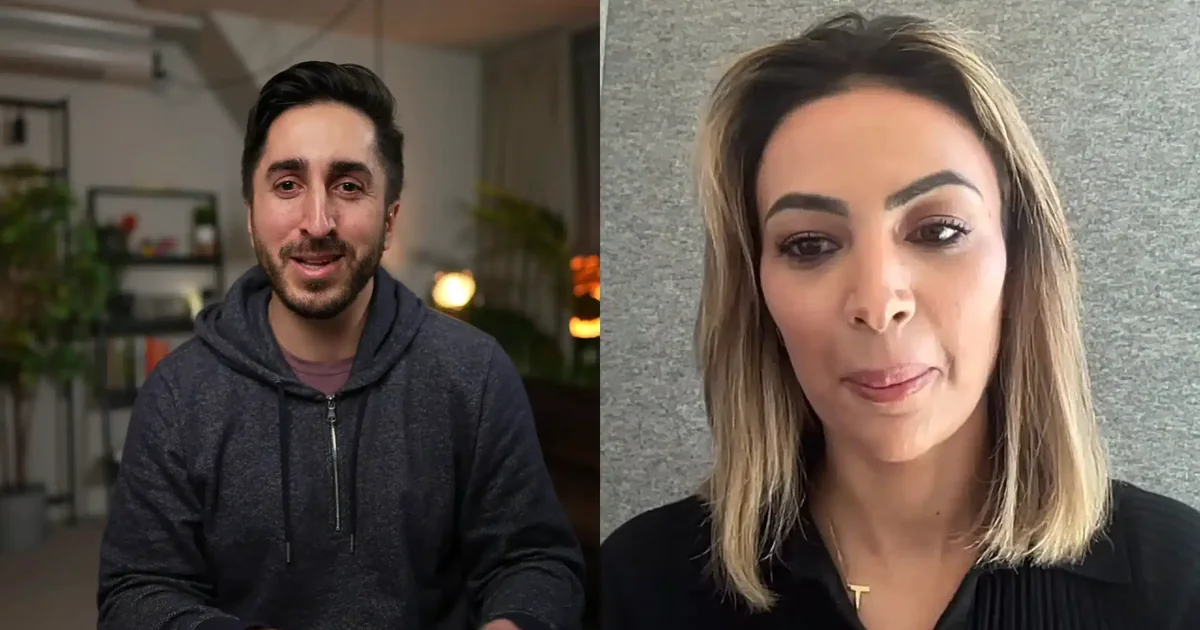
Here's what partner emails looked like for 2 summits, John Lee Dumas for the Self-Publishing Success Summit and Molly Mahoney for my AI Creator Summit:
7. Record a short promo video 🎬
60 to 90 seconds, you on camera: who the event is for, what they'll get, who's speaking, and when it starts.
Put it on the registration page and in the announcement email. People trust a face more than a graphic.
8. Drip speaker clips and quotes 🎞️
In the 2 weeks before the event, post a short clip or a quote from a different speaker every day.
Each one is a free sample. AI tools pull the best 30 seconds from an interview in minutes.
9. Build an affiliate army 🏆
Pay a commission on every all-access pass, and add a leaderboard with prizes for the top partners. I explain how I set it up in 21 online event marketing strategies.
10. Promote in phases, not all at once 📅
Split your promotion into windows, each with its own message:
- Pre-launch: the waitlist and teasers.
- Early bird: the pass at its lowest price.
- Main launch: speakers, partners and affiliates all share.
- Last chance: the final days before it starts.
Each phase gives you a new reason to email, and your audience a new reason to act.
11. Offer free access plus a VIP pass 🎟️
Keep the live sessions free, so anyone can join. Sell a pass for the recordings, bonuses and extras.
Free grows your list. The pass pays for the event. List Building School had $104,811 in pass sales before it started.
12. Use scarcity the honest way ⏰
Early bird prices that really end. Bonuses that really expire. A replay window that really closes.
Fake urgency works once. Real urgency works every time you host.
13. Partner with micro-influencers and newsletters 📰
You don't need the biggest names. A niche newsletter or a YouTuber with 10,000 loyal followers can outperform an account with a million.
Look for the people your audience already reads, and ask them to share the event or speak at it.
14. Retarget warm audiences with ads 🎯
Skip cold ads for a free event. Retarget people who visited your page, watched your videos or opened your emails. It's cheap, and it catches people who meant to register and forgot.
15. Reward referrals 🎁
Give attendees a reason to invite a friend: a bonus session, a template pack or a free upgrade when someone they invite registers.
Your attendees know exactly who else would love the event.
16. Use AI to create promo assets fast ⚡
AI can draft your emails, social posts, speaker bios, graphics and clip captions in an afternoon.
Then rewrite them in your own voice. People can tell when a promo was written by a machine and nobody read it.
17. Get on podcasts and in the press 🎙️
A podcast tour in the month before your event puts you in front of new audiences, with the host's trust behind you.
Pitch your story, not your event. When Business Insider featured my story in 2015, it brought in almost 2,000 subscribers overnight.
A 6-week plan for promoting your virtual event
| When | What to do |
|---|---|
| 6 weeks out | Speakers confirmed, waitlist page live, promo kit ready |
| 4 weeks out | Announce to your list, open the early bird pass |
| 3 weeks out | Speakers and affiliates start sharing, the affiliate contest opens |
| 2 weeks out | Speaker clips every day, a partner webinar, spotlight emails |
| 1 week out | Countdown emails and retargeting ads |
| Event week | A daily email, speakers share their day, live sessions |
| After the event | Replay weekend, last call for the pass, evergreen version |
FAQs about promoting virtual events
Quick answers to the questions people ask most about promoting a virtual event.
Partner with people who already have one.
Invite speakers whose audience matches yours, make it a win for them, and give them everything they need to share it.
Put up a waitlist page about 6 weeks before the event.
Announce it to your list about 4 weeks out, and have your partners start sharing about 3 weeks out.
Your speakers.
A speaker emailing their list or sharing their own session day is free, and their audience already trusts them.
Only on warm audiences.
Retarget people who visited your registration page, watched your videos or opened your emails, and skip cold ads for a free event.
Make it easy and make it worth it.
Send a promo kit with ready emails, posts, graphics and a tracking link, and offer a commission on pass sales.
Plan an announcement, a few speaker spotlight emails, an early bird deadline, a countdown and one email every morning of the event.
Each phase gives you a new reason to write.
Final thoughts on promoting virtual events
Promoting a virtual event comes down to 3 things: a promise people instantly understand, partners who want to share it, and a plan that starts weeks before the doors open.
You don't need a big audience to start. I didn't. You need the right people to share your event with theirs.
Pick 5 of these tips for your next event, put them on the 6-week plan, and track which ones bring in the most registrations. Then do more of what works.
For the full plan before, during and after, read 21 online event marketing strategies. And if you haven't planned your event yet, start with how to host a virtual summit.
Navid Moazzez
AI business strategist & AI OS builder
Navid Moazzez helps creators and founders master AI and build their own AI Operating System (AI OS) to automate their business and life.
Navid.me is reader-supported. When you buy through links on this site, I may earn an affiliate commission. Learn more.
Similar articles
21 virtual event mistakes and how to avoid them
21 online event marketing strategies that work in 2026
What is a virtual event? The complete guide for 2026
How to host a virtual summit that converts (2026 guide)
How to monetize virtual events: 21 proven strategies (2026)
100 best virtual event examples to model in 2026
21 benefits of virtual events for creators in 2026
100 best questions to ask guest speakers at a virtual event
50 top virtual event ideas that actually work in 2026
19 types of virtual events for creators & marketers in 2026
What is a telesummit? And why video summits replaced them
What is a virtual summit? The complete guide (2026)
 Free AI newsletter
The most actionable AI newsletter for founders
Every week, get proven AI strategies, curated tools, and step-by-step systems to grow your audience, create better content, and build a profitable creator business.
No fluff, no filler, no BS. Just five minutes each week that might level up your online business and life.
P.S. Sign up now to get free access to my ultimate AI tools guide for creators.