100 best questions to ask guest speakers at a virtual event
Discover the best questions to ask guest speakers at a virtual event so you can lead better conversations and create more valuable content.
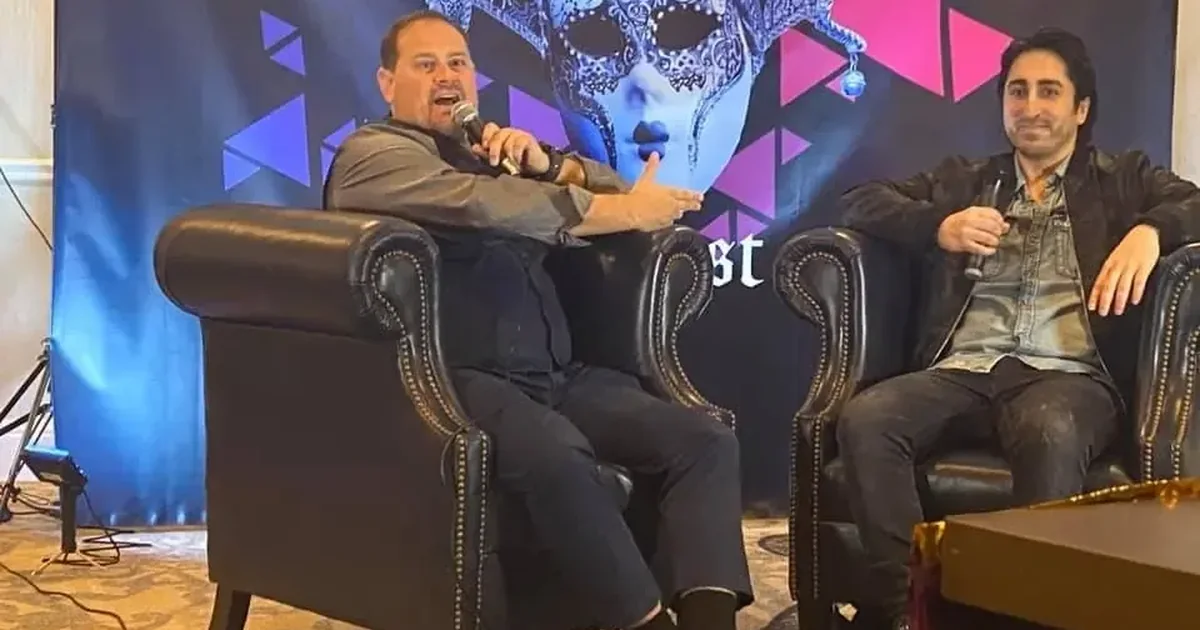
The right questions to ask guest speakers can transform an ordinary online event into an extraordinary one.
I’ve conducted 100’s of impactful interviews with thought leaders at my virtual events over the past decade.
Through this experience, I’ve discovered that thoughtful, strategic questions make all the difference in content quality.
In this guide, I’ll share my proven system for crafting powerful questions that bring out the best from your expert speakers.
Why questions to ask guest speakers matter more than you think
Most virtual event hosts focus on booking impressive speakers. They assume great experts automatically deliver great content.
The truth? Even the most knowledgeable experts need the right questions to truly shine.
After tracking audience engagement across hundreds of online summit sessions, I’ve found that questions determine content quality. Great questions:
- Extract unique insights your audience can’t find elsewhere
- Create authentic moments that build genuine connection
- Deliver practical advice attendees can implement immediately
Pro tip The difference between mediocre and memorable interviews isn’t the guest’s expertise, it’s the host’s questions.
Questions to ask guest speakers: The 4 key elements of exceptional interviews
An attendee once wrote me after watching several of my virtual event interviews:
“I’ve been watching videos from the summit this past week, and you are a skillful interviewer! Here’s what I notice that makes your interviewing so great…”
These four principles will elevate your questions to ask guest speakers:
1. Adopt a humble learner’s mindset
Show genuine interest in what your guest speakers share. This creates an environment where they naturally open up more.
Your role isn’t to showcase your knowledge but to extract valuable insights from your guest. As one attendee noted:
“When the speakers are talking, you show such interest in them that they really get to shine.”
2. Let your guest speakers be the expert
The biggest mistake many hosts make is competing with their guests. They get excited, add their own stories, and inadvertently upstage their interviewee.
Maintain focus on showcasing your guest speaker’s expertise. Ask thoughtful questions, then step back and give them the spotlight.
3. Balance knowledge with curiosity
Research thoroughly, but don’t feel compelled to demonstrate everything you know.
One viewer observed:
You get right to the topic and are knowledgeable about the speaker. At the same time, you don’t draw attention to yourself. It’s like a quiet knowing.
4. Create natural conversational flow
Great interviews feel less like formal Q&A sessions and more like engaging conversations with purpose.
Prepare thoroughly but remain flexible, knowing when to follow an interesting tangent and when to guide the discussion back on track.
Your job as an event host isn’t to impress the guest with your knowledge. It’s to impress the audience with the value you extract from your guest.
Types of questions to ask guest speakers based on interview format
The questions you ask your guest speakers should align with your interview format.
Here are the main types of virtual event interviews:
1. Teaching / how-to interviews
These interviews focus on practical knowledge transfer where the guest speaker shares specific strategies and tactics. Your questions should guide them through their methodology in a structured way.
Example questions for teaching interviews:
- “What’s your step-by-step process for [specific outcome]?”
- “How do you approach [common challenge] differently from others?”
- “What specific tools make your approach to [task] more effective?”
2. Case study/behind-the-scenes interviews
These interviews reveal real-world implementation of concepts, where the guest speaker walks through actual examples. Your questions should help unpack their process and results.
- “Can you walk us through how you implemented [approach] for [specific project]?”
- “What unexpected challenges did you face during this process?”
- “What results did you achieve, and how did you measure success?”
3. Perspective / insight interviews
These interviews explore deeper thinking on industry trends, where the guest speaker shares unique viewpoints. Your questions should prompt thoughtful analysis.
Example questions for perspective interviews:
- “How do you see [industry] evolving over the next few years?”
- “What counterintuitive insight have you gained about [topic]?”
- “What widely accepted practice in [field] do you believe is ineffective?”
Getting comfortable on camera: Practical tips for virtual event hosts
Many would-be great interviewers are held back by camera anxiety. Having conducted hundreds of virtual interviews, I’ve developed practical strategies to help you appear confident and professional on camera.
Create a comfortable recording setup
Your physical environment significantly impacts your on-camera confidence. Keep these elements in mind:
- Optimize your lighting: Position a soft light in front of you to eliminate shadows on your face
- Clean your background: Use a simple, non-distracting backdrop (either a clean wall or organized bookshelf)
- Position your camera at eye level: This creates a more natural conversational feel
- Use a quality microphone: Clear audio is actually more important than perfect video
Practice your camera presence
Comfort on camera comes with practice. Before hosting important interviews:
- Record yourself asking a few questions and watch the playback
- Practice maintaining eye contact with the camera lens (not the screen)
- Develop awareness of your facial expressions and gestures
- Rehearse your introduction until it feels natural
Focus on your guest, not yourself
The secret to camera confidence is paradoxical: stop thinking about yourself. When you’re genuinely focused on your guest and the conversation, self-consciousness naturally fades away.
During the interview:
- Keep your attention on what your guest is saying
- Take brief notes on points you want to explore further
- Show genuine interest through nodding and appropriate reactions
- Remember that viewers care more about the content than your appearance
Start with lower-pressure interviews
If you’re new to on-camera interviewing, build confidence gradually:
- Begin with friends or colleagues for practice interviews
- Move to less well-known guest speakers before approaching major influencers
- Record practice sessions that won’t be publicly released
- Get feedback from trusted colleagues on your interviewing style
With each interview, you’ll become more comfortable on camera, allowing your natural interviewing skills to shine through.
The art of researching your guest speakers
The difference between mediocre and outstanding interviews often comes down to preparation. Over my years of hosting virtual events, I’ve developed a systematic approach to researching speakers that consistently delivers exceptional results.
This 7-step process will help you uncover unique angles and prepare questions that draw out your guest speakers’ best insights.
Step 1: Find your speakers’ content
- Google their name + “interview” or “podcast”
- Visit their website, especially their About page and blog
- Check their social media profiles for recent activities
- Look for their books, courses, or recent publications
Step 2: Study their work strategically
- Read their latest articles or blog posts
- Listen to 1-2 recent interviews they’ve done
- Watch a recent presentation or talk
- Note recurring themes and unique perspectives
Step 3: Identify their expertise areas
- What specialized knowledge do they possess?
- What achievements are they known for?
- What unique methodologies have they developed?
- What results have they helped clients achieve?
Step 4: Discover their current focus
- What are they currently working on?
- What topics do they seem most passionate about now?
- Have they recently changed their approach or perspective?
- What predictions are they making for their field?
Step 5: Find content gaps
- What questions are they rarely asked?
- What aspects of their expertise aren’t widely covered?
- What contradictions exist in their field they could address?
- What practical applications might your audience want explained?
Step 6: Design your question framework
- Create opening questions that establish expertise
- Develop middle questions that extract practical advice
- Craft closing questions that provide strong takeaways
- Include follow-up questions for potential deeper exploration
Step 7: Personalize your questions
- Reference specific projects or content they’ve created
- Connect questions to their unique methodologies
- Adapt questions to address their current focus areas
- Structure questions to highlight their specialized knowledge
What to share with your guest speakers
Properly preparing your guest speakers is crucial for creating valuable content. However, there’s a delicate balance between helpful preparation and over-rehearsed responses.
Here’s what I’ve found works best to share with speakers before your virtual event:
Topic focus rather than specific questions
Instead of sending a list of exact questions, provide broad topic areas you’d like to explore. This gives speakers enough direction to prepare thoughtfully while keeping their responses fresh and authentic.
Example: “We’ll discuss your approach to effective content repurposing strategies” rather than “I’ll ask you to explain your exact 5-step process for content repurposing.”
Audience background and needs
Give your guest speakers insight into who will be attending. This helps them tailor their expertise to the right level and address specific challenges your audience faces.
Example: “Our audience consists primarily of small business owners who struggle with limited time and resources for content creation.”
Session goals and outcomes
Communicate what you hope attendees will gain from the session. This helps speakers frame their responses toward actionable takeaways.
Example: “The goal of this session is for attendees to walk away with at least one implementable strategy they can use immediately.”
Technical expectations
Clarify the format, length, and any technical requirements well in advance.
Example: “This will be a 30-minute interview followed by 10 minutes of audience Q&A. We’ll use Zoom, and we recommend using a headset for optimal audio quality.”
By providing this information without over-prescribing the conversation, you create the perfect environment for authentic, valuable exchanges that benefit your audience.
How to structure your interview for maximum impact
Every great interview needs a thoughtful structure. Without it, even the most brilliant guest speakers can deliver content that feels disjointed or lacks purpose.
I’ve found that the most effective interview structure follows a deliberate arc that gives both focus and flexibility.
Start with a clear session purpose
Before crafting your interview outline, define what you want attendees to gain from the session. Is it:
- Practical knowledge they can implement immediately?
- Strategic understanding of an emerging trend?
- A behind-the-scenes look at a successful case study?
- Insight into innovative approaches in your field?
This clarity will guide your entire interview structure.
Create your interview cheat sheet
For each guest speaker, I develop a comprehensive session cheat sheet that includes:
Speaker Name and Title: [Full professional details]
Scripted Introduction: [2-3 sentence tailored introduction]
Key Points to Highlight:
- [Speaker’s notable achievements]
- [Unique expertise relevant to the topic]
- [Recent projects or publications]
Opening Question: [Specific, thoughtful first question]
Core Interview Questions: [10-15 questions organized by topic]
Closing Question: [Question that creates strong conclusion]
Having this prepared allows you to focus on the conversation rather than scrambling for the next question.
The 4-part interview arc
I structure most of my interviews in four distinct segments:
1. Credibility establishment (3-5 minutes)
Start with questions that showcase your guest’s expertise and unique perspective. This helps the audience understand why they should listen.
2. Fundamental principles (5-10 minutes)
Explore the core framework or approach your guest uses. These questions should reveal their thought process and methodology.
3. Practical application (10-15 minutes)
Dive into specific strategies, tactics, and implementation steps. This is where the most actionable value comes from.
4. Forward-looking insights (3-5 minutes)
End with questions about emerging trends, future developments, and final advice. This leaves the audience with broader perspective.
This structure ensures your interviews have purpose, flow naturally, and deliver substantial value to your audience.
For a first draft of your cheat sheet in this arc, for any guest, use my free interview questions generator. Now, let’s explore powerful questions for each of these segments.
Category 1: Strategic opening questions (15 questions)
The first question sets the tone for your entire interview. Unlike casual podcasts, virtual event interviews should quickly establish expertise and deliver immediate value.
These opening questions immediately position your guest speaker as an authority while engaging your audience:
- What’s one strategy in [topic area] that’s working exceptionally well right now?
- What’s the biggest misunderstanding most people have about [topic]?
- What fundamental principle in [field] do you see experts getting wrong?
- How has your approach to [topic] evolved over the past few years?
- What’s the most significant shift you’ve observed in [industry] recently?
- What counterintuitive discovery have you made about [topic]?
- What’s a common pain point your [clients/students/customers] face with [specific challenge]?
- How do you define success in [field] differently from others?
- What’s the most important metric people should track when working on [specific goal]?
- What’s the first thing you recommend when someone is struggling with [common problem]?
- What experience shaped your unique perspective on [topic]?
- What’s the biggest opportunity in [field] that most people are overlooking?
- What’s a foundational concept in [topic] that most people misapply?
- What sparked your interest in [topic] initially, and how has that evolved?
- What’s a specific result you’ve achieved for [clients/students/yourself] that illustrates your approach?
At my AI for Creators event, I used question #3 with a well-respected AI researcher who immediately challenged conventional implementation approaches. This created an engaging start that demonstrated his expertise while providing immediate value to attendees.
Category 2: Experience and background questions (15 questions)
These questions explore your guest’s journey and expertise in ways that provide context and credibility without falling into generic biography territory:
- What critical insight changed your approach to [topic]?
- What problem were you trying to solve when you developed [method/system/approach]?
- What unexpected challenge taught you the most about [topic]?
- How did you test and refine your approach to [specific area]?
- What conventional wisdom in your field did you have to unlearn?
- What skill took you longest to develop that’s now central to your work?
- What early mistake do you see most people making in [field]?
- How has your thinking evolved about [specific aspect] over time?
- What research or data fundamentally changed your perspective?
- What client/student outcome made you realize your approach was working?
- What specific problem in the industry inspired your work?
- What was the gap you identified that others weren’t addressing?
- How did you develop your unique framework for [specific process]?
- What failure led to an important breakthrough in your approach?
- What experiment or test delivered surprising results that shaped your work?
During my Personal Branding event, I used question #20 with a successful entrepreneur who shared how conventional networking advice actually held back his growth for years. His story of unlearning traditional approaches resonated deeply with attendees.
Category 3: Strategic implementation questions (15 questions)
These questions extract specific, actionable strategies that deliver immediate value:
- What’s your step-by-step process for [specific outcome]?
- How do you approach [common challenge] differently from others?
- What specific tools or systems make your approach to [task] more effective?
- What metrics do you track to measure success with [specific goal]?
- How do you customize your approach for different [situations/clients/needs]?
- What common obstacle prevents people from succeeding with [approach], and how do you overcome it?
- What’s the most efficient way to implement [strategy] with limited resources?
- How do you troubleshoot when [common problem] occurs?
- What’s your framework for deciding which [tasks/projects/initiatives] to prioritize?
- What’s the minimum effective approach for someone just starting with [method]?
- How do you scale [process] without sacrificing quality?
- What systems do you use to manage [complex process] efficiently?
- How do you modify your approach for [specific scenario]?
- What behind-the-scenes element of your process would surprise most people?
- How do you measure and improve results for [specific goal]?
One of my students used question #44 in the Virtual Harp event. Her guest revealed the messy reality behind their seemingly perfect performances, including hours of practice and multiple failed attempts. This humanizing moment created a strong connection with the audience.
Category 4: Advanced strategy questions (15 questions)
These questions dig deeper into sophisticated approaches that experienced practitioners can implement:
- What advanced technique produces disproportionate results for [goal]?
- What subtle adjustment makes the biggest difference in [outcome]?
- How do you optimize [process] once you’ve mastered the fundamentals?
- What nuanced approach separates experts from intermediates in [field]?
- What’s a sophisticated strategy that’s often overlooked but highly effective?
- How do you systematically test and improve [specific approach]?
- What’s your framework for diagnosing issues with [complex process]?
- What counterintuitive approach yields better results than conventional methods?
- How do you balance competing priorities when implementing [strategy]?
- What advanced metric gives you the most insight into [process performance]?
- How do you adapt your approach as market conditions change?
- What complex problem in your field requires a multifaceted solution?
- How do you prevent diminishing returns when scaling [approach]?
- What’s your method for continuous improvement in [area]?
- How do you maintain effectiveness while increasing efficiency?
During the Guitar event, one of my students used question #53 with a guitar instructor who shared a simple practice technique that helps beginners progress 2x faster. This specific, actionable tip received enthusiastic responses from attendees.
Category 5: Perspective-challenging questions (10 questions)
These questions reveal unique viewpoints that differentiate your speaker and create memorable moments:
- What widely accepted practice in [field] do you believe is ineffective?
- What unpopular opinion do you hold about [topic] that data supports?
- What’s overrated in your industry right now?
- What’s underrated in your industry that deserves more attention?
- How is conventional wisdom about [topic] misleading people?
- What complex reality gets oversimplified in most discussions about [topic]?
- What’s a nuanced perspective on [controversial issue] that most people miss?
- How does your approach challenge established thinking in [field]?
- What industry “best practice” actually creates problems?
- What assumption do most people make about [topic] that limits their success?
During my AI for Creators event, I used question #62 with a respected AI researcher. His answer challenging common assumptions about AI implementation for creators sparked thoughtful discussions and became one of the most referenced moments from the event.
Category 6: Future-focused questions (10 questions)
These questions position your virtual event as forward-thinking and help attendees prepare for emerging trends:
- What emerging capability/technology will reshape [field] in the next 1-2 years?
- What skill will become essential in your industry that most professionals aren’t developing yet?
- What current approach will become obsolete in the near future?
- How are you adapting your strategy to account for [specific industry change]?
- What overlooked opportunity do you see emerging in [field]?
- How will [new technology/regulation/trend] impact how professionals approach [task]?
- What’s a small trend today that will become significant in the next few years?
- What fundamental shift is happening in [industry] that most people haven’t recognized?
- What are you experimenting with now that could become your standard approach?
- How should professionals prepare for [specific upcoming change]?
During the Fasting event, a student used question #75 which prompted a nutrition expert to share an emerging fasting protocol that most practitioners weren’t discussing yet. Many attendees implemented this approach and reported positive results.
Category 7: Decision-making questions (10 questions)
These questions explore the strategic thinking that informs experts’ approaches:
- How do you decide which [approach/method/strategy] to use in different situations?
- What framework guides your decision-making when facing [common challenge]?
- How do you evaluate the effectiveness of [strategy/approach]?
- What mental models have been most valuable in your work?
- How do you balance [competing priority A] with [competing priority B]?
- What criteria do you use to determine if [approach] is working?
- How do you know when to persist with a strategy versus when to pivot?
- What factors do you consider when prioritizing [resources/time/energy]?
- How do you distinguish between signal and noise when analyzing [data/feedback]?
- What questions do you ask yourself before implementing a new [strategy/system]?
During the Personal Branding event, I used question #84 with a successful entrepreneur who shared a mental model for overcoming perfectionism. This created an authentic moment that resonated deeply with attendees who were struggling with the same challenge.
Category 8: Closing questions (10 questions)
These questions create powerful endings and clear calls to action:
- What final advice would you give someone looking to excel in [specific area]?
- What one strategy would create the biggest impact for most people in [situation]?
- What’s the most important thing for people to understand about [topic]?
- What question should people be asking themselves about [topic] that most don’t?
- What resource would you recommend for someone who wants to implement what we’ve discussed?
- What’s the first step someone should take after watching this interview?
- What mindset shift would help people most with [challenge]?
- What’s your definition of success when it comes to [topic]?
- If you could go back and give yourself advice when starting with [topic], what would it be?
- What’s the best way for our audience to learn more about your work and stay connected?
I consistently use question #99 to close my interviews at virtual events. The reflective nature of this question consistently produces thoughtful, quotable responses that work perfectly in promotional materials and social media clips.
How to customize these questions for your specific virtual event
Here’s my three-step customization framework that ensures questions feel perfectly tailored to your event and guest speaker:
Step 1: Insert your specific topic
Replace generic terms with your specific niche terminology:
Generic: “What’s one strategy that’s working exceptionally well right now?” Customized: “What’s one AI prompt engineering strategy that’s working exceptionally well right now?”
Step 2: Add speaker-specific context
Include details from your research:
Generic: “How has your approach evolved over the past few years?” Customized: “Since publishing your book on content repurposing last year, how has your approach evolved?”
Step 3: Add industry-specific elements
Reference trends, challenges, or technologies in your field:
Generic: “What emerging capability will reshape the field?” Customized: “What emerging AI capability will reshape personal branding now that voice cloning is becoming mainstream?”
Here are examples from my actual online events:
AI for Creators Event: Original: “What trend are you most excited about right now?” Customized: “What emerging AI capability are you most excited about for content creators in the next 12 months?”
Personal Branding Event: Original: “What’s the most common mistake you see beginners make?” Customized: “What’s the most common authenticity mistake you see people make when first building their personal brand?”
Virtual Harp Event: Original: “What’s a counterintuitive approach that actually works better?” Customized: “What’s a counterintuitive practice technique for harp that actually works better than the traditionally taught methods?”
My secret weapon: AI-powered question generation
I now use AI tools to help brainstorm, refine, and personalize questions. Here are my most effective prompts:
Deep research prompt
``` CopyAnalyze these resources about [SPEAKER NAME]: 1. Their website: [URL] 2. Recent podcast appearance: [URL] 3. Their book/article: [TITLE]
Generate a research brief that includes: 1. Their core expertise and unique perspective 2. Topics they're currently focused on 3. Gaps in typical interviews (what they're rarely asked about) 4. 3 potential unique angles for my virtual event interview ```
Question personalization prompt
``` CopyI'm interviewing [SPEAKER NAME] who specializes in [TOPIC] for my event on [EVENT TOPIC].
Transform these questions into highly personalized versions that reference their specific work, background, unique methodologies, and recent projects:
[PASTE 3-5 QUESTIONS FROM LIST]
Make each question specific enough that it couldn't be asked of any other expert in this field. ```
Expert-level question generator
``` CopyAs a host interviewing [EXPERT NAME] about [SPECIFIC TOPIC], generate 10 questions that:
- Explore advanced aspects of their [METHODOLOGY/APPROACH]
- Uncover their strategic thinking process
- Extract actionable frameworks attendees can implement
- Challenge conventional wisdom in the field
- Explore future trends they're uniquely positioned to identify
Focus on questions other interviewers rarely ask but would provide exceptional value to my audience who are [AUDIENCE DESCRIPTION]. ```
My virtual event question workflow
Here’s exactly how I prepare questions for each interview:
1. Create a question bank (1-2 weeks before)
I select 20-25 questions from this article that fit the speaker’s expertise
2. Research and customize (1-3 days before)
I use my comprehensive research process to personalize 10-15 questions specifically for the speaker
3. Prioritize (day before)
I identify my 5 “must-ask” questions and 10 optional questions
4. Pre-interview communication
I send speakers 3-5 broad topic areas (not specific questions) so they can prepare thoughtfully without rehearsing scripted answers.
5. During the interview
I have my questions document open but focus on the conversation, not my list. I use my prepared questions as a guide but follow interesting threads as they emerge.
6. Post-interview rapid fire questions
After the main interview ends but while still recording, I tell my guest:
“Before we wrap up, I’d like to ask a few quick rapid-fire questions for some additional content we can share.”
These quick Q&As create perfect clips for social media and expert roundup posts.
Rapid fire questions I use for my AI for Creators Summit
- Why did you start using AI?
- What is your biggest learning when using AI?
- What can you do with AI now that you couldn’t do without it?
- How do you use AI in your creator business?
- What are your 3 top tips for someone getting started with AI?
- What are your top 3 AI tools and how do they help you day-to-day?
- What do you think about where AI is heading?
- Why should someone consider attending this virtual event?
AI prompt for generating custom rapid fire questions
`Create 8 rapid-fire questions for a [YOUR EVENT TOPIC] expert that: 1. Take around 30-90 seconds each to answer 2. Reveal practical tips and insights 3. Work well as standalone social media clips 4. Include at least one question about why someone should attend the virtual event
Make questions specific to [NICHE/INDUSTRY] and focused on [SPECIFIC ASPECT] when possible.`
These rapid-fire responses often become the most shareable content from your interviews!
FAQs about interviewing guest speakers
Below you’ll find answers to a few common questions about the best questions to ask guest speakers during virtual events.
Prepare questions that cover their expertise, personal experiences, and insights related to the event topic.
Ask open-ended questions like, ‘Can you share a challenge you faced in your career and how you overcame it?’
Begin with a few pre-prepared questions that are relevant to the speaker’s background and the event theme.
Frame your questions to be specific and thought-provoking, prompting deeper discussion rather than simple yes or no answers.
Yes, asking about current trends can provide valuable insights and keep the conversation relevant for attendees.
Absolutely. Questions about future predictions can lead to interesting discussions and highlight the speaker’s expertise.
Be adaptable. If they provide an unexpected answer, use follow-up questions to explore that topic further.
Do some research beforehand. Familiarize yourself with their work and achievements to formulate relevant questions.
Yes, but ensure they are suitable for the audience’s level of understanding. Avoid overly technical jargon.
Wrap up by thanking the speaker, summarizing key points discussed, and possibly inviting them to share any final thoughts or tips.
Prepare 15 questions but expect to ask anywhere from 8-12, depending on how deep you dive into each one. The best answers often come from follow-up questions that explore the guest’s initial response more deeply. This follow-up questioning is where you’ll uncover the most valuable insights for your audience.
Share broad topics but not specific questions. This helps them prepare without rehearsing scripted answers. For example, say “We’ll discuss your content creation process” rather than “I’ll ask what your exact step-by-step content process looks like.”
Use the “what, how, why” follow-up technique. If they give a short answer, ask “What makes you say that?” or “How did you discover that approach?” or “Why do you think that works so well?”
Use the “bridge back” technique: “That’s fascinating, and it reminds me of something else I wanted to ask you about…” This gently redirects without seeming dismissive.
Listen for “curiosity triggers”, any mention of results, processes, or challenges. Then ask “How did you achieve that result?” or “What did that process look like?” or “How did you overcome that challenge?”
Focus on comparative questions that highlight different perspectives: “How does your approach to X differ from what others on this panel do?” This creates natural discussion points.
Yes, but customize at least 30% of your questions for each speaker. Your audience will notice if you ask identical questions to everyone.
Asking questions they think sound impressive rather than questions that will actually produce valuable content. Simple, clear questions often yield the best answers.
Final thoughts on questions to ask guest speakers
The difference between a forgettable virtual event and one people rave about often comes down to the questions you ask guest speakers.
Great questions create unique content your audience can’t find elsewhere. They showcase your speakers’ expertise while delivering immediate value to attendees.
Through preparing and asking thoughtful questions, you position yourself as a skilled host who creates exceptional content.
Next time you prepare for a virtual event interview, remember that your questions to ask guest speakers are the most powerful tool you have for creating memorable, valuable content.
Start with the 100 questions in this guide. Customize them for your specific topic and guest speakers. Then watch as your interviews transform from basic conversations into powerful content that genuinely helps your audience.
The questions you ask guest speakers will determine the quality of your virtual event. Choose them wisely.
Navid Moazzez
AI business strategist & AI OS builder
Navid Moazzez helps creators and founders master AI and build their own AI Operating System (AI OS) to automate their business and life.
Navid.me is reader-supported. When you buy through links on this site, I may earn an affiliate commission. Learn more.
Similar articles
21 virtual event mistakes and how to avoid them
21 online event marketing strategies that work in 2026
What is a virtual event? The complete guide for 2026
How to host a virtual summit that converts (2026 guide)
How to monetize virtual events: 21 proven strategies (2026)
100 best virtual event examples to model in 2026
21 benefits of virtual events for creators in 2026
50 top virtual event ideas that actually work in 2026
19 types of virtual events for creators & marketers in 2026
How to promote a virtual event: 17 tips and a 6-week plan

What is a telesummit? And why video summits replaced them
What is a virtual summit? The complete guide (2026)
 Free AI newsletter
The most actionable AI newsletter for founders
Every week, get proven AI strategies, curated tools, and step-by-step systems to grow your audience, create better content, and build a profitable creator business.
No fluff, no filler, no BS. Just five minutes each week that might level up your online business and life.
P.S. Sign up now to get free access to my ultimate AI tools guide for creators.