

A free macro calculator that sets protein by your weight, splits the rest into fat and carbs, and checks each against healthy ranges.
Split your calories into protein, fat and carbs for your goal, with protein set by your weight.
You
Entered once, used by every health calculator here, and saved only in this browser.
Your plan
Protein is set by your weight (1.6 to 2.0 g per kg), fat as a share of calories, and carbs fill the rest. Leave calories empty to use your TDEE and goal.
Your result
Fill in the fields above to see your result.
These calculators give general estimates for healthy adults, not medical advice. Talk to your doctor before you change how you eat or train, especially if you're pregnant, take medication or have a health condition.
Embed this tool on your site
Paste the code into any page: WordPress, Webflow, Squarespace, Ghost or plain HTML. It's free with the credit under it, which links back to navid.me.
This free macro calculator splits your daily calories into protein, fat and carbs for your goal. It sets protein by your body weight, checks each macro against the National Academies' healthy ranges, and shows protein a meal.
I built it because most macro calculators set protein as a share of calories, which gives a small person too little and a big person too much. Here it follows your weight, the way the research sets it.
Here's how macros work, which style fits you, and how to hit your numbers without counting every bite.
 TL;DR
TL;DRKey takeaways
What is a macro calculator?
A macro calculator turns a daily calorie target into grams of protein, fat and carbs. Protein and carbs have 4 calories a gram, and fat has 9.
The National Academies set healthy ranges for each as a share of calories: protein 10% to 35%, fat 20% to 35% and carbs 45% to 65%. The calculator flags any macro outside them.
How to use the macro calculator
You only need to fill in yourself once, and every health calculator here reads it.
Your numbers stay in this browser.
The four styles
Each style sets protein by your weight and fat by a share of calories. Here they are at 2,400 calories for someone at 78 kg.
- Protein
- 125 g (21%)
- Fat
- 80 g (30%)
- Carbs
- 295 g (49%)
- Protein
- 156 g (26%)
- Fat
- 67 g (25%)
- Carbs
- 294 g (49%)
- Protein
- 140 g (23%)
- Fat
- 107 g (40%)
- Carbs
- 220 g (37%)
- Protein
- 125 g (21%)
- Fat
- 53 g (20%)
- Carbs
- 355 g (59%)
Lower carb puts fat over the 35% range and carbs under 45%, so the calculator flags both. That's a choice some people make on purpose, and the flag makes sure it's a choice.
A worked example
Here's the example the calculator loads when you press Try an example.
A 35-year-old man at 178 cm and 78 kg is moderately active and wants to lose 0.5 kg a week. His target is about 2,120 calories a day.
On high protein, that's 156 g of protein, 59 g of fat and 241 g of carbs. Over three meals, he'd aim for about 52 g of protein at each.
How to hit your macros
You don't need to count every gram to get close.
Build each meal around protein
Start with a palm or two of meat, fish, eggs, tofu or Greek yogurt. The protein calculator shows what that adds up to.
Add vegetables, then carbs and fat to fit
Fill half the plate with vegetables, then add rice, potatoes or bread, and some oil, nuts or avocado.
Check a few days, then repeat
Track three normal days, then repeat the meals that work.
Mistakes to avoid
These are the common ways macros go wrong.
- Setting protein as a share of calories instead of by your weight
- Cutting fat under 20% of calories for long
- Chasing exact grams every day instead of a weekly average
- Forgetting that drinks have calories too
Get close most days, and let the weekly average do the work.
Strength needs protein
Protein matters most when you train, because it's what muscle is built from.
If you are strong, you live better.
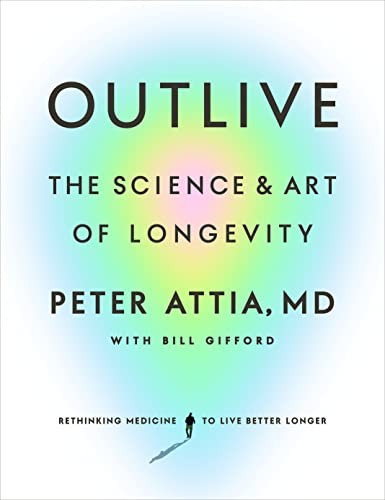
Outlive by Peter Attia covers protein, training and aging together.
Outlive

Outlive by Dr. Peter Attia breaks down the most effective strategies for long-term health and performance, covering exercise, nutrition, sleep, and emotional wellbeing to add years to your life.
I may earn a commission if you make a purchase, at no additional cost to you.
Who is the macro calculator for?
It's for anyone eating for a goal, and these tools set the numbers around it.
- Calorie calculator – for the daily target your macros split
- Protein calculator – for more on how much protein you need
- TDEE calculator – for what you burn in a day
- One rep max calculator – for the training your protein supports
- Longevity diet plan – for what to eat for the long run
Set your macros here, then build three meals you like around them.
More health calculators
Every health calculator reads the same "You", so you only enter yourself once.
| Calculator | What it answers |
|---|---|
| Calorie calculator | How much should I eat? |
| TDEE calculator | What do I burn in a day? |
| One rep max calculator | How strong am I? |
| Water intake calculator | How much should I drink? |
Pair your macros with enough water, and the water intake calculator sets that too.
Plan your health with your AI
Take your numbers further in




Macro Calculator FAQs
Questions about the macro calculator? Here's what to know.
A macro calculator turns your daily calories into grams of protein, fat and carbs.
This free one sets protein by your weight and checks each macro against the National Academies' ranges.
Set protein at 1.6 to 2.0 g per kg of body weight, set fat at 20% to 35% of calories, and fill the rest with carbs.
Protein and carbs have 4 calories a gram, and fat has 9.
This calculator uses 1.6 to 2.0 g per kg of body weight for active people.
The protein calculator goes deeper on your goal.
The National Academies' ranges are protein 10% to 35%, fat 20% to 35% and carbs 45% to 65% of calories.
Keep protein high, at 1.6 to 2.0 g per kg, and lower calories mostly from fat and carbs.
The high protein style does that.
Weight loss comes from eating under your TDEE, whatever the split.
Pick the style you can keep up.
Divide your daily protein by your meals.
The calculator shows it for two to five meals a day.
Yes, type your calories and the calculator uses them instead of your TDEE and goal.
No, it's a general estimate for healthy adults.
Talk to your doctor before you change how you eat or train, especially if you're pregnant, take medication or have a health condition.
Yes, it's free with no login, and your numbers stay in this browser.
I did.
I'm Navid Moazzez, and I made the macro calculator as one of my free tools on navid.me.
More about me.
Navid Moazzez
AI business strategist & AI OS builder
Navid Moazzez helps creators and founders master AI and build their own AI Operating System (AI OS) to automate their business and life.
Navid.me is reader-supported. When you buy through links on this site, I may earn an affiliate commission. Learn more.
Related calculators


More free tools

 X
X Bluesky
 LinkedIn
 Threads

 Mastodon
 Instagram
 TikTok
 Pinterest
 YouTube

Related MCP servers & CLIs


 Substack


 Apple Podcasts
 Free AI newsletter
The most actionable AI newsletter for founders
Every week, get proven AI strategies, curated tools, and step-by-step systems to grow your audience, create better content, and build a profitable creator business.
No fluff, no filler, no BS. Just five minutes each week that might level up your online business and life.
P.S. Sign up now to get free access to my ultimate AI tools guide for creators.