


A free TDEE calculator that shows the calories you burn a day, your BMR, every activity level and the calories for your goal.
See how many calories you burn a day, at rest and with your activity, and what to eat for your goal.
You
Entered once, used by every health calculator here, and saved only in this browser.
Your result
Fill in the fields above to see your result.
These calculators give general estimates for healthy adults, not medical advice. Talk to your doctor before you change how you eat or train, especially if you're pregnant, take medication or have a health condition.
Embed this tool on your site
Paste the code into any page: WordPress, Webflow, Squarespace, Ghost or plain HTML. It's free with the credit under it, which links back to navid.me.
This free TDEE calculator shows how many calories you burn in a day: your BMR at rest, plus everything you do on top.
Enter yourself once, pick how active you are, and it shows your number and what to eat to lose, keep or gain weight.
I built it because a calorie target is only as good as the number it starts from. This one shows your TDEE at every activity level side by side, so you can see how much your day really moves it.
Here's what TDEE is, how it's worked out, and how to turn it into a plan that works for you.
 TL;DR
TL;DRKey takeaways
What is a TDEE calculator?
A TDEE calculator estimates the calories your body uses in a day. It starts from your basal metabolic rate (BMR), the energy you'd burn lying still all day, and multiplies it by your activity level.
This calculator uses the Mifflin-St Jeor equation for BMR, published in 1990. It's the one most dietitians use today, because it came closest to measured values in later studies.
How to use the TDEE calculator
You only need to fill in yourself once, and every health calculator here reads it.
Your numbers stay in this browser, and nothing is sent anywhere.
How TDEE is worked out
The Mifflin-St Jeor equation is BMR = 10 × weight in kg + 6.25 × height in cm − 5 × age, plus 5 for men or minus 161 for women. TDEE is that times your activity level.
- Multiplier
- 1.2
- What it means
- Little or no exercise
- Multiplier
- 1.375
- What it means
- Exercise 1 to 3 days a week
- Multiplier
- 1.55
- What it means
- Exercise 3 to 5 days a week
- Multiplier
- 1.725
- What it means
- Hard exercise 6 to 7 days a week
- Multiplier
- 1.9
- What it means
- Hard training twice a day
Pick the level that matches a normal week, not your best one. Overestimating activity is the most common reason a calorie plan stalls.
A worked example
Here's the example the calculator loads when you press Try an example.
A 35-year-old man is 178 cm tall, weighs 78 kg and exercises 3 to 5 days a week. His BMR is 1,723 calories a day, and his TDEE is about 2,670.
| Activity level | TDEE |
|---|---|
| Sedentary | 2,067 |
| Light | 2,368 |
| Moderate | 2,670 |
| Active | 2,971 |
| Athlete | 3,273 |
To lose 0.5 kg a week, he'd eat about 2,120 calories a day. To gain 0.25 kg a week, about 2,945.
How to use your TDEE
Your TDEE is a starting point, and your scale tells you how close it is.
Start at your number for 2 to 3 weeks
Eat at the calories for your goal and weigh yourself most mornings. Daily weight jumps around, so look at the weekly average.
Adjust by 100 to 200 calories
If your average doesn't move the way you planned, change your calories a little and give it another two weeks.
Recheck as your weight changes
A lighter body burns less, so your TDEE drops as you lose weight. Update your weight here every few weeks.
The calorie calculator sets a target and a date for a goal weight, and the macro calculator splits it into protein, fat and carbs.
Mistakes to avoid
These are the common ways a TDEE gets misused.
- Picking a higher activity level than your normal week
- Adding the calories your watch says you burned on top of an active TDEE
- Treating the number as exact instead of a starting point
- Never updating it as your weight changes
Use the number, then let your weight trend guide you.
Energy is the base of everything else
What you eat every day adds up over years.
Health is wealth that compounds daily. The choices you make at 30 decide your energy at 50, 70, and beyond.
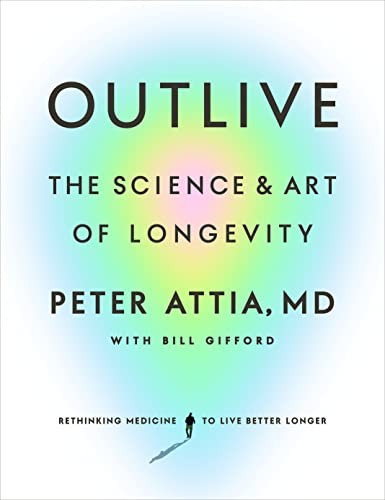
Peter Attia's Outlive makes the case that nutrition, exercise and sleep together decide how well you age.
Outlive

Outlive by Dr. Peter Attia breaks down the most effective strategies for long-term health and performance, covering exercise, nutrition, sleep, and emotional wellbeing to add years to your life.
I may earn a commission if you make a purchase, at no additional cost to you.
For the daily habits around it, the longevity routine puts them into one day.
Who is the TDEE calculator for?
It's for anyone who wants to eat for a goal instead of guessing, and these tools take it further.
- Calorie calculator – for a daily target and a date for your goal weight
- Macro calculator – for splitting your calories into protein, fat and carbs
- Protein calculator – for how much protein you need for your goal
- Calories burned calculator – for what each workout adds
- Longevity diet plan – for eating well for the long run
Find your TDEE here, then pick the tool that answers your next question.
More health calculators
Every health calculator reads the same "You", so you only enter yourself once.
| Calculator | What it answers |
|---|---|
| Calorie calculator | How much should I eat for my goal? |
| Macro calculator | How much protein, fat and carbs? |
| BMR calculator | What do I burn at rest? |
| BMI calculator | Is my weight healthy for my height? |
Start with the calorie calculator if you have a goal weight in mind.
Plan your health with your AI
Take your numbers further in





TDEE Calculator FAQs
Questions about the TDEE calculator? Here's what to know.
A TDEE calculator estimates the calories you burn in a day, from your BMR and your activity level.
This free one uses the Mifflin-St Jeor equation and shows every activity level side by side.
It stands for total daily energy expenditure.
Work out your BMR with the Mifflin-St Jeor equation, then multiply it by your activity level, from 1.2 for sedentary to 1.9 for an athlete.
BMR is what you burn at complete rest.
TDEE adds everything you do on top, from walking to training.
It's an estimate, often within about 10% of a lab measurement.
Your weight trend over two to three weeks shows how close it is for you.
About 550 a day under your TDEE loses about 0.5 kg a week.
The calorie calculator sets a target and a date for your goal.
Pick the one that matches a normal week, not your best one.
If you're unsure, pick the lower one.
Not if you picked an active level, because your TDEE already counts your exercise.
Adding them again double counts.
Yes, switch to US units and enter feet, inches and pounds.
No, it's a general estimate for healthy adults.
Talk to your doctor before you change how you eat or train, especially if you're pregnant, take medication or have a health condition.
Yes, it's free with no login, and your numbers stay in this browser.
I did.
I'm Navid Moazzez, and I made the TDEE calculator as one of my free tools on navid.me.
More about me.
Navid Moazzez
AI business strategist & AI OS builder
Navid Moazzez helps creators and founders master AI and build their own AI Operating System (AI OS) to automate their business and life.
Navid.me is reader-supported. When you buy through links on this site, I may earn an affiliate commission. Learn more.
Related calculators


More free tools

 X
X Bluesky
 LinkedIn
 Threads

 Mastodon
 Instagram
 TikTok
 Pinterest
 YouTube

Related MCP servers & CLIs


 Substack


 Apple Podcasts
 Free AI newsletter
The most actionable AI newsletter for founders
Every week, get proven AI strategies, curated tools, and step-by-step systems to grow your audience, create better content, and build a profitable creator business.
No fluff, no filler, no BS. Just five minutes each week that might level up your online business and life.
P.S. Sign up now to get free access to my ultimate AI tools guide for creators.