

What is a telesummit? And why video summits replaced them
What a telesummit is, how it compares to a modern virtual summit, and why I chose video for my first summit in 2014.
 by Navid Moazzez·Updated Sept 27, 2026·5 min read·Navid.me is reader-supported. When you buy through links on this site, I may earn an affiliate commission. Learn more.





Before virtual summits with HD video, there were telesummits.
When I got into online events in 2014, most summits in the online marketing space were still telesummits: audio interviews over a phone line or a basic webinar tool. A few health summits had started using video instead.
I had to choose which one to host. That choice shaped my business for the next 10 years.
Here's what a telesummit is, how it compares to a modern virtual summit, and whether it's still worth hosting one today.
What is a telesummit?
A telesummit is an online event where a host interviews several experts on one topic, delivered mainly as audio.
Speakers joined by phone or a simple conference line. Attendees listened live, or downloaded the MP3 recordings for a limited time. Think of it as a virtual conference you listen to instead of watch.
The "tele" is for telephone, like the teleseminars that were popular before online video was easy.
How a telesummit works
A typical telesummit had:
- 5 to 30 audio interviews with experts
- A phone bridge line or a basic webinar tool
- A simple registration page with an email box
- Free access to each interview for 24 to 48 hours
- A paid package with all the recordings, often as MP3s
The business model was the same one summits use today: free while it's live, and a paid pass to keep everything.
Telesummit vs virtual summit
- Telesummit
- Audio only
- Virtual summit
- Video, with audio and transcripts
- Telesummit
- Phone line or basic tool
- Virtual summit
- Separate high-quality video tracks
- Telesummit
- Simple opt-in page
- Virtual summit
- Designed site with speaker pages and a replay vault
- Telesummit
- Listen alone
- Virtual summit
- Watch, chat, join live sessions and a community
- Telesummit
- MP3 downloads
- Virtual summit
- Clips, posts, a course, a book
- Telesummit
- Lower
- Virtual summit
- Higher, so the pass sells for more
The biggest difference isn't the video. It's perception. A professional summit makes the host look like a leader in their space, and that makes everything else easier to sell.
The decision that changed my business
In 2014, I could have done what most people in my space were doing and hosted an audio telesummit.
Instead, I followed what I'd seen in some health summits and went with video. The Branding Summit had 88 speakers, and I recorded the interviews on video.
It brought in over $20,000 in sales and close to 3,000 attendees. That same month, I quit my part-time job.
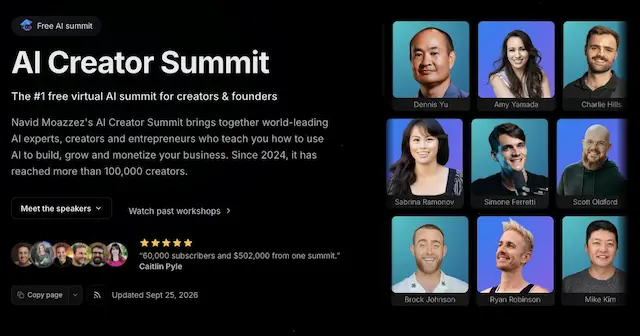
I've hosted video summits ever since. When I launched the AI for Creators Summit in 2024, I had no track record in AI. It still grew into the AI Creator Summit, which 100,000+ creators from 110+ countries have tuned in to. People didn't join because I was the AI expert. They joined because I brought the right experts together at the right time.
Telesummit vs podcast vs webinar
- Speakers
- Many experts, audio only
- Length
- A few days
- How it makes money
- A pass for the recordings
- Speakers
- A host and one guest per episode
- Length
- Ongoing
- How it makes money
- Sponsors, and leads for your offers
- Speakers
- Usually one presenter
- Length
- 60 to 90 minutes
- How it makes money
- An offer at the end
- Speakers
- Many experts, on video
- Length
- 3 to 7 days
- How it makes money
- A pass, bonuses and a backend offer
A telesummit sits between a podcast and a virtual summit. It has the many experts of a summit, but the audio-only format of a podcast.
When an audio format still makes sense
- Your audience listens on the go. Commuters, parents and people who train a lot often prefer audio.
- Your speakers won't do video. Some experts are happy to talk but don't want to be on camera.
- You're testing a topic. An audio series is a fast, low-effort way to see if people care, before you build a full summit.
Even then, record video when you can, and offer the audio as a second option.
Mistakes that sank telesummits
These are the mistakes that made many telesummits forgettable, and they still sink summits today:
- Too many speakers. 40 audio interviews is overwhelming, not generous.
- Bad audio. In an audio-only event, bad sound is the whole experience.
- No clear promise. "Experts share their tips" doesn't make anyone sign up.
- No next step. Free sessions and nothing to buy means no business.
- Speakers picked for fame. A big name with a generic interview hurts your reputation.
Do telesummits still work today?
Audio isn't dead. Podcasts are bigger than ever, and plenty of people would rather listen on a walk than watch a screen.
But today, an audio-only summit leaves too much on the table. Your audience expects video, and video gives you so much more to work with afterward: clips for every platform, a replay vault, a course.
The best of both: record every interview on video, then offer an audio version too. Attendees can watch or listen, and you get a podcast feed out of the same recordings.
How to host a modern summit instead
You don't need a studio or a big budget:
- Recording: a tool like Riverside that records each person's video and audio separately, in high quality.
- Editing: Descript, which lets you edit video by editing the transcript.
- Site: today I host my summits on AI Summit OS, my set of summit templates from registration to replay vault. Claude builds from them, so a summit site comes together fast.
- Gear: a good USB microphone and a webcam, or even your phone. My video gear guide has the setup I use.
The full step-by-step is in how to host a virtual summit.
What modern summits have done for my students
None of these hosts had a big audience before their first summit:







These results would have been very hard with an audio telesummit.
FAQs about telesummits
Quick answers to the questions people ask about telesummits.
A telesummit is an online event where a host interviews several experts on one topic, delivered mainly as audio.
Speakers joined by phone or a simple conference line.
A telesummit is audio only.
A virtual summit is on video, with a designed site, a replay vault and often live sessions and a community.
They can, but an audio-only summit leaves a lot on the table today.
Record on video, and offer an audio version as a second option.
The same way summits do today.
Interviews were free for a limited time, and a paid package gave you all the recordings.
No.
A podcast is ongoing, with one guest per episode, while a telesummit brings many experts together around one topic over a few days.
Final thoughts on telesummits
Telesummits paved the way for today's online events. They proved that people will sign up to learn from a group of experts, and pay to keep the recordings.
But the format has moved on. A video summit, with an audio option, gives your attendees a better experience and gives you far more to build on.
If you're planning your first event, read what is a virtual summit, then how to host one. My upcoming book Virtual Summit OS teaches my full method, rebuilt so AI does most of the work.

Navid Moazzez
AI business strategist
Navid Moazzez helps creators and founders master AI and build their own AI Operating System (AI OS) to automate their business and life.

Navid.me is reader-supported. When you buy through links on this site, I may earn an affiliate commission. Read the affiliate disclaimer.
On this page
Similar articles
The 14 best live streaming software in 2026 (free and paid)
What is a virtual event? The complete guide for 2026
How to promote a virtual event: 17 tips and a 6-week plan
21 virtual event mistakes and how to avoid them
21 online event marketing strategies that work in 2026
100 best questions to ask guest speakers at a virtual event

19 types of virtual events for creators & marketers in 2026
21 benefits of virtual events for creators in 2026
50 top virtual event ideas that actually work in 2026
100 best virtual event examples to model in 2026
How to monetize virtual events: 21 proven strategies (2026)

What is a virtual summit? The complete guide (2026)
Related free tools


 Bluesky
 Instagram

 Threads

 Mastodon

 TikTok
 Pinterest
 YouTube
 Free AI newsletter
The most actionable AI newsletter for founders
Every week, get proven AI strategies, curated tools, and step-by-step systems to grow your audience, create better content, and build a profitable creator business.
No fluff, no filler, no BS. Just five minutes each week that might level up your online business and life.
P.S. Sign up now to get free access to my ultimate AI tools guide for creators.
