



Free Card Finder (+ Guide)





A free card finder that starts with where you live and shows the credit cards you can really get, with every fact from the issuer's own page.
0.0(0 ratings) by Navid Moazzez·Updated Sept 30, 2026·10 min read·Navid.me is reader-supported. When you buy through links on this site, I may earn an affiliate commission. Learn more.
Embed this tool on your site
Paste the code into any page: WordPress, Webflow, Squarespace, Ghost or plain HTML. It's free with the credit under it, which links back to navid.me.
This free card finder shows the credit and charge cards you can really get from where you live, with what each one asks for, what it costs abroad, and today's welcome bonus.
Pick where you live, or "No fixed home", and what matters to you: no foreign fee, free cash abroad, airport lounges.
The finder puts the cards you can get first, easiest first, and marks the rest honestly.
It lists cards only.
For bank accounts, including accounts for travel and for people abroad, use the bank account finder.
TL;DRKey takeaways
What is a card finder?
A card finder matches you to the cards that fit how you live and spend.
Most card quizzes only cover one country.
This one starts with where you live, then covers personal and business cards in the US, the UK and the UAE, for people at home and people abroad.
How to use the card finder
Your choices stay in this browser, so the list is ready when you come back.
How the card finder decides
Each credit card gets one of four answers for you:
- Nothing rules you out – no rule on the provider's own pages or sign-up form excludes you
- Not confirmed for you – the provider doesn't say whether people who live elsewhere can open it, and you don't live there
- For residents of a country – it's only for residents, or it needs a residence document such as an Emirates ID
- Needs a company in a country – a business account that takes companies from certain countries only
- Its rules exclude where you live – the provider's own list of countries leaves out where you live
- Its rules mention one of your passports – the provider's own list names a country whose passport you hold
Then it rates how hard opening is, for you:
- Easy – it opens online from abroad, with nothing local to show
- Medium – one step in person, or something local you may not have (a tax number, address, bank account or credit history there), extra paperwork, or an income threshold
- Hard – in person only, or a real tie to the country is required
The same rule sits under the list, and every credit card says why it got its rating.
None of these is a promise: the bank decides when you apply.
Your passport can matter as much as where you live.
Pick every passport you hold, and the finder checks each provider's own published list: some go by where you live, some by citizenship, some by both, and the finder follows each one's wording.
Mercury, for example, goes by where you live, not your citizenship, while Relay counts either.
Where a provider publishes no list, the finder can't check, and US banks also follow US sanctions.
Why "can I get it?" comes first
The best card in the world doesn't help if you can't get it, and each country asks for different things:
- US – Chase's guide to applying says card applications ask for a Social Security number or an ITIN, and generally a physical US address
- UK – American Express asks for a permanent UK home address and a UK bank account
- UAE – the cards ask for an Emirates ID, and most for a salary certificate and a minimum salary
The finder asks where you live first, so the list starts with what's really open to you.
Every card at a glance
Each card's annual fee and today's welcome bonus.
Every personal card here is a travel card, and each has its own write-up in the travel credit card finder.
United States
 Sapphire Preferred
- Annual fee
- $95 a year
- Welcome bonus
- 75K points
 Sapphire Reserve
- Annual fee
- $795 a year
- Welcome bonus
- 100K points
 Venture X
- Annual fee
- $395 a year
- Welcome bonus
- 75K miles
 Venture
- Annual fee
- $95 a year
- Welcome bonus
- 75K miles
 Bonvoy Boundless
- Annual fee
- $95 a year
- Welcome bonus
- 3 free nights
 Bonvoy Bold
- Annual fee
- No annual fee
- Welcome bonus
- 45K points
 Amex Platinum
- Annual fee
- $895 a year
- Welcome bonus
- Up to 175K points
 Amex Gold
- Annual fee
- $325 a year
- Welcome bonus
- Up to 100K points
 Bonvoy Brilliant
- Annual fee
- $650 a year
- Welcome bonus
- 150K points
 Bonvoy Bevy
- Annual fee
- $250 a year
- Welcome bonus
- 125K points
 Hilton Honors
- Annual fee
- No annual fee
- Welcome bonus
- 70K points
 Hilton Surpass
- Annual fee
- Free in year 1, then $150 a year
- Welcome bonus
- 130K points
 Hilton Aspire
- Annual fee
- $550 a year
- Welcome bonus
- 200K points
 World of Hyatt
- Annual fee
- $95 a year
- Welcome bonus
- Up to 60K points
 IHG Premier
- Annual fee
- $99 a year
- Welcome bonus
- 140K points
 IHG Traveler
- Annual fee
- No annual fee
- Welcome bonus
- 80K points
United Kingdom
 Amex Platinum
- Annual fee
- £650 a year
- Welcome bonus
- 50K points
 Marriott Bonvoy
- Annual fee
- £95 a year
- Welcome bonus
- 20K points
United Arab Emirates
 Marriott Bonvoy
- Annual fee
- AED 1,575 a year, AED 1,575 to join
- Welcome bonus
- Up to 200K points
 Skywards Infinite
- Annual fee
- AED 1,575 a year, AED 3,148.95 to join
- Welcome bonus
- Up to 100K miles
 Amex Platinum
- Annual fee
- AED 3,255 a year with VAT
- Welcome bonus
- 50K points
 Amex Platinum Credit
- Annual fee
- AED 735 a year with VAT
- Welcome bonus
- 30K points
 Citi Cash Back
- Annual fee
- Free in year 1, then AED 300 a year
- Welcome bonus
- Not listed
 FAB Travel Credit Card
- Annual fee
- AED 1,575 a year
- Welcome bonus
- Not listed
 HSBC Emirates Skywards Infinite Credit Card
- Annual fee
- AED 2,625 a year
- Welcome bonus
- 70K miles
Canada
 Scotiabank Passport Visa Infinite
- Annual fee
- CAD 150 a year
- Welcome bonus
- Not listed
The best business credit cards
Business cards need a company, and the US ones a tax number: Chase says it requires a Social Security number for its business cards.
Hilton Honors American Express Business Card

 American Express · Credit cardHilton Gold status for business travel
- Annual fee
- $195 a year
- Welcome bonus
- 150,000 Hilton Honors points + a free night after $8,000 in 6 months
- Foreign fee
- None
- Rewards
- 12x at Hilton hotels
- Lounges
- Not listed
- Interest
- 19.74% to 28.74%
It includes Hilton Honors Gold status, earns 12x points at Hilton, and gives up to $240 a year in statement credits, with no foreign transaction fees.
- Hilton Honors Gold status
- Up to $240 a year in statement credits
- No foreign transaction fees
- $195 a year
 Visit American Express
Marriott Bonvoy Business American Express Card
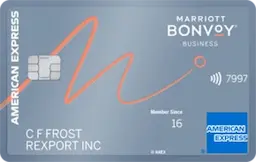 American Express · Credit cardMarriott Gold Elite and night credits for business
- Annual fee
- $125 a year
- Welcome bonus
- 100,000 Marriott Bonvoy points + a free night after $8,000 in 6 months
- Foreign fee
- None
- Rewards
- 6x at Marriott hotels
- Lounges
- Not listed
- Interest
- 19.74% to 28.74%
It includes Marriott Bonvoy Gold Elite status and 15 Elite Night Credits a year, earns 6x at Marriott hotels, and charges no foreign transaction fees.
- Marriott Bonvoy Gold Elite status
- 15 Elite Night Credits a year
- No foreign transaction fees
- $125 a year
Visit American ExpressChase Ink Business Preferred
 Chase · Credit cardPoints on travel and business costs
- Annual fee
- $95 a year
- Welcome bonus
- 100,000 points after $8,000 in 3 months
- Foreign fee
- None
- Rewards
- 3x on business categories
- Lounges
- Not listed
- Interest
- 17.74% to 26.74%
It earns 3x points on the first $150,000 a year in select business categories, such as travel and shipping, with no foreign transaction fees.
- No foreign transaction fees
- 3x points on travel and business categories
- $95 a year
- Needs a Social Security number (Chase)
 Visit Chase
American Express Business Platinum Card
 American Express · Charge cardLounges and hotel credits for business travel
- Annual fee
- $895 a year
- Welcome bonus
- As high as 300,000 Membership Rewards points after $20,000 in 3 months
- Foreign fee
- Not listed
- Rewards
- 5x on Amex Travel
- Lounges
- Not listed
- Interest
- Not listed
It opens Centurion Lounges, Delta Sky Clubs on eligible Delta flights and Priority Pass, and gives up to $600 a year in hotel credits.
- Centurion, Delta Sky Club and Priority Pass lounges
- Up to $600 a year in hotel credits
- $895 a year
Visit American ExpressAmerican Express Business Platinum Card

 American Express · Charge cardLounges for you and your team
- Annual fee
- £650 a year
- Welcome bonus
- Not listed
- Foreign fee
- Not listed
- Rewards
- 2x on Amex Travel
- Lounges
- Not listed
- Interest
- 29.1% p.a.
It opens 1,550+ lounges for you, an employee Cardmember and a guest each, with travel credits as your spending grows.
- 1,550+ lounges, including for an employee Cardmember and guests
- Travel credits as spending grows
- 650 GBP a year
Visit American ExpressCredit history and credit card approval
Being able to apply isn't the same as being approved.
Card issuers look at your credit history, and it's kept country by country, so a history built in one country usually doesn't show up in another.
A few official lines show how this works:
- Chase – sets each card's interest rate "based on your creditworthiness and other factors", and says it requires a Social Security number for its business cards
- American Express UK – asks for no history of bad debt, a permanent UK home address and a UK bank account
- American Express Global Card Relationship – lets Card Members who move apply for a card in their new country, in select countries, using their existing Amex relationship
That's why the finder counts a local credit history as something you may not have yet, and marks those cards medium for you.
The bank accounts and cards I use
I'm not a US citizen, and I bank with Chase: I have Chase Private Client and Chase Business Complete Checking. Private Client has no foreign exchange fees and no ATM fees worldwide, and Chase waives its $35 monthly fee when you keep $150,000 or more with it.
Private Client is great if you qualify, but it's harder to get. You need proof of a US address, which you can get without living in the US, by staying there for a while or getting a short contract there. After that it's usually easy, especially with a good relationship with your banker. It depends on the banker and what they think: one turned me down, and another in the same city said yes.
Most people start with a regular account like Chase Total Checking, and I think it's still better than most other US banks. For a US company, I also like Mercury.
I keep a big bank on purpose. A neobank like Wise or Mercury can shut an account down, and with Chase that's very hard. And if JPMorgan Chase ever went under, I think we'd have bigger problems to worry about: it would be the end of the American economy, and in many ways the world's.
I use Wise to hold and convert other currencies, and I bank with HSBC in the UK. I've had American Express cards in the US and in the UK, where I had the Platinum, personal and business. I'm Marriott Bonvoy Titanium Elite.
In Dubai, I banked with Emirates NBD and Mashreq, and had Emirates NBD's Marriott and Emirates cards. I'd recommend Wio Personal and Wio Business there, because they have by far the best UI, but I'd still try to get an Emirates NBD account too.
That's my own mix, not a ranking. I haven't lived everywhere, so the card finder stays objective: the order comes from the rules above, never from what I use.
The Wise link is an affiliate link, so I may earn a commission at no extra cost to you.
Where the facts on these credit cards come from
Every fee, rule and requirement comes from the provider's own pages: its product page, fee schedule, pricing and terms, or eligibility page.
Deposit protection comes from each scheme's own site, and each credit card lists its sources with the date I read them.
When a provider doesn't publish something, the finder leaves it empty and says so, rather than filling it in from a comparison site.
Fees change, so check the provider before you apply.
It's information, not financial advice.
Who is the card finder for?
It's for anyone who lives, works or spends across borders, and each of them has a next step:
- Best travel credit cards – travelers comparing foreign fees, lounges and welcome bonuses
- Bank account finder – anyone opening an account in another country
- Business bank account finder – founders with a company abroad
- Card fees abroad calculator – anyone checking what a payment abroad really costs
- Money transfer comparison – anyone sending money abroad
- Digital nomad visa finder – remote workers checking which visas their income covers
- What is a global citizen? – anyone building a life across borders, in my own words
Card Finder FAQs
Questions about banks and cards abroad? Here's what to know.
A card finder matches you to the credit cards that fit how you live and spend.
This one starts with where you live, and shows the cards you can really get first.
Usually only if you live there, or can show the ties the issuer asks for.
US cards ask for a Social Security number or an ITIN and a US address, UK cards a UK home address, and UAE cards an Emirates ID.
It means the issuer's pages don't say whether people who live elsewhere can apply.
The finder marks it that way rather than guess, so check with the issuer before you apply.
Easy means you can apply from abroad with nothing local to show.
Medium means something local you may not have, like a tax number, an address or a credit history there, or an income threshold.
Hard means a real tie to the country.
Yes, each card shows today's offer from the issuer's own page, with the day I read it.
Offers change often, so check the issuer's page before you apply.
From each issuer's own pages, fee schedules and terms.
Every card lists its sources with the date they were read.
I did. I'm Navid Moazzez, and the card finder is one of my free tools on navid.me.
Read about me, or see my creator profile.

Navid Moazzez
AI business strategist & AI OS builder
Navid Moazzez helps creators and founders master AI and build their own AI Operating System (AI OS) to automate their business and life.

Navid.me is reader-supported. When you buy through links on this site, I may earn an affiliate commission. Read the affiliate disclaimer.
On this page
More free tools


Related MCP servers & CLIs

 Bluesky
 Substack
 Threads
 Mastodon
 TikTok


 Apple Podcasts
 Free AI newsletter
The most actionable AI newsletter for founders
Every week, get proven AI strategies, curated tools, and step-by-step systems to grow your audience, create better content, and build a profitable creator business.
No fluff, no filler, no BS. Just five minutes each week that might level up your online business and life.
P.S. Sign up now to get free access to my ultimate AI tools guide for creators.
