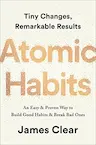



Atomic Habits by James Clear: Book Summary, Review & Notes
An in-depth summary of Atomic Habits by James Clear, with the key ideas, the Four Laws of Behaviour Change, real quotes and how it compares to similar books.
I may earn a commission if you make a purchase, at no additional cost to you.
 by Navid Moazzez·Updated Sept 29, 2026·4 min read·Navid.me is reader-supported. When you buy through links on this site, I may earn an affiliate commission. Learn more.




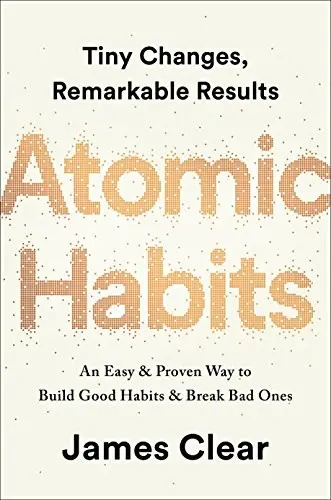
This is an in-depth book summary, notes and highlights of Atomic Habits by James Clear. Published in 2018 by Avery, it has sold over 30 million copies and been translated into more than 60 languages.
Atomic Habits in three sentences
- Atomic Habits argues that small repeated behaviours matter far more than big one-off efforts.
- It says your results come from the systems you run every day, not from the goals you set.
- The book gives a four-step framework for making good habits obvious, attractive, easy and satisfying, and inverts it to break bad ones.
Key takeaways
- Small habits compound. Clear puts 1 percent daily gains at roughly 37 times better over a year.
- Focus on systems, not goals. Goals set the direction, systems produce the progress.
- Change identity first. Every action is a vote for the person you want to become.
- The Four Laws of Behaviour Change: make it obvious, attractive, easy, satisfying. Invert them to break a habit.
- Design your environment. Disciplined people structure their lives so they need less willpower.
- Habit stacking pins a new habit to an existing one: after [current habit], I will [new habit].
- The Two-Minute Rule: scale a new habit down so starting it takes under two minutes.
- Track your habits and never miss twice. Missing once is an accident, missing twice starts a new habit.
Who should read Atomic Habits
- People who set goals and keep missing them. The book moves the focus to daily systems.
- Anyone starting a first habit like exercise or reading. The Two-Minute Rule lowers the barrier.
- Readers who want tactics over theory. Each chapter ends with something concrete to do.
- Managers and coaches who need a shared vocabulary for behaviour change on a team.
- Parents and teachers. The appendix covers applying the four laws to business and parenting.
- People who quit after one bad day. The never miss twice rule addresses that directly.
Who might not enjoy it
- Readers wanting original peer-reviewed research. Clear synthesises other people's studies and leans on anecdotes.
- People whose blockers are clinical, such as ADHD, depression or trauma. The book does not cover those.
Popular quotes from Atomic Habits
Habits are the compound interest of self-improvement.
Small repeated actions accumulate the way interest does.
You do not rise to the level of your goals. You fall to the level of your systems.
Ambition does not carry you, your daily process does.
Every action you take is a vote for the type of person you wish to become.
Habits build evidence about who you are, not just what you do.
You should be far more concerned with your current trajectory than with your current results.
Direction of travel predicts more than a snapshot of today.
Your outcomes are a lagging measure of your habits.
What you see now was produced by what you repeated earlier.
Be the designer of your world and not merely the consumer of it.
Change your surroundings instead of fighting them with willpower.
The greatest threat to success is not failure but boredom.
Most people stop because the habit stopped feeling interesting.
How Atomic Habits compares to similar books
The Power of Habit by Charles Duhigg
Habits run on a loop of cue, routine and reward, in people, companies and societies. Published 2012 and written as reported journalism. Stronger on why habits work, weaker on a step-by-step system you can apply tomorrow.
Tiny Habits by BJ Fogg
Anchor a very small behaviour to something you already do, then celebrate immediately. Published 2019 by a Stanford researcher. Puts emotion and celebration at the centre where Clear centres cues and rewards.
How to Change by Katy Milkman
Diagnose the specific obstacle, then match a research-backed tactic to it. Published 2021 by a Wharton behavioural scientist drawing on her own experiments. Clear borrows her temptation bundling research for his second law.
Better Than Before by Gretchen Rubin
Habit advice depends on personality, sorted into four tendencies. Published 2015 and personality-first. Clear's four laws are presented as applying to everyone the same way.
Mini Habits by Stephen Guise
Set a daily requirement so small it feels silly, such as one push-up. Published 2013, short, and built on one tactic. Atomic Habits contains the same idea as the Two-Minute Rule inside a wider framework.
The Compound Effect by Darren Hardy
Consistent small choices compound into large results over time. Published 2010 and more motivational in tone. It shares the compounding argument but skips the habit loop mechanics and the how-to laws.
About James Clear
James Clear is a writer and speaker on habits, decision making and continuous improvement. He pitched college baseball at Denison University and was named to the ESPN Academic All-America team in 2008. He has written about habits on his site since 2012 and sends the 3-2-1 newsletter to more than 3 million subscribers.
The book opens with his account of being hit in the face by a baseball bat as a high school sophomore, which caused skull fractures and a medically induced coma.
FAQs about Atomic Habits
The questions people most often ask about Atomic Habits by James Clear.
Atomic Habits is a 2018 book by James Clear about building good habits and breaking bad ones. Its argument is that small changes repeated daily compound into large results. Clear's framework is the Four Laws of Behaviour Change.
James Clear is a writer and speaker on habits, decision making and continuous improvement. He pitched college baseball at Denison University and has written about habits on his site since 2012. His 3-2-1 newsletter goes to more than 3 million subscribers.
That tiny changes repeated daily produce large results over time. Clear argues you should build systems rather than chase goals. The book's line is that you fall to the level of your systems.
Make it obvious, make it attractive, make it easy, make it satisfying. They map to the four parts of a habit: cue, craving, response, reward. To break a habit you invert them: invisible, unattractive, difficult, unsatisfying.
Clear uses atomic in two senses. A habit is tiny like an atom, and it is also a building block of a larger system. Small habits are meant to be the units that produce big results.
Clear rejects a fixed number of days. He argues habits form based on frequency of repetition, not elapsed time. The 21-day rule is a misreading of Maxwell Maltz's Psycho-Cybernetics.
When you start a new habit, it should take less than two minutes to do. Read one page instead of reading before bed. Tie your running shoes instead of running three miles.
You attach a new habit to one you already do reliably. The formula is: after [current habit], I will [new habit]. The existing routine acts as the cue.
A goal is the result you want. A system is the process that produces it. Clear says goals are useful for setting direction, but systems are what make progress.
It is the gap between the work you put in and the results you can see. Clear uses an ice cube warming from 25 to 32 degrees as the example. Nothing looks like it is happening until it suddenly does.
Clear cites work from psychology, neuroscience and biology, but he is a writer and speaker rather than an academic researcher. Critics say it leans on anecdotes and secondhand studies.
That is the most common complaint from readers, who say it over-explains simple ideas. Others argue the core message fits in a long article. It still holds a 4.31 average from over 1.4 million Goodreads ratings.
Duhigg's 2012 book explains why habits work using stories about people and companies. Clear's book is a how-to manual with named tactics. Many readers find Atomic Habits easier to act on and Duhigg more interesting to read.
There is no sequel. Avery published The Atomic Habits Workbook in December 2025 as an official companion. Clear narrates the audiobook himself and it runs about 5 hours 35 minutes.

Navid Moazzez
AI business strategist & AI OS builder
Navid Moazzez helps creators and founders master AI and build their own AI Operating System (AI OS) to automate their business and life.

Navid.me is reader-supported. When you buy through links on this site, I may earn an affiliate commission. Read the affiliate disclaimer.
On this page
More books like this


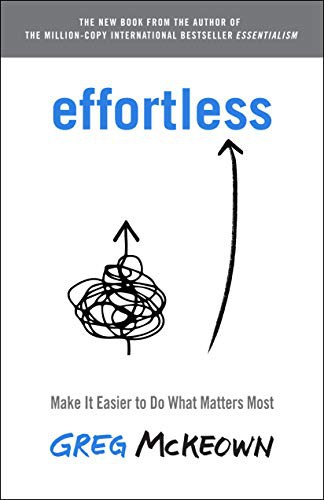
Effortless
 by Greg McKeown
Effortless by Greg McKeown shows how to make success easier by removing unnecessary effort, simplifying your approach.
Categories
We earn a commission if you make a purchase, at no additional cost to you.
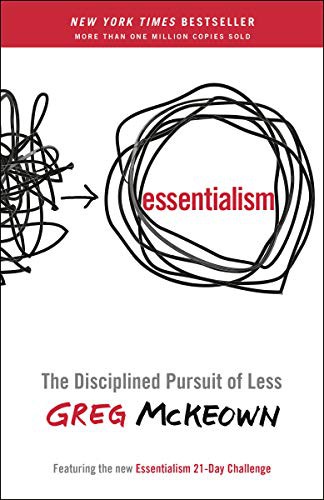
Essentialism
by Greg McKeownEssentialism by Greg McKeown teaches how to eliminate distractions, say no to the nonessential, and channel all your energy into the few things that truly matter.
Categories
We earn a commission if you make a purchase, at no additional cost to you.
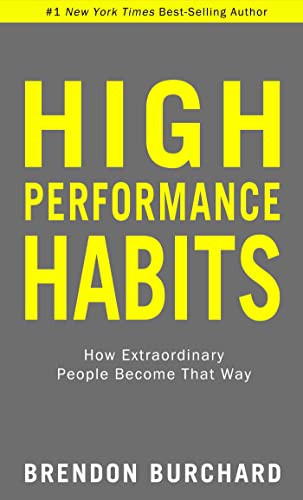
High Performance Habits
 by Brendon Burchard
High Performance Habits by Brendon Burchard reveals six science-backed habits that separate top performers from the rest and help sustain long-term.
Categories
We earn a commission if you make a purchase, at no additional cost to you.
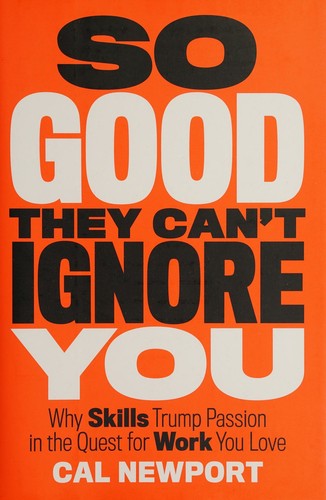
So Good They Can't Ignore You
 by Cal Newport
So Good They Can't Ignore You by Cal Newport challenges the idea of 'follow your passion.
Categories
We earn a commission if you make a purchase, at no additional cost to you.
10% Happier
 by Dan Harris
A skeptic's guide to meditation that actually works. Covers practical mindfulness techniques for reducing anxiety, improving focus, and staying calm under pressure.
Categories
We earn a commission if you make a purchase, at no additional cost to you.
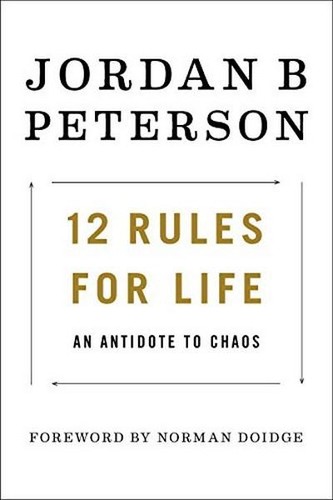
12 Rules for Life
 by Jordan Peterson
Twelve practical principles for building a more meaningful and disciplined life. Covers personal responsibility, honesty, and finding order in the chaos of modern existence.
Categories
We earn a commission if you make a purchase, at no additional cost to you.
More free tools


Related MCP servers & CLIs

 Bluesky
 Substack
 Threads
 Mastodon
 TikTok


 Apple Podcasts
 Free AI newsletter
The most actionable AI newsletter for founders
Every week, get proven AI strategies, curated tools, and step-by-step systems to grow your audience, create better content, and build a profitable creator business.
No fluff, no filler, no BS. Just five minutes each week that might level up your online business and life.
P.S. Sign up now to get free access to my ultimate AI tools guide for creators.