


Choose by Ryan Levesque: Book Summary, Review & Notes
An in-depth summary of Choose by Ryan Levesque, with the Choose Method, the 5 Market Must-Haves, real quotes and how it compares to similar books.
I may earn a commission if you make a purchase, at no additional cost to you.
 by Navid Moazzez·Updated Sept 29, 2026·4 min read·Navid.me is reader-supported. When you buy through links on this site, I may earn an affiliate commission. Learn more.




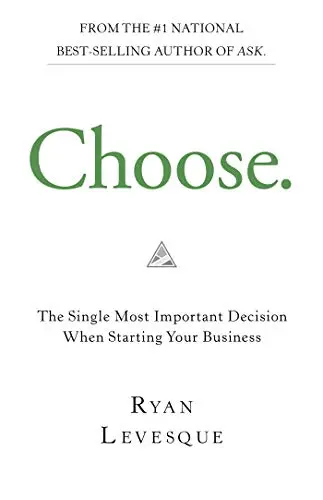
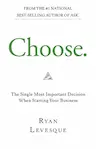
This is an in-depth book summary, notes and highlights of Choose by Ryan Levesque. Published in 2019 by Hay House Business, it is the companion to his earlier book Ask and covers the decision that comes first: which market to serve.
Choose in 3 sentences
- Choose argues that many new businesses fail because the founder picked the wrong market, not the wrong product.
- Ryan Levesque's Choose Method tests an idea in 9 steps across 3 stages: Brainstorm, Test and Choose.
- It favors markets with proven demand and a healthy number of competitors, where you build something a little better or a little different.
Key takeaways
- Decide who you will serve before deciding what you will sell. The market shapes everything built on top of it.
- Brainstorm in 3 passes: the business model, the market and the business idea. Levesque favors selling education and expertise.
- Turn each idea into a Bullseye Keyword, the search phrase that sums it up, such as "PCOS diet" in one of the book's examples.
- Check demand with Google Trends to see whether the idea sits in the Market Size Sweet Spot.
- Check competition on Amazon. Count the sponsored listings selling education on page 1: 3 to 7 is a green light, 1 to 2 or 8 to 9 is yellow, and 0 or 10 or more is red.
- Run the idea past the 5 Market Must-Haves: an evergreen market, an enthusiast market, an urgent problem, future problems and players with money.
- Be a settler, not a pioneer. Enter a market others have proven and improve on what is there.
- Start small with IN/UP/MAX, a low-priced first product that lets customers in, followed by higher-priced offers.
Who should read Choose
- Aspiring entrepreneurs with several ideas who cannot decide which one to pursue.
- Owners of a struggling business who suspect the market, not the effort, is the problem.
- Course creators, coaches and authors, since the method is built for education and expertise businesses.
- Anyone about to spend money on a new venture who wants a quick way to screen ideas first.
- Readers of Ask who have not yet settled on a market.
- People who like checklists and simple scoring, like the book's green, yellow and red lights.
Who might not enjoy it
- Founders of venture-backed tech startups. The tests are designed for information and education businesses.
- Readers who already run a business in a healthy market. Most of the book is about the choice itself.
Popular quotes from Choose
If you choose the wrong market, your business is destined to fail before you even begin.
The claim the book is built on.
To a 4th-grader, the 5th-grader is a genius. You just need to stay one step ahead, not necessarily light-years ahead.
Why you do not need to be the top expert to teach a market.
Billion-dollar problems require billion-dollar budgets. What kind of budget do you have?
Pick a problem that matches your resources.
The secret here is having the right number of competitors. Not too many, but not too few.
Competition is a signal of demand, up to a point.
So, how do you find out whether your idea fits in the Market Competition Sweet Spot? In a word, advertising. But your competitors', not yours.
Other people's ad spend tells you a market pays.
Google wasn't the first search engine. They identified an opportunity that someone else pioneered, built a better mousetrap, and settled in that space.
The settler strategy in one example.
Once your customers are familiar with your business or brand, you can offer a more premium product at a higher price.
The logic behind starting with a low-priced first offer.
How Choose compares to similar books
Ask by Ryan Levesque
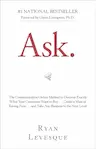
Levesque's first book, on using surveys to learn what a market wants to buy. Published in 2015. Choose covers the step before it, deciding which market to enter at all.
The Lean Startup by Eric Ries
Build, measure and learn with a minimum viable product. Published in 2011. It validates an idea by launching and measuring, while Choose screens the market with search and advertising data first.
Blue Ocean Strategy by W. Chan Kim and Renée Mauborgne
Create new market space instead of fighting rivals. Published in 2005 by 2 business school professors. Choose argues the opposite for small businesses: enter markets where competitors already prove demand.
Will It Fly? by Pat Flynn
How to test a business idea before spending time and money on it. Published in 2016. It covers similar ground with more on validating the offer itself, where Choose focuses on the market.
The $100 Startup by Chris Guillebeau
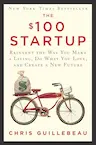
Stories of people who started small businesses with little money. Published in 2012. It is broader and more inspirational, with fewer tests for rating a market in advance.
Launch by Jeff Walker
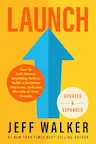
A formula for launching a product with a sequence of prelaunch content. Published in 2014. It picks up after the market is chosen and the offer is ready.
About Ryan Levesque
Ryan Levesque studied neuroscience and East Asian studies at Brown University and worked in finance in China with AIG before starting online. His first business taught people to make jewelry from Scrabble tiles, a fad he later used as the example of a market that is not evergreen.
He has built businesses in 23 niche markets, created the Ask Method and has been an Inc. 5000 founder 7 times. He hosts the podcast The Digital Contrarian and lives on a farm in Vermont.
FAQs about Choose
The questions people most often ask about Choose by Ryan Levesque.
Choose is a 2019 book by Ryan Levesque about picking the right market before starting a business. It sets out the Choose Method, a 9-step process for testing ideas against search, advertising and market data. Its argument is that the market decision comes before the product.
Ryan Levesque is an entrepreneur and author who studied neuroscience and East Asian studies at Brown University and worked in finance in China. He built businesses in 23 niche markets and created the Ask Method. Choose is his second book, after Ask.
A process for choosing a market in 9 steps across 3 stages. In Brainstorm you generate models, markets and ideas. In Test you check each idea's search demand, competition and fit, and in Choose you pick one and prepare to launch.
Model Brainstorm, Market Brainstorm, Business Idea Brainstorm, Bullseye Keyword, Market Size Sweet Spot, Market Competition Sweet Spot, Market Must-Haves, Choose Your Market and The Final Step to Launch.
An evergreen market that is not a fad, an enthusiast market that buys more than once, an urgent problem you can solve first, future problems you can solve later, and players with money who already spend in the market.
It is the search phrase that best sums up a business idea, such as "PCOS diet" in one of the book's examples. You use it to run the book's market size and competition tests.
It is a test of whether enough people are searching for your Bullseye Keyword, using Google Trends. Like the other tests in the book, it gives the idea a green, yellow or red light.
A test run on Amazon. Search your Bullseye Keyword and count the sponsored listings selling education on page 1. Between 3 and 7 is a green light, 1 to 2 or 8 to 9 is yellow, and 0 or 10 or more is red.
It means customers who have already shown they spend money in the market. Levesque lists it as one of the 5 Market Must-Haves, because a market full of people unwilling to pay will not support a business.
Levesque argues that settlers learn from where pioneers failed and succeeded. He points out that Google, Facebook, Amazon and Apple were not first in their categories. Entering a proven market and improving on it carries less risk.
It is the book's pricing path. You launch with a low-priced IN product that almost any customer can afford, then offer higher-priced products as customers get to know your business.
Levesque favors education and expertise, selling knowledge through products like courses, books and coaching. The competition test on Amazon counts listings of that kind.
Mission-based entrepreneurs want to right a wrong, passion-based ones want to turn something they love into a business, and opportunity-based ones spot an unsolved problem. Undecided entrepreneurs start with a practice business to learn the skills for the business they will keep.
Read Choose first if you have not picked a market, because it covers that decision. Read Ask once you have a market and want to learn what it wants to buy.

Navid Moazzez
AI business strategist & AI OS builder
Navid Moazzez helps creators and founders master AI and build their own AI Operating System (AI OS) to automate their business and life.

Navid.me is reader-supported. When you buy through links on this site, I may earn an affiliate commission. Read the affiliate disclaimer.
On this page
More books like this

 Navid’s pick
$100M Leads
 by Alex Hormozi
A complete system for generating unlimited leads through cold outreach, paid ads, referrals, and organic content. Covers the exact frameworks behind eight and nine-figure businesses.
Categories
We earn a commission if you make a purchase, at no additional cost to you.
 Navid’s pick
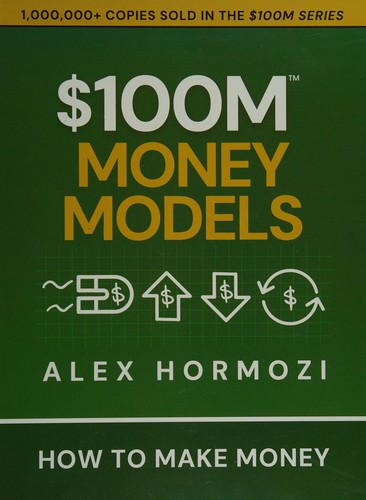
$100M Money Models
by Alex HormoziBreaks down the business models that generate massive recurring revenue. Covers pricing strategies, offer structures, and profit optimization for scaling past seven figures.
Categories
We earn a commission if you make a purchase, at no additional cost to you.
 Navid’s pick
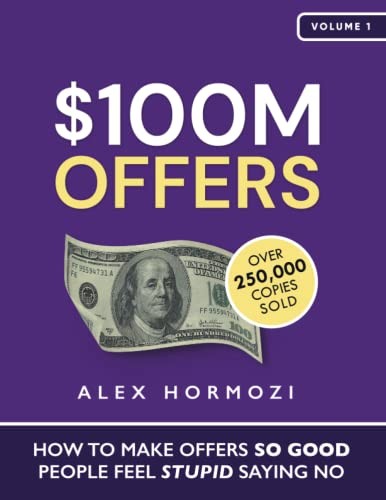
$100M Offers
by Alex HormoziProven strategies for creating irresistible offers that customers can't say no to. Covers pricing, value stacking, and positioning to maximize conversions.
Categories
We earn a commission if you make a purchase, at no additional cost to you.
 Navid’s pick
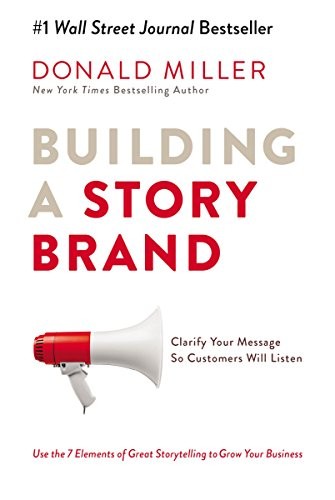
Building a StoryBrand
 by Donald Miller
Building a StoryBrand by Donald Miller teaches how to clarify your brand's message using a storytelling framework that attracts customers and drives.
Categories
We earn a commission if you make a purchase, at no additional cost to you.
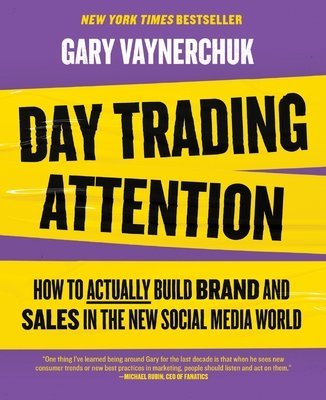
Day Trading Attention
 by Gary Vaynerchuk
Day Trading Attention by Gary Vaynerchuk explains how to win in today's fast-moving digital world by capturing attention, building a brand.
Categories
We earn a commission if you make a purchase, at no additional cost to you.

DotCom Secrets
 by Russell Brunson
DotCom Secrets by Russell Brunson is his playbook for growing a company online with sales funnels.
Categories
We earn a commission if you make a purchase, at no additional cost to you.
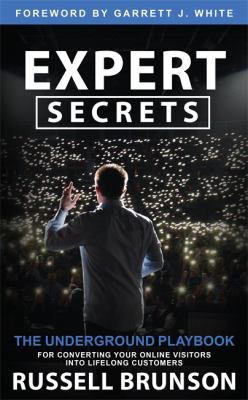
Expert Secrets
by Russell BrunsonExpert Secrets by Russell Brunson teaches how to find your message, build a tribe, and turn your expertise into a mass movement that drives sales.
Categories
We earn a commission if you make a purchase, at no additional cost to you.
More free tools


Related MCP servers & CLIs

 Bluesky
 Substack
 Threads
 Mastodon
 TikTok


 Apple Podcasts
 Free AI newsletter
The most actionable AI newsletter for founders
Every week, get proven AI strategies, curated tools, and step-by-step systems to grow your audience, create better content, and build a profitable creator business.
No fluff, no filler, no BS. Just five minutes each week that might level up your online business and life.
P.S. Sign up now to get free access to my ultimate AI tools guide for creators.