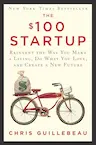



The $100 Startup by Chris Guillebeau: Book Summary, Review & Notes
An in-depth summary of The $100 Startup by Chris Guillebeau, with the convergence idea, the 1-page business plan, real quotes and how it compares to similar books.
I may earn a commission if you make a purchase, at no additional cost to you.
 by Navid Moazzez·Updated Sept 29, 2026·4 min read·Navid.me is reader-supported. When you buy through links on this site, I may earn an affiliate commission. Learn more.




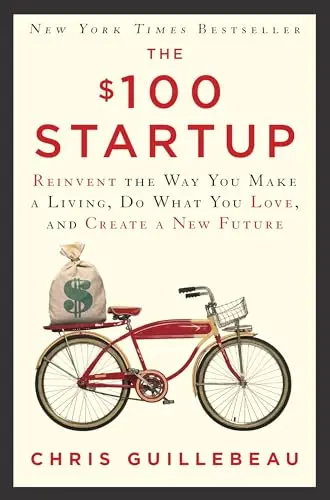
This is an in-depth book summary, notes and highlights of The $100 Startup by Chris Guillebeau. Published in 2012 by Crown Business, it reached number 6 in its category on The New York Times bestseller list and draws on the stories of more than 1,500 small business owners.
The $100 Startup in 3 sentences
- The $100 Startup argues that you can build a business with very little money by turning a skill or passion into something useful people will pay for.
- Chris Guillebeau found more than 1,500 people who built businesses earning $50,000 or more from a modest investment, often $100 or less, and profiles about 50 of them.
- His formula is passion or skill plus usefulness equals success, put into action with a 1-page business plan and a fast launch.
Key takeaways
- Look for convergence, the overlap between what you love or are good at and what other people will pay for.
- You rarely get paid for a hobby itself. You get paid for helping other people pursue it, or for something related to it.
- Value means helping people. Give customers what they want, the fish, rather than a lesson in fishing they did not ask for.
- Test each idea with 3 questions: how you would get paid, how much you would get paid and whether you could get paid more than once.
- Keep the plan to 1 page: what you will sell, who will buy it, how it helps them, what you will charge and how you will get paid.
- Launch quickly and adjust. Inertia is a bigger threat than competition.
- Think more about what people want than about what you think they need.
- Treat a job as a risk too. Guillebeau argues that working for someone else may be the riskier choice.
Who should read The $100 Startup
- People with a skill or hobby who wonder whether it could pay.
- Side hustlers who want to start without loans or investors.
- Freelancers and consultants thinking about turning a service into a product.
- Readers who learn from case studies. The book is built on about 50 real businesses.
- People who dread writing a long business plan.
- Anyone who wants work they can do from anywhere.
Who might not enjoy it
- Founders who want to raise money and build a high-growth company. The book is about small, profitable businesses.
- Readers who want detailed guidance on hiring, finance and scaling. The focus is on getting started.
Popular quotes from The $100 Startup
Value is created when a person makes something useful and shares it with the world.
The book's definition of value.
Think more about what people really want than about what you think they need.
Sell what people ask for.
The missing piece is that you usually don't get paid for your hobby itself; you get paid for helping other people pursue the hobby or for something indirectly related to it.
How a passion turns into income.
If you make your business about helping others, you'll always have plenty of work.
Usefulness as a business strategy.
It's always better to start from where you are than to wait for everything to be perfect.
Why the book pushes a quick launch.
Competition from other businesses is a problem for another day; the greater problem you face is inertia.
The real obstacle is not starting.
The new reality is that working at a job may be the far riskier choice.
His case for building something of your own.
How The $100 Startup compares to similar books
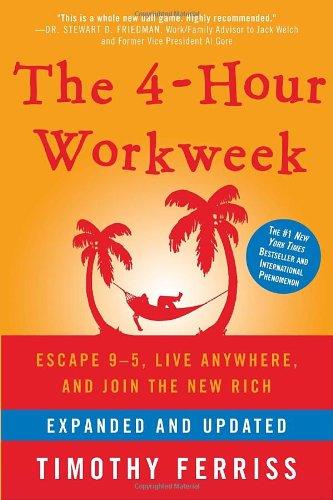
The 4-Hour Workweek by Tim Ferriss
Build an automated business, outsource the rest and design your lifestyle around it. Published in 2007. It pushes automation and less work, while Guillebeau focuses on usefulness and getting started.
The Art of Non-Conformity by Chris Guillebeau
Guillebeau's first book, about living on your own terms instead of following convention. Published in 2010. It is broader and more personal, while The $100 Startup is his practical business book.
Side Hustle by Chris Guillebeau
A 27-day plan for launching a side project while keeping a job. Published in 2017. It is shorter on stories and more of a day-by-day program.
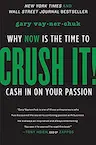
Crush It! by Gary Vaynerchuk
Turn a passion into a personal brand with content and social media. Published in 2009. It is narrower, about content and brand, where The $100 Startup covers many kinds of small business.
Company of One by Paul Jarvis
Why staying small on purpose can beat growth for its own sake. Published in 2019. It shares the small-business outlook and adds more on sustaining one over time.
The Lean Startup by Eric Ries
Build, measure and learn with a minimum viable product. Published in 2011 for startup founders. It shares the idea of launching fast but aims at scalable companies.
About Chris Guillebeau
Chris Guillebeau was born in 1978 and set a goal of visiting every country in the world by his 35th birthday, reaching all 193 in April 2013. He founded the World Domination Summit, an annual gathering in Portland, Oregon, that ran from 2011 to 2022.
His books include The Art of Non-Conformity, The $100 Startup, The Happiness of Pursuit, Born for This, Side Hustle and Time Anxiety.
FAQs about The $100 Startup
The questions people most often ask about The $100 Startup by Chris Guillebeau.
It is a 2012 book by Chris Guillebeau about building a small, profitable business with very little money. It is based on the stories of people who turned a skill or passion into something useful that others pay for.
Chris Guillebeau is an American author who visited all 193 countries by his 35th birthday in 2013 and founded the World Domination Summit in Portland. His books include The Art of Non-Conformity, The $100 Startup and Side Hustle.
Many of the businesses Guillebeau studied began with a modest investment, often $100 or less. The title makes the point that a business does not need much money to start.
Guillebeau found more than 1,500 people who had built businesses earning $50,000 or more from a small investment. He then focused on about 50 of the most interesting cases, which appear throughout the book.
Convergence is the overlap between what you love or are good at and what other people want and will pay for. Guillebeau argues that a business should sit in that overlap, not in passion alone.
Passion or skill plus usefulness equals success. A passion becomes a business only when it helps other people in a way they value.
A single page that answers the basics instead of a long formal plan. Its questions include what you will sell, who will buy it, how it will help them, what you will charge and how you will get paid.
Guillebeau turns the old proverb around. Instead of teaching people to fish when they want dinner, give customers what they are asking for, because that is what they will pay for.
Ask 3 questions: how you would get paid with it, how much you would get paid and whether there is a way to get paid more than once. Ideas with clear answers are worth testing.
Not exactly. Guillebeau says you usually get paid for helping people with something related to your passion, not for the passion itself, so usefulness matters more than enthusiasm.
No. The case studies include online businesses and offline ones, such as a couple who began hosting paying horseback riders on their ranch in California.
The Crown Business hardcover runs about 300 pages. It is organized around stories from the case studies.
Yes. It reached number 6 in its category on The New York Times bestseller list after it was published in May 2012.
Side Hustle, also by Guillebeau, turns the ideas into a 27-day plan for starting a project alongside a job. The Lean Startup is useful if you want to test ideas more formally.

Navid Moazzez
AI business strategist & AI OS builder
Navid Moazzez helps creators and founders master AI and build their own AI Operating System (AI OS) to automate their business and life.

Navid.me is reader-supported. When you buy through links on this site, I may earn an affiliate commission. Read the affiliate disclaimer.
On this page
More books like this

 Navid’s pick
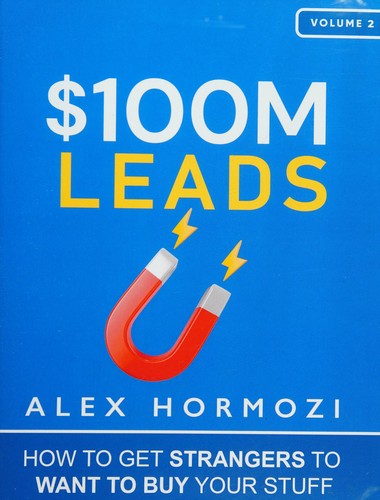
$100M Leads
 by Alex Hormozi
A complete system for generating unlimited leads through cold outreach, paid ads, referrals, and organic content. Covers the exact frameworks behind eight and nine-figure businesses.
Categories
We earn a commission if you make a purchase, at no additional cost to you.
 Navid’s pick
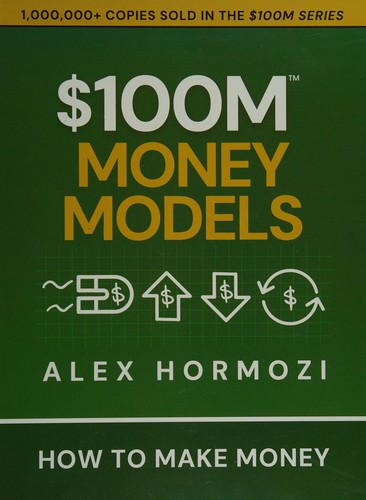
$100M Money Models
by Alex HormoziBreaks down the business models that generate massive recurring revenue. Covers pricing strategies, offer structures, and profit optimization for scaling past seven figures.
Categories
We earn a commission if you make a purchase, at no additional cost to you.
 Navid’s pick
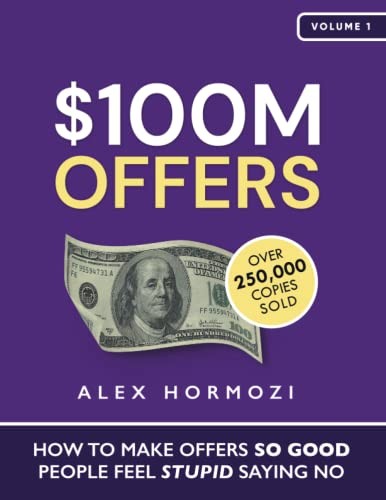
$100M Offers
by Alex HormoziProven strategies for creating irresistible offers that customers can't say no to. Covers pricing, value stacking, and positioning to maximize conversions.
Categories
We earn a commission if you make a purchase, at no additional cost to you.
 Navid’s pick
The 4-Hour Workweek
 by Tim Ferriss
A step-by-step playbook for escaping the 9-to-5 by automating income and outsourcing tasks. Covers lifestyle design, remote work, and building location-independent businesses.
Categories
We earn a commission if you make a purchase, at no additional cost to you.

Anything You Want
 by Derek Sivers
Short, unconventional lessons from building and selling a $22M company. Covers why staying small, keeping things simple, and following your curiosity leads to better businesses.
Categories
We earn a commission if you make a purchase, at no additional cost to you.
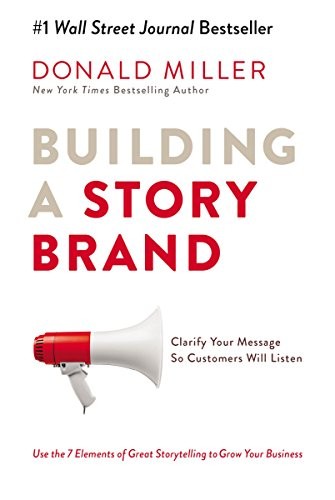 Navid’s pick
Building a StoryBrand
 by Donald Miller
Building a StoryBrand by Donald Miller teaches how to clarify your brand's message using a storytelling framework that attracts customers and drives.
Categories
We earn a commission if you make a purchase, at no additional cost to you.
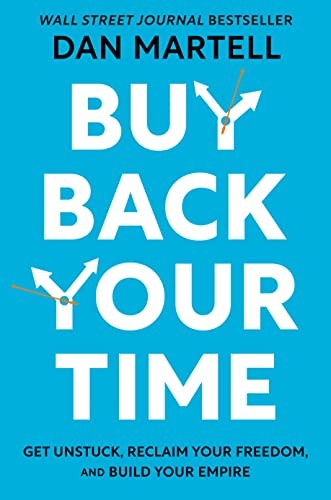
Buy Back Your Time
 by Dan Martell
Buy Back Your Time by Dan Martell teaches entrepreneurs how to reclaim time, delegate effectively, and scale a business without burnout.
Categories
We earn a commission if you make a purchase, at no additional cost to you.
More free tools


Related MCP servers & CLIs

 Bluesky
 Substack
 Threads
 Mastodon
 TikTok


 Apple Podcasts
 Free AI newsletter
The most actionable AI newsletter for founders
Every week, get proven AI strategies, curated tools, and step-by-step systems to grow your audience, create better content, and build a profitable creator business.
No fluff, no filler, no BS. Just five minutes each week that might level up your online business and life.
P.S. Sign up now to get free access to my ultimate AI tools guide for creators.