


The 5 AM Club by Robin Sharma: Book Summary, Review & Notes
An in-depth summary of The 5 AM Club by Robin Sharma, with the 20/20/20 Formula, the Four Interior Empires, real quotes and how it compares to similar books.
I may earn a commission if you make a purchase, at no additional cost to you.
 by Navid Moazzez·Updated Sept 29, 2026·4 min read·Navid.me is reader-supported. When you buy through links on this site, I may earn an affiliate commission. Learn more.




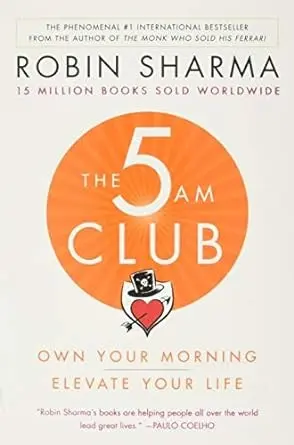
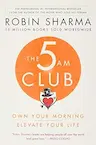
This is an in-depth book summary, notes and highlights of The 5 AM Club by Robin Sharma. Published in 2018 by HarperCollins, it is written as a fable and built around one idea: own the first hour of your day.
The 5 AM Club in three sentences
- The 5 AM Club argues that the first hour after you wake decides the quality of the rest of your day.
- Robin Sharma's method is to rise at 5am and run a Victory Hour split into 20 minutes of exercise, 20 minutes of reflection and 20 minutes of learning.
- He claims that repeating this for 66 days builds the inner capacity that outer results follow from.
Key takeaways
- The 20/20/20 Formula splits the first hour into 20 minutes move, 20 minutes reflect, 20 minutes grow.
- The Victory Hour is the 5am to 6am block you protect before anyone else is awake.
- The Four Interior Empires are Mindset, Heartset, Healthset and Soulset.
- Habit installation takes about 66 days, across Destruction, Installation and Integration phases.
- The Twin Cycle of Elite Performance alternates a High Excellence Cycle with a Deep Refueling Cycle.
- The 90/90/1 Rule gives the first 90 minutes of your workday to one project for 90 days.
- The 60/10 Method is 60 minutes of focused work followed by a real 10 minute break.
- The 10 Tactics of Lifelong Genius cover focus, sleep, exercise, learning and weekly planning.
Who should read The 5 AM Club
- Founders and freelancers who control their own schedule and can move their morning.
- People whose phone takes the first hour of the day before they choose to give it.
- Readers who absorb ideas better as a story than as a manual.
- Anyone who already wakes early but has no structure for the extra time.
- Fans of The Monk Who Sold His Ferrari who want more of the same style.
- People who want one prescriptive routine to try instead of a menu of options.
Who might not enjoy it
- Readers who want direct instruction. It is a 336 page fable, and reviewers commonly say the core advice would fit in 30 pages.
- Shift workers, night owls and parents of young children. A fixed 5am start is not workable for everyone, and the book does not really address that.
Popular quotes from The 5 AM Club
Own your morning. Elevate your life.
The book's central claim, and its subtitle, that the start of the day sets the rest of it.
All change is hard at first, messy in the middle and gorgeous at the end.
Expect a new routine to feel bad before it feels normal.
An addiction to distraction is the death of your creative production.
Interruption, not lack of talent, is what stops good work.
The smallest of implementations is always worth more than the grandest of intentions.
Doing one small thing beats planning a big one.
You need to remember that your excuses are seducers, your fears are liars and your doubts are thieves.
Sharma's framing of the internal resistance that keeps people in bed.
Elite producers and everyday heroes understand that what you do each day matters far more than what you do once in a while.
Consistency beats occasional bursts of intensity.
Victims have big TVs. Leaders own large libraries.
A blunt line on choosing learning over passive entertainment.
Everyone dreams of being a legend until it comes time to do the work that legends do.
Wanting the outcome is common. Doing the work is not.
How The 5 AM Club compares to similar books
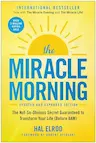
The Miracle Morning by Hal Elrod
Six morning practices, called the Life S.A.V.E.R.S., done before the day starts. Elrod lets you pick your own wake time and split the minutes as you like. Sharma fixes both.
Atomic Habits by James Clear
Small habit changes compound through cue, craving, response and reward. Clear explains how habits work and leaves the routine to you. Sharma hands you one routine and little theory.
Deep Work by Cal Newport
Undistracted concentration is a rare skill and the source of valuable output. Newport argues from research and case studies, covers the whole workday, and uses no fable.
The Monk Who Sold His Ferrari by Robin Sharma
A burned out lawyer learns life lessons from sages in the Himalayas. Same author and same fable device, but about purpose and calm rather than a morning routine.
Daily Rituals by Mason Currey
Short profiles of how 161 writers, artists and thinkers actually structured their days. Currey reports real routines and shows there is no single winning schedule. Sharma prescribes one.
The 7 Habits of Highly Effective People by Stephen R. Covey
Character and priority principles, including Sharpen the Saw for daily renewal. Covey is a whole life framework and treats renewal as one habit of seven, not the centrepiece.
About Robin Sharma
Robin Sharma, born 1965, is a Canadian writer and speaker. He studied at Dalhousie University and took a master's degree in law there, then worked as a litigation lawyer, including for Canada's Department of Justice, until his mid twenties.
He self-published MegaLiving in 1994 and The Monk Who Sold His Ferrari in 1997, and moved to writing and speaking full time after the second book sold. He founded Sharma Leadership International and has written more than a dozen books.
FAQs about The 5 AM Club
The questions people most often ask about The 5 AM Club by Robin Sharma.
The 5 AM Club is a 2018 book by Robin Sharma about owning the first hour of your day. It is written as a fable, and its method is to wake at 5am and run a Victory Hour split into three 20 minute blocks.
Robin Sharma is a Canadian writer and speaker, born 1965. He practised as a litigation lawyer before self-publishing The Monk Who Sold His Ferrari in 1997, then moved to writing and speaking full time. He has written more than a dozen books.
It is a self-help book written as a fable. An entrepreneur and an artist are mentored by a billionaire called Stone Riley, plus a character known as The Spellbinder. The advice is real, the story is invented.
It splits the 5am to 6am hour into three 20 minute blocks. Move from 5:00 to 5:20, reflect from 5:20 to 5:40, grow from 5:40 to 6:00. Move is hard exercise, reflect is journaling or meditation, grow is reading or study.
It is Sharma's name for the 5am to 6am hour. The point is that it is quiet and nobody is competing for it. What you do inside it is the 20/20/20 Formula.
The book is built around 5am. Reviewers note that Sharma never explains why that specific hour. The three part structure works at any wake time you can actually protect.
Mindset, Heartset, Healthset and Soulset. They stand for psychology, emotions, physical health and spirituality. Sharma says the three morning blocks feed all four.
Sharma says a habit locks in at around 66 days, which he calls the Automaticity Point. The figure traces to a 2010 study by Lally and colleagues at University College London. In that study 66 days was the average, with a range of 18 to 254 days.
Destruction runs days 1 to 22 and breaks the old pattern. Installation runs days 23 to 44 and is the hardest stretch. Integration runs days 45 to 66, when the habit becomes automatic.
The HarperCollins edition is 336 pages. The audiobook runs about 11 hours and is read by Adam Verner.
It names cortisol, dopamine and brain derived neurotrophic factor as mechanisms. Reviewers often say the science is asserted rather than sourced. Treat the biology as claims, not settled findings.
It sits at 3.66 on Goodreads across roughly 122,000 ratings. The most common complaint is length. Readers say the practical advice arrives late and the fictional wrapper gets in the way.
Hal Elrod uses six practices and lets you set your own wake time. Sharma fixes the hour at 5am and the structure at three 20 minute blocks. Elrod is flexible, Sharma is prescriptive.
Atomic Habits explains why habits stick or fail. The 5 AM Club gives you one routine and assumes you can hold it. Read Clear first if keeping habits is the part you struggle with.

Navid Moazzez
AI business strategist & AI OS builder
Navid Moazzez helps creators and founders master AI and build their own AI Operating System (AI OS) to automate their business and life.

Navid.me is reader-supported. When you buy through links on this site, I may earn an affiliate commission. Read the affiliate disclaimer.
On this page
More books like this


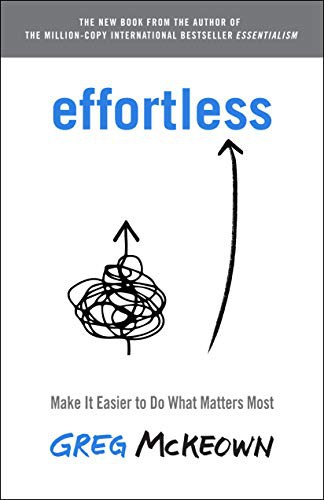
Effortless
 by Greg McKeown
Effortless by Greg McKeown shows how to make success easier by removing unnecessary effort, simplifying your approach.
Categories
We earn a commission if you make a purchase, at no additional cost to you.
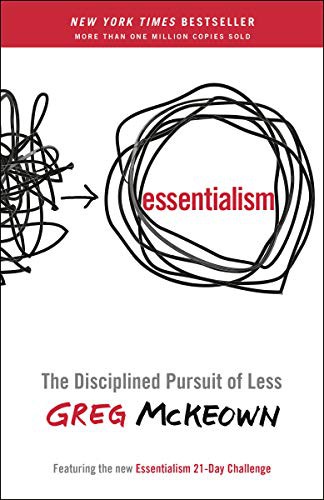
Essentialism
by Greg McKeownEssentialism by Greg McKeown teaches how to eliminate distractions, say no to the nonessential, and channel all your energy into the few things that truly matter.
Categories
We earn a commission if you make a purchase, at no additional cost to you.
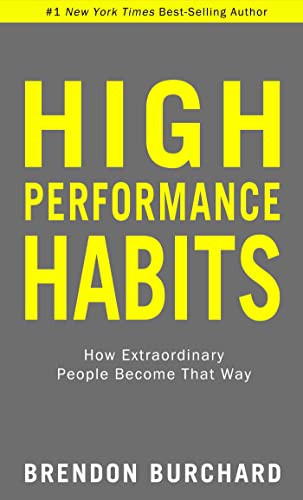
High Performance Habits
 by Brendon Burchard
High Performance Habits by Brendon Burchard reveals six science-backed habits that separate top performers from the rest and help sustain long-term.
Categories
We earn a commission if you make a purchase, at no additional cost to you.
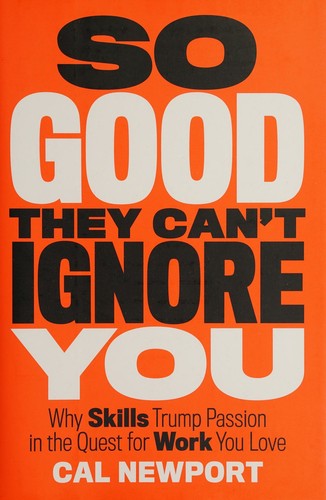
So Good They Can't Ignore You
 by Cal Newport
So Good They Can't Ignore You by Cal Newport challenges the idea of 'follow your passion.
Categories
We earn a commission if you make a purchase, at no additional cost to you.
10% Happier
 by Dan Harris
A skeptic's guide to meditation that actually works. Covers practical mindfulness techniques for reducing anxiety, improving focus, and staying calm under pressure.
Categories
We earn a commission if you make a purchase, at no additional cost to you.
12 Rules for Life
 by Jordan Peterson
Twelve practical principles for building a more meaningful and disciplined life. Covers personal responsibility, honesty, and finding order in the chaos of modern existence.
Categories
We earn a commission if you make a purchase, at no additional cost to you.
More free tools


Related MCP servers & CLIs

 Bluesky
 Substack
 Threads
 Mastodon
 TikTok


 Apple Podcasts
 Free AI newsletter
The most actionable AI newsletter for founders
Every week, get proven AI strategies, curated tools, and step-by-step systems to grow your audience, create better content, and build a profitable creator business.
No fluff, no filler, no BS. Just five minutes each week that might level up your online business and life.
P.S. Sign up now to get free access to my ultimate AI tools guide for creators.