



Daily Routines of Successful People





A free library of the daily routines of successful people, each from their own words, that you can watch, compare and fit to your hours.
0.0(0 ratings) by Navid Moazzez·Updated Sept 30, 2026·11 min read·Navid.me is reader-supported. When you buy through links on this site, I may earn an affiliate commission. Learn more.
This free tool shows the daily routines of successful people from their own words: when they wake, when they work, when they walk, and when they stop. You can watch each day play, then fit it to your own hours.
They range from Benjamin Franklin's 18th-century schedule to Dan Martell's calendar as a CEO.
TL;DRKey takeaways
Daily routines of successful people
 Dan Martell
- Up at
- 4:00am
- Their day
- Up at 4, 90 minutes on the #1 priority, creative work until noon, meetings after lunch, and dinner with his kids.
 Andrew Huberman
- Up at
- About 6:00am
- Their day
- Light and water first, hard thinking in the first hours, a walk after lunch, a short rest, and dim lights after sunset.
 Haruki Murakami
- Up at
- 4:00am
- Their day
- Up at 4, writing for 5 to 6 hours, a 10-kilometer run or a swim in the afternoon, some reading and music, and bed at 9.
- Source
- The Paris Review, 2004
 Maya Angelou
- Up at
- About 5:30am
- Their day
- Out of the house at 6, writing in a hotel room until early afternoon, home to breathe, a look at the work at 5, and a quiet dinner.
- Source
- The Paris Review, 1990
 Ernest Hemingway
- Up at
- About 6:00am
- Their day
- Writing from first light until about noon, stopping while he still knew what came next, then a walk to the pool for a half-mile swim.
- Source
- The Paris Review, 1958
 Benjamin Franklin
- Up at
- 5:00am
- Their day
- Up at 5 with the question "What good shall I do this day?", work from 8 to noon and 2 to 6, and a review of the day before bed at 10.
 Charles Darwin
- Up at
- About 7:00am
- Their day
- A walk before breakfast, his best work from 8 to 9:30, letters, work until noon, the Sand-walk, rest, an hour's work at 4:30, and backgammon every night.
Every day is retold in our words from the person's own book, interview, video or page. A time with "about" is placed from the order they describe.
What their days have in common
Of the 7 people here, not counting me:
| What they do | How many |
|---|---|
| Do their hardest work before noon | 7 of 7 |
| Walk, swim or train during the day | 4 of 7 |
| Say they're up by 5am | 3 of 7 |
What they don't share is the length of the working day.
Darwin worked about 4 and a half hours, in 3 blocks, and Franklin blocked out 8.
Founder daily routines
Dan Martell's daily routine
Founder and author of Buy Back Your Time, up at 4:00am. Up at 4, 90 minutes on the #1 priority, creative work until noon, meetings after lunch, and dinner with his kids.
- About 4:00am, morning routine – His morning routine, with a workout.
- About 5:30am, deep work – The first 90 minutes on his #1 priority, planned the night before. No phone, no inbox, no WhatsApp.
- 7:00am, deep work – Creative work until noon: his output.
- About 12:00pm, meal – A reset for lunch.
- About 1:00pm, meetings – Meetings, calls and collaborations, batched: 15 minutes for a first connection, 30 for his leaders and partners.
- About 4:30pm, shutdown – He winds down before dinner and closes any open loops, so he's present for the meal.
- About 5:30pm, family – Dinner with his kids.
- About 6:30pm, people – Evenings: mountain biking with friends, time with his wife, date night, wake surfing.

Dan's tip: Plan the day the night before, so the first 90 minutes go to the 1 thing that makes everything else easier.
Your first 90 minutes of your day, minimum, should be focused on your number one priority.
Dan's book:
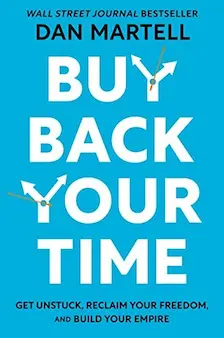
Buy Back Your Time

by Dan Martell
Buy Back Your Time by Dan Martell teaches entrepreneurs how to reclaim time, delegate effectively, and scale a business without burnout.
I may earn a commission if you make a purchase, at no additional cost to you.
In his own words (Dan Martell, 2023):
Source: his own video, October 2023.
Scientist and creator daily routines
Andrew Huberman's daily routine
Neuroscientist and host of Huberman Lab, up at about 6:00am. Light and water first, hard thinking in the first hours, a walk after lunch, a short rest, and dim lights after sunset.
- About 6:00am, morning routine – Outside light soon after waking, 5 to 30 minutes depending on the clouds, and about a liter of water with a pinch of sea salt.
- About 7:00am, deep work – Hard mental work in the first 1 to 4 hours after waking. Caffeine waits until 90 to 120 minutes after waking.
- About 11:00am, training – Exercise, in the middle part of the day.
- About 12:00pm, meal – A lower-carb lunch.
- About 12:45pm, walk – A 5 to 30 minute walk after lunch.
- About 2:00pm, break – If there's an afternoon dip: a nap of 20 minutes or less, or 10 to 30 minutes of NSDR.
- About 6:00pm, walk – Light again around sunset.
- About 6:30pm, meal – Dinner with some starchy carbs and protein.
- About 8:00pm, wind-down – Lights dim and warm, screens dimmed, the bedroom a little cooler. The same wake time within an hour, days off included.

Andrew's tip: His Blueprint says to aim for 85% of days: consistency matters more than perfection.
Andrew's book:
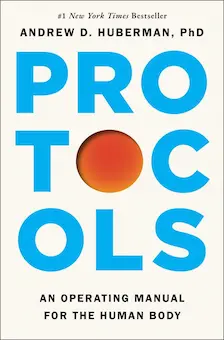
Protocols

Protocols by Dr. Andrew Huberman is an operating manual for the human body, with science-based routines for sleep, focus, mood, energy and physical health.
I may earn a commission if you make a purchase, at no additional cost to you.
In his own words (Andrew Huberman, 2025):
Source: his Daily Blueprint on hubermanlab.com, laid out by hours after waking.
Try Andrew Huberman's day in the tool above
Charles Darwin's daily routine
Naturalist, author of On the Origin of Species, up at about 7:00am. A walk before breakfast, his best work from 8 to 9:30, letters, work until noon, the Sand-walk, rest, an hour's work at 4:30, and backgammon every night.
- About 7:00am, walk – A short walk before breakfast, a habit he kept almost to the end of his life.
- 7:45am, meal – Breakfast alone, at about 7:45.
- 8:00am, deep work – Straight to work. He counted 8 to 9:30 among his best working hours.
- 9:30am, admin – His letters in the drawing room, and family letters and part of a novel read aloud while he lay on the sofa.
- 10:30am, deep work – Back to work until 12 or a quarter past. Then he considered his day's work done.
- About 12:15pm, walk – His midday walk: the greenhouse, then round the Sand-walk, with Polly, his terrier.
- About 1:00pm, meal – Luncheon, after the walk.
- 1:30pm, admin – More letters, finished by about 3.
- 3:00pm, break – A rest on the sofa in his bedroom, with a novel read to him.
- 4:00pm, walk – Down at 4 for another walk.
- 4:30pm, deep work – Work from about 4:30 to 5:30.
- 5:30pm, break – Idle in the drawing room, then another rest with a novel from about 6.
- 7:30pm, meal – A simple tea at 7:30, in place of a late dinner.
- About 8:00pm, people – 2 games of backgammon with his wife Emma, every night, with a running score kept for years.
- About 9:00pm, learning – A scientific book to himself, and Emma playing the piano.
- 10:00pm, wind-down – He left the drawing room about 10 and was in bed by 10:30.

Charles' tip: He did his hardest work in 3 short blocks a day, and walked between them.
His day, explained (English Heritage, 2017):
Writer daily routines
Writers are the clearest example of protecting the morning. All 3 here write first and stop by early afternoon.
Haruki Murakami's daily routine
Novelist, up at 4:00am. Up at 4, writing for 5 to 6 hours, a 10-kilometer run or a swim in the afternoon, some reading and music, and bed at 9.
- 4:00am, deep work – When he's writing a novel, he gets up at 4 and works for 5 to 6 hours.
- About 1:00pm, training – In the afternoon, a 10-kilometer run or a 1,500-meter swim, or both.
- About 3:00pm, learning – Then he reads a bit.
- About 4:30pm, free time – And listens to some music.

Haruki's tip: He keeps the same routine every day while he writes a novel: the repetition itself becomes the important thing.
Someone who lived his day for a week (Mel Torrefranca, 2020):
Source: in his own words to The Paris Review, 2004.
Try Haruki Murakami's day in the tool above
Maya Angelou's daily routine
Poet and author, up at about 5:30am. Out of the house at 6, writing in a hotel room until early afternoon, home to breathe, a look at the work at 5, and a quiet dinner.
- 6:00am, commute – She leaves home at 6 to be at work by 6:30.
- 6:30am, deep work – She writes in a hotel room she rents for a few months, lying across the bed, with everything taken off the walls, until 12:30 or 1:30.
- About 1:00pm, free time – Then she goes home and tries to breathe.
- 5:00pm, admin – Around 5 she looks at the day's work.
- About 6:30pm, meal – An orderly dinner: proper, quiet and lovely, in her words. Then back to work the next morning.

Maya's tip: She kept a hotel room in every town she lived in, with nothing on the walls, only for writing.
I have kept a hotel room in every town I've ever lived in.
In her own words (American Masters PBS, 2017):
Source: in her own words to The Paris Review, 1990.
Try Maya Angelou's day in the tool above
Ernest Hemingway's daily routine
Novelist, up at about 6:00am. Writing from first light until about noon, stopping while he still knew what came next, then a walk to the pool for a half-mile swim.
- 6:00am, deep work – He writes every morning as soon after first light as possible, from about 6 until noon or before, and stops while he still knows what will happen next.
- 12:00pm, training – Around noon he takes a knotted walking stick and walks to the pool for his daily half-mile swim.

Ernest's tip: Stop while you still know what happens next, so you can start from there the next morning.
Someone who lived his day for a week (Nathaniel Drew, 2025):
The classic daily schedule
Benjamin Franklin's daily routine
Writer, printer, scientist and statesman, up at 5:00am. Up at 5 with the question "What good shall I do this day?", work from 8 to noon and 2 to 6, and a review of the day before bed at 10.
- 5:00am, morning routine – He rises, washes and says a prayer, plans the day's business and sets the day's resolution, studies, and has breakfast.
- 8:00am, deep work – Work.
- 12:00pm, meal – He reads or looks over his accounts, and dines.
- 2:00pm, deep work – Work.
- 6:00pm, free time – He puts things in their places, has supper, and makes time for music, diversion or conversation.
- 9:00pm, wind-down – An examination of the day, and his evening question: "What good have I done to-day?"

Benjamin's tip: He asked 1 question each morning, "What good shall I do this day?", and another each night, "What good have I done to-day?"
His day, explained (Thomas Frank, 2017):
Source: in his own words, from the daily scheme in his Autobiography.
What to borrow from a famous day
You don't have to copy someone's day to get something from it. These are the parts worth taking:
- 1 question at each end of the day – Franklin's "What good shall I do this day?" and "What good have I done to-day?"
- Stop while you know what's next – Hemingway's rule makes the next morning easy to start.
- Short work blocks with walks between them – Darwin's 3 blocks and his Sand-walk.
- A place that's only for work – Maya Angelou's hotel room with nothing on the walls.
- The first 90 minutes on 1 priority – Dan Martell plans them the night before.
Pick 1, try it for a week, and keep it only if it works for you.
Mistakes when copying a famous day
- Copying the wake time – Murakami is up at 4, and he's in bed by 9. Move your bedtime too, or keep your own hours.
- Copying all of it at once – take 1 part, then add the next.
- Copying the output – 5 to 6 hours of writing is what worked for a novelist, not a target.
- Forgetting their season of life – several of these days are from a single book, a year or a phase.
How to try a famous day
My daily routine
My own day is in the tool too. Up around 5, movement early, deep work before noon, a long walk after lunch, a free afternoon, and screens off by 9:30.
- 5:00am, morning routine – I wake up naturally around 5, drink a glass of lime water and step outside. Then my Day One journal (what I'm grateful for, what would make today great) and 10 minutes of Headspace.
- 6:00am, training – Movement: surfing at sunrise if I'm by the ocean, otherwise a hike, calisthenics outdoors, a swim or the gym. Then a cold shower or an ocean dip.
- 7:30am, meal – A high-protein breakfast.
- 8:00am, deep work – Deep work at my peak, with no meetings: writing, filming, and working on my businesses.
- 12:00pm, meal – A clean, simple lunch, around noon.
- 12:45pm, walk – A long walk outside with an audiobook or a podcast. I aim for 15,000 steps a day.
- 2:00pm, free time – The afternoon is for freedom: calls, interviews or planning some days, the beach, a paddleboard, padel or a new city on others.
- 6:00pm, meal – Dinner at 6, high-protein and low-carb, with close friends when I can.
- 7:30pm, wind-down – My daily review in Day One (the wins, what to improve, tomorrow's 1 focus), 10 minutes of Headspace, 20 to 30 minutes of reading, then screens off.

My tip: I don't believe in rigid schedules. I lock the non-negotiables and keep the afternoons free.
I'm not waiting for "one day" to live like this. I've built my life so that I get to experience parts of my perfect day every single day.
Source: my ideal day, from my posts on navid.me.
Design your perfect day with your AI
Run the Perfect Day OS prompts in


FAQs about the daily routines of successful people
Questions about the daily routines of successful people? Here's what to know.
They are the real days of people like Benjamin Franklin, Charles Darwin, Maya Angelou, Haruki Murakami and Dan Martell, each from their own words.
You can watch each day play and fit it to your hours.
Each one is from the person's own book, interview, video or page, retold in our words with the source.
A ~ marks a time placed from the order they describe.
Most of the people here do their hardest work before noon and move during the day.
Their wake times and working hours are very different.
Borrow a part of it, not all of it.
Fit it to your hours, try it for a week, and keep what works for you.
Yes, press Compare days to see their day next to your Ideal Day or anyone else's.
No, not with anyone shown.
Each day is retold from their own public words.
Final thoughts on the daily routines of successful people
A famous day is a set of ideas, not a script. Borrow the part that fits your life, fit it to your hours, and give it a week.
Build your own daily schedule from a few answers, or write your perfect day.

Navid Moazzez
AI business strategist & AI OS builder
Navid Moazzez helps creators and founders master AI and build their own AI Operating System (AI OS) to automate their business and life.

Navid.me is reader-supported. When you buy through links on this site, I may earn an affiliate commission. Read the affiliate disclaimer.
On this page
More free tools


Related MCP servers & CLIs

 Bluesky
 Substack
 Threads
 Mastodon
 TikTok


 Apple Podcasts
 Free AI newsletter
The most actionable AI newsletter for founders
Every week, get proven AI strategies, curated tools, and step-by-step systems to grow your audience, create better content, and build a profitable creator business.
No fluff, no filler, no BS. Just five minutes each week that might level up your online business and life.
P.S. Sign up now to get free access to my ultimate AI tools guide for creators.