


Free Daily Schedule Maker (+ Guide)





A free daily schedule maker that turns your wake time and priorities into an ideal day in time blocks, with versions for real life and a daily check-in.
0.0(0 ratings) by Navid Moazzez·Updated Sept 30, 2026·6 min read·Navid.me is reader-supported. When you buy through links on this site, I may earn an affiliate commission. Learn more.
This free daily schedule maker turns a few answers into your ideal day, in time blocks you can follow tomorrow. Your non-negotiables go in first, deep work sits at your peak, and the day keeps room to breathe.
It's built on Perfect Day OS, the system I use to design my own days. You can also try a famous person's day, fitted to your hours.
TL;DRKey takeaways
What is a daily schedule maker?
A daily schedule maker builds your day in time blocks from your wake time, your bed time and what matters to you. This one follows the rules of the Ideal Day: lock the non-negotiables first, order the day by energy, and end work with a shutdown.
It's a plan, not a cage. Every block can move, and open time is part of it.
How to use the daily schedule maker
The day plays on a phone's lock screen as the sun moves, so you see how it feels before you live it.
The 6 rules behind your ideal day
1. Non-negotiables go in first
Your non-negotiables are placed before anything else, so the rest of the day fits around them. On a busy day they get shorter, never dropped.
Keep the list short. Three to five is plenty.
2. Deep work goes where your energy is
Your deep work lands in the window you say you think best, in blocks of up to 90 minutes with a 15-minute break between them. Meetings and admin come after.
Dan Martell gives his first 90 minutes to his #1 priority, and Haruki Murakami writes for 5 to 6 hours from 4am.
Both put the hardest thing where they're sharpest.
3. Shallow work waits
Meetings sit in the window you choose, and admin gets 1 block after your deep work. Email doesn't get the first hours of your day.
4. Movement and recovery get their own time
Training gets a slot in the late part of your working day unless you move it, and there's a walk after lunch. Dinner lands about 3 hours before bed, and the day ends with a wind-down.
5. Work ends with a shutdown
A 15-minute shutdown closes the working day: what got done, what's next, and a clear desk. With fixed hours it's the last 15 minutes of work.
6. Leave room
What's left after work becomes free time, and the tool counts it. A day with no open time tends to break at the first surprise.
Your day for real life
A plan that only works on a perfect Tuesday isn't a plan. Pick a version and the same rules rebuild your day:
- What changes
- More meetings, 1 short deep work block, a 30-minute morning
- What stays
- Every non-negotiable, at its smallest
- What changes
- No fixed hours or commute, a hotel-room workout, 1 focus block
- What stays
- Your morning, a walk, the wind-down
- What changes
- Less of everything, bed 30 minutes earlier, a longer wind-down
- What stays
- The non-negotiables, only shorter
- What changes
- No work hours, a longer training slot, time with people
- What stays
- 1 focus block if deep work is a non-negotiable
My ideal day
This is roughly what my ideal day looks like right now. It moves with where I am in the world, but the shape stays.
- Block
 Morning
- What I do
- Lime water, outside, my Day One journal and 10 minutes of Headspace
- Block
 Movement
- What I do
- Surfing at sunrise by the ocean, otherwise a hike, calisthenics, a swim or the gym
- Block
 Deep work
- What I do
- Writing, filming and my businesses, with no meetings
- Block
 Walk
Walk- What I do
- A long walk with an audiobook; I aim for 15,000 steps a day
- Block
 Freedom
- What I do
- Calls and planning some days, the beach, padel or a new city on others
- Block
- Wind-down
- What I do
- My daily review, 10 minutes of Headspace, reading, then screens off by 9:30
I don't believe in rigid schedules. I lock the non-negotiables and keep the afternoons free.
You can play my day in the Famous days tab, and fit it to your own hours.
Daily routines of successful people
Before you design yours, see how others spend theirs. Each of these is from their own words:
 Dan Martell
- Up at
- 4:00am
- Their day
- Up at 4, 90 minutes on the #1 priority, creative work until noon, meetings after lunch, and dinner with his kids.
 Andrew Huberman
- Up at
- About 6:00am
- Their day
- Light and water first, hard thinking in the first hours, a walk after lunch, a short rest, and dim lights after sunset.
 Haruki Murakami
- Up at
- 4:00am
- Their day
- Up at 4, writing for 5 to 6 hours, a 10-kilometer run or a swim in the afternoon, some reading and music, and bed at 9.
- Source
- The Paris Review, 2004
 Maya Angelou
- Up at
- About 5:30am
- Their day
- Out of the house at 6, writing in a hotel room until early afternoon, home to breathe, a look at the work at 5, and a quiet dinner.
- Source
- The Paris Review, 1990
 Ernest Hemingway
- Up at
- About 6:00am
- Their day
- Writing from first light until about noon, stopping while he still knew what came next, then a walk to the pool for a half-mile swim.
- Source
- The Paris Review, 1958
 Benjamin Franklin
- Up at
- 5:00am
- Their day
- Up at 5 with the question "What good shall I do this day?", work from 8 to noon and 2 to 6, and a review of the day before bed at 10.
 Charles Darwin
- Up at
- About 7:00am
- Their day
- A walk before breakfast, his best work from 8 to 9:30, letters, work until noon, the Sand-walk, rest, an hour's work at 4:30, and backgammon every night.
Mistakes when you build a daily schedule
These are the mistakes the daily schedule maker is built to stop:
- No room left – a day booked to the minute breaks at the first surprise. Keep open time.
- Too many non-negotiables – if everything is locked, nothing is. Keep 3 to 5.
- Deep work in the wrong window – put it where you think best, not where it's left over.
- Meetings first – shallow work in your peak hours pushes the real work to the evening.
- No shutdown – without an end, work leaks into the evening and the next morning.
- One version for every day – a travel day and a busy day need their own plan.
Pick the rule you break most, and fix that first.
How to know your schedule is working
Check in each evening for a week: tick the blocks you kept and rate your energy from 1 to 10. It takes 20 seconds.
After 3 days the week shows what worked, what didn't, the non-negotiable to test in a smaller version, and the friction to remove.
Books for designing your day
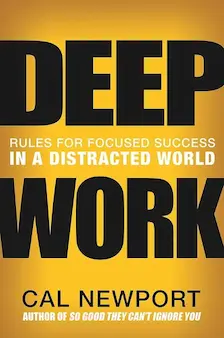
Deep Work

by Cal Newport
Deep Work by Cal Newport teaches how to focus without distraction, master your craft, and produce high-quality work in less time.
I may earn a commission if you make a purchase, at no additional cost to you.
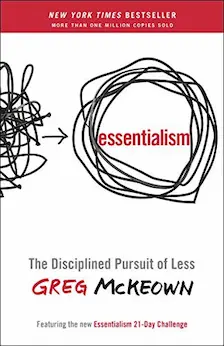
Essentialism
by Greg McKeown
Essentialism by Greg McKeown teaches how to eliminate distractions, say no to the nonessential, and channel all your energy into the few things that truly matter.
I may earn a commission if you make a purchase, at no additional cost to you.
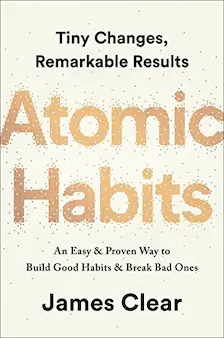
Atomic Habits

by James Clear
Atomic Habits by James Clear breaks down the science of tiny daily habits, showing how small consistent changes compound into extraordinary results over time.
I may earn a commission if you make a purchase, at no additional cost to you.
Design your perfect day with your AI
Run the Perfect Day OS prompts in


FAQs about the daily schedule maker
Questions about the daily schedule maker? Here's what to know.
A daily schedule maker turns your wake time, bed time and priorities into a day of time blocks.
This one places your non-negotiables first, puts deep work in your peak hours and leaves room open.
Yes, it's free with no sign-up.
Everything you enter stays in your browser.
Plan what you can protect.
Many people start with 1 or 2 blocks of 90 minutes; the tool never schedules more than you ask for.
Choose Fixed hours and enter them.
The tool fits your deep work, meetings and shutdown inside them, and your commute and school run around them.
Yes, pick Busy day, Travel day, Low energy or Weekend.
Each version keeps your non-negotiables and rebuilds the rest.
Yes, press Add it to my calendar.
It downloads a calendar file with every block and an evening check-in reminder.
I did.
I'm Navid Moazzez, and it's built on Perfect Day OS, the system I use to design my own days.
Final thoughts on your daily schedule
The best daily schedule is the one you still follow on a bad day. Lock in a few things that matter, put your hardest work at your best hours, and leave room.
Write your perfect day first if you want the vision behind it, or try a famous day.

Navid Moazzez
AI business strategist & AI OS builder
Navid Moazzez helps creators and founders master AI and build their own AI Operating System (AI OS) to automate their business and life.

Navid.me is reader-supported. When you buy through links on this site, I may earn an affiliate commission. Read the affiliate disclaimer.
On this page
More free tools


Related MCP servers & CLIs

 Bluesky
 Substack
 Threads
 Mastodon
 TikTok


 Apple Podcasts
 Free AI newsletter
The most actionable AI newsletter for founders
Every week, get proven AI strategies, curated tools, and step-by-step systems to grow your audience, create better content, and build a profitable creator business.
No fluff, no filler, no BS. Just five minutes each week that might level up your online business and life.
P.S. Sign up now to get free access to my ultimate AI tools guide for creators.
