



Free Longevity Test (+ Your Longevity OS)





A free longevity test with five at-home checks, a safety check first, and a plan for your day, food and training built from your answers.
0.0(0 ratings) by Navid Moazzez·Updated Sept 30, 2026·7 min read·Navid.me is reader-supported. When you buy through links on this site, I may earn an affiliate commission. Learn more.
This free longevity test gives you five at-home checks that research links to how long people live. Then it builds your plan from what you enter: your day on a 24-hour clock, your food, and what to train now for the life you want at 90.
It starts with a safety check, it shows the source behind every number, and your answers stay in your browser.
Here's what a longevity test is, the five tests and what each study found, what the guidelines say, how the tool builds your plan, and my own routine as the worked example.
TL;DRKey takeaways
What is a longevity test?
A longevity test is a set of simple checks that research links to how long people live. You can do these ones at home in about 5 minutes, next to a counter and a chair.
It's not a quiz that hands you a "biological age". A single number from a few questions is something no study can back.
If your WHOOP, Oura, Bevel or Garmin gives you an age, the tool shows it next to your real age, with a link to how each company works it out.
The five at-home tests
Each test comes with its own study. These are the numbers behind them:
- How to do it
- Stand on one leg for 10 seconds, eyes open, next to a counter
- What the study found
- In 1,702 people aged 51 to 75, those who couldn't hold it had an 84% higher risk of death over about 7 years
- How to do it
- Sit down on the floor and stand back up, and score yourself from 0 to 10
- What the study found
- In 4,282 people followed for about 12 years, the lowest scores had 5 to 6 times the risk of death of a perfect 10
- How to do it
- From your watch, or NTNU's free fitness calculator
- What the study found
- In 122,007 patients, elite fitness went with an 80% lower risk of death than the lowest, with no upper limit found
- How to do it
- Measure around your belly button, after you breathe out
- What the study found
- NICE's line: keep your waist to less than half your height
- How to do it
- Count your pulse for 30 seconds sitting still, and double it
- What the study found
- A number to track over time, so the tool shows it without a grade
These studies found links, not causes. The first two followed people in Brazil, so the numbers may differ elsewhere.
You can take the floor test on its own at the sit to stand test, and see where your VO2 max heads with the fitness age calculator.
Do the tests safely Stand next to a counter you can grab for the one-leg stand. Skip the floor test if you have joint, back or balance problems, or you've had a fall in the last year. Stop if anything hurts.
What the guidelines say
The tool compares your week with these lines, each from its own source:
- The line
- 150 to 300 minutes of moderate movement a week, or 75 to 150 hard, plus two strength days
- Source
- WHO 2020
- The line
- 7,000 a day
- Source
- Lancet Public Health 2025
- The line
- 7 hours or more for adults
- Source
- AASM 2015
- The line
- 1.2 to 1.6 g per kg of body weight a day
- Source
- US Dietary Guidelines 2025
- The line
- No level is safe
- Source
- WHO Europe 2023
Why 7,000 steps and not 10,000
Compared with 2,000 steps a day, 7,000 went with a 47% lower risk of death. At 10,000, it was about 48%.
So 7,000 is where most of the gain is.
If you already walk more, keep going. If you don't, 7,000 is a line you can hit.
Train now for the life you want at 90
The tool's "You at 90" step comes from Peter Attia's Centenarian Decathlon: pick what you want to still do at 90, then walk each one back to today.
It’s not about being great at any one pursuit, but about being pretty good at just about everything. As Centenarian Decathletes, we are no longer training for a specific event, but to become a different sort of athlete altogether: an athlete of life.
Strength falls about 8 to 17% a decade, and VO2 max about 10% a decade until 50, then up to 15%, by Attia's numbers in Outlive. So the math runs backward:
- It takes about
- 9 kg overhead
- At 40, train toward
- 14 to 23 kg (30 to 51 lb) now
- It takes about
- A VO2 max near 30
- At 40, train toward
- About 64 now, with no training in between
The hike is the point of the screen.
With no training, you keep about 47% of today's VO2 max by 90, so you'd need an elite number now. Keep training, and the line bends.
Each task also sets which of Attia's four pillars your training starts with: stability, strength, zone 2 or peak.
Your day on a 24-hour clock
Your plan draws your day as a clock: sleep, first light, movement, meals, deep work and wind-down, with your city's real sunrise and sunset around it.
Then it checks your day against Peter Attia's nine sleep rules from Outlive:
- The same wake time, weekends included
- 8 hours in bed, and 9 if you can
- The last meal 3 hours before bed
- Screens off 2 hours before bed
- A dark, cool room
- A hot shower or bath before bed
- Half an hour of strong daylight
- Hard exercise ending well before bed
- A caffeine cutoff
You see how many you meet, with a sentence for each. Build your day on its own with the longevity routine generator.
Your food and your protein
Protein is where the sources disagree the most, so the tool shows three of them side by side for your weight:
 US Dietary Guidelines 2025
- Rule
- 1.2 to 1.6 g per kg
- For 80 kg (176 lb)
- 96 to 128 g a day
 Peter Attia
- Rule
- 1.6 g per kg minimum, 2.2 g to start
- For 80 kg (176 lb)
- 128 to 176 g a day
 Gabrielle Lyon
- Rule
- 1 g per lb of goal weight
- For 80 kg (176 lb)
- 176 g a day
Muscle is the organ of longevity.
Your food list shows each food with its real photo and its USDA numbers, filtered by how you eat and what you leave out. Work it out for your weight with the protein calculator, and build your food with the longevity diet plan.
How others do it
The tool shows how 12 people plan their day, their food and their training, each from their own published page, with their own video. These are the headlines:
- What they do
- Four zone 2 rides a week, heavy lifting four times, 1 g of protein per pound
- Source
- Outlive (2023)
 Andrew Huberman
- What they do
- Outside light within an hour of waking, caffeine 90 to 120 minutes after
- Source
- The Daily Blueprint
- What they do
- 30 to 50 g of protein at each of three meals
- Source
- The Lyon Protocol (2024)
 Rhonda Patrick
- What they do
- Sauna about four times a week, right after interval training
- Source
- FoundMyFitness
 Matthew Walker
- What they do
- The same bedtime and wake time, in a 65 to 68°F room
- Source
- MasterClass
 Stacy Sims
- What they do
- 25 to 30 g of protein within 30 minutes of hard training
- Source
- drstacysims.com
 Kelly Starrett
- What they do
- The sit-and-rise test, 8,000 steps, 800 g of fruit and vegetables
- Source
- Built to Move (2023)
 Dan Go
- What they do
- 160 to 170 g of protein, and 10 to 12k steps a day
- Source
- dango.co
 Rich Roll
- What they do
- Plant-based: a green smoothie, a big salad, a Plantpower dinner
- Source
- richroll.com
 Mark Hyman
- What they do
- 75% of the plate from plants, beans up to a cup a day
- Source
- drhyman.com
 Paul Saladino
- What they do
- Animal-based: meat, organs, fruit and honey
- Source
- paulsaladinomd.com
 Bryan Johnson
- What they do
- The extreme example: meals from 5:35am to noon, bed at 8:30pm
- Source
- protocol.bryanjohnson.com
They disagree, and that's useful.
Look at the ones who live the way you want to live, and take one thing at a time.
Every one of them is in the creator directory.
My routine as the worked example
I just turned 40, and the example in the tool is my real routine from my Longevity OS guide. My test results are simulated until I take the tests.
- I'm up at 5:30am, and in bed by 9:15pm
- 60+ minutes of movement every morning: a swim, a hike, a run, the gym or yoga
- 4 hours of deep work, with a 5-minute movement break every hour
- Three meals: 8:30am, 1pm and 6pm, with 40 to 60 g of protein each
- A walk after lunch, and one at sunset
- No screens the last hour, then a hot shower and my journal
This is what I do. Try it. If it doesn't work for you, drop it.
Press "See my example" on the tool to see it all, then go back to your own.
What you get
Your plan is yours to keep, in the files you need:
| File | What it's for |
|---|---|
| Your page | Your plan as one HTML file, in a look measured from a real brand or your own, with your logo in light and dark |
| The same page, printed | |
| longevity.md | Your plan for your own AI, so ChatGPT or Claude knows your day and your lines |
| Calendar file | Your day as daily events in Google or Apple Calendar |
| Saved plan | Open it again next month, and your new tests sit next to the old ones |
The books behind it
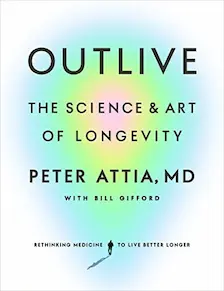
Outlive

Outlive by Dr. Peter Attia breaks down the most effective strategies for long-term health and performance, covering exercise, nutrition, sleep, and emotional wellbeing to add years to your life.
I may earn a commission if you make a purchase, at no additional cost to you.
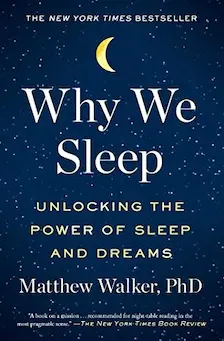
Why We Sleep

Why We Sleep by Matthew Walker reveals how sleep affects every aspect of our health and success.
I may earn a commission if you make a purchase, at no additional cost to you.
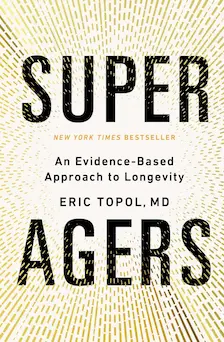
Super Agers

Super Agers by Dr. Eric Topol looks at why some people reach old age free of major disease, and what the evidence says the rest of us can do.
I may earn a commission if you make a purchase, at no additional cost to you.
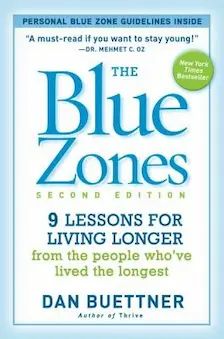
The Blue Zones

by Dan Buettner
The Blue Zones by Dan Buettner shares nine lessons from the places where people live the longest, from Okinawa to Sardinia.
I may earn a commission if you make a purchase, at no additional cost to you.
Retest every 4 weeks
Take the five tests again in 4 weeks, on the same day and time, and open your saved plan. Change one thing at a time, so you know what moved.
Health is wealth that compounds daily.
The choices you make at 30 decide your energy at 50, 70, and beyond.
Build your Longevity OS with your AI
Take your plan further in


Longevity test FAQs
Questions about the longevity test? Here's what to know.
A longevity test is a set of simple checks that research links to how long people live.
This free longevity test uses five at-home tests: the one-leg stand, the sit-to-rise test, your resting heart rate, your waist and your VO2 max.
No.
It's general wellness education, and it doesn't replace your doctor.
Talk to your doctor before you change how you train or eat, especially if you have a health condition, take medication or are pregnant.
It's built for adults, so it stops for anyone under 18.
If you have chest pain, fainting or severe shortness of breath, call your local emergency number instead.
The safety check changes the plan for heart conditions, pregnancy, insulin, kidney disease, eating disorders and joint problems.
Every number comes from a named source: WHO, the AASM, the US Dietary Guidelines, published studies, and Peter Attia's Outlive.
Each one shows its source, and I left out anything no source backs.
No.
Your answers stay in this browser, and nothing is sent to my server.
Your plan file is yours to keep.
I don't make one from a quiz: a single number from a few questions is something no study can back.
If your WHOOP, Oura, Bevel or Garmin gives you an age, add it on the Tests step and see it next to your real age, with a link to how each company works it out.
I did.
I'm Navid Moazzez, and I made the longevity test as one of my free tools on navid.me, from my own Longevity OS routine.
Read more about me.

Navid Moazzez
AI business strategist & AI OS builder
Navid Moazzez helps creators and founders master AI and build their own AI Operating System (AI OS) to automate their business and life.

Navid.me is reader-supported. When you buy through links on this site, I may earn an affiliate commission. Read the affiliate disclaimer.
On this page
More free tools


Related MCP servers & CLIs

 Bluesky
 Substack
 Threads
 Mastodon
 TikTok


 Apple Podcasts
 Free AI newsletter
The most actionable AI newsletter for founders
Every week, get proven AI strategies, curated tools, and step-by-step systems to grow your audience, create better content, and build a profitable creator business.
No fluff, no filler, no BS. Just five minutes each week that might level up your online business and life.
P.S. Sign up now to get free access to my ultimate AI tools guide for creators.
